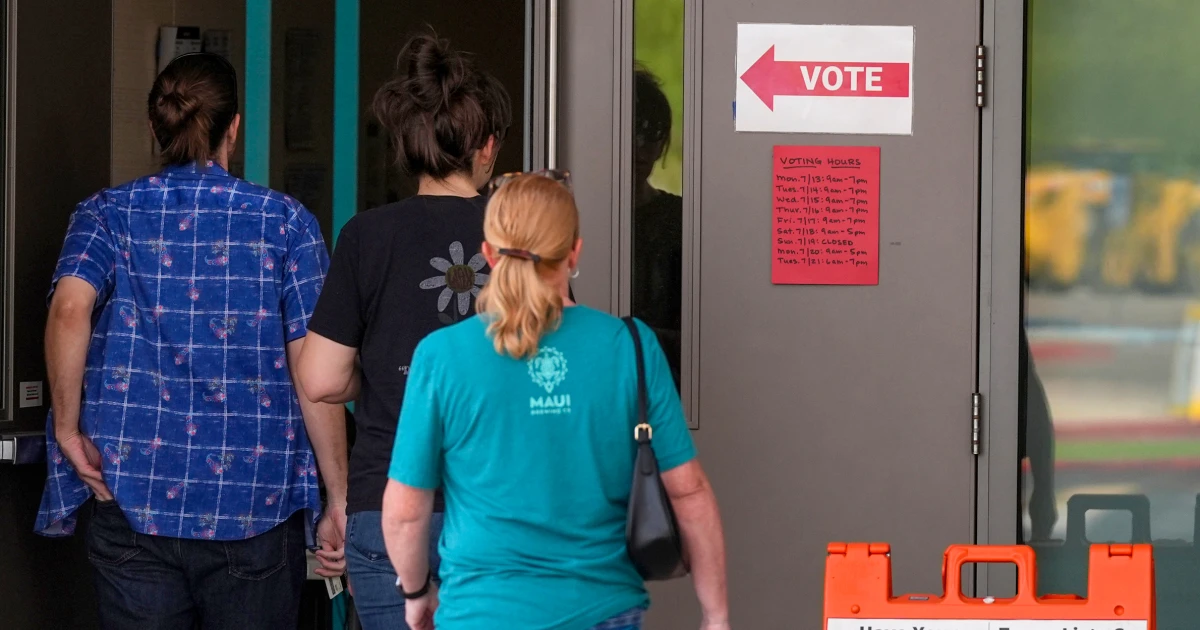
Arizona’s political landscape is heating up as primary voters head to the polls to decide crucial matchups that will define the state’s leadership for years to come. With high-profile races for Governor, Secretary of State, and Congressional seats on the ballot, the state remains a central theater for the ongoing tension between established political norms and the movement led by Donald Trump.
What happened
In the race for Governor, Republican Representative Andy Biggs has emerged as the leading contender to challenge Democratic incumbent Katie Hobbs. Biggs, a prominent conservative who formerly led the House Freedom Caucus, holds a key endorsement from Donald Trump. He faces a primary challenge from fellow Representative David Schweikert. While Biggs has historically been a vocal critic of the 2020 election results, his recent campaign rhetoric has shifted toward broader issues as he prepares for a potential general election in a pivotal swing state.
The Secretary of State race is equally contentious, featuring a primary battle between state Representative Alexander Kolodin and former GOP state chair Gina Swoboda. Both candidates have focused heavily on election administration. Kolodin is known for his legal involvement in post-2020 election challenges, while Swoboda has navigated a complex path regarding the former president’s support. The winner will eventually face Democrat Adrian Fontes in a role that will oversee the 2028 presidential election cycle.
In the 1st Congressional District, the Republican side sees former professional athlete Jay Feely running with Trump’s backing. On the Democratic side, the race is a competitive rematch between Amish Shah and Marlene Galán-Woods. Galán-Woods has secured significant institutional support from high-ranking state Democrats and national party leadership.
Context
These primaries are occurring against a backdrop of significant national tension, including a new phase of military engagement regarding Iran under the Trump administration. Locally, the shadow of the 2020 election continues to influence candidate platforms nearly six years later. Many GOP contenders are walking a fine line, attempting to satisfy a base that remains skeptical of previous election results while trying to appeal to the moderate voters necessary for a statewide victory in November.
The influence of outside groups is also notable. Organizations like Turning Point USA have waded into down-ballot races, while the Democratic Congressional Campaign Committee has already begun investing in specific candidates to ensure they are prepared for the general election fight.
Why it matters
Arizona remains one of the most pivotal battlegrounds in American politics. The outcomes of these primaries will determine whether the Republican Party moves forward with a platform heavily centered on election grievances or pivots toward a different governing message.
Furthermore, the Secretary of State race carries immense weight for the future of democratic processes, as the winner will serve as the chief authority over the state’s voting systems during the next presidential contest. For Democrats, defending the governorship is a top priority, as Katie Hobbs is viewed as one of the most vulnerable incumbents in the country. The results tonight will provide a clear signal of which strategies and ideologies currently resonate most with the Arizona electorate.