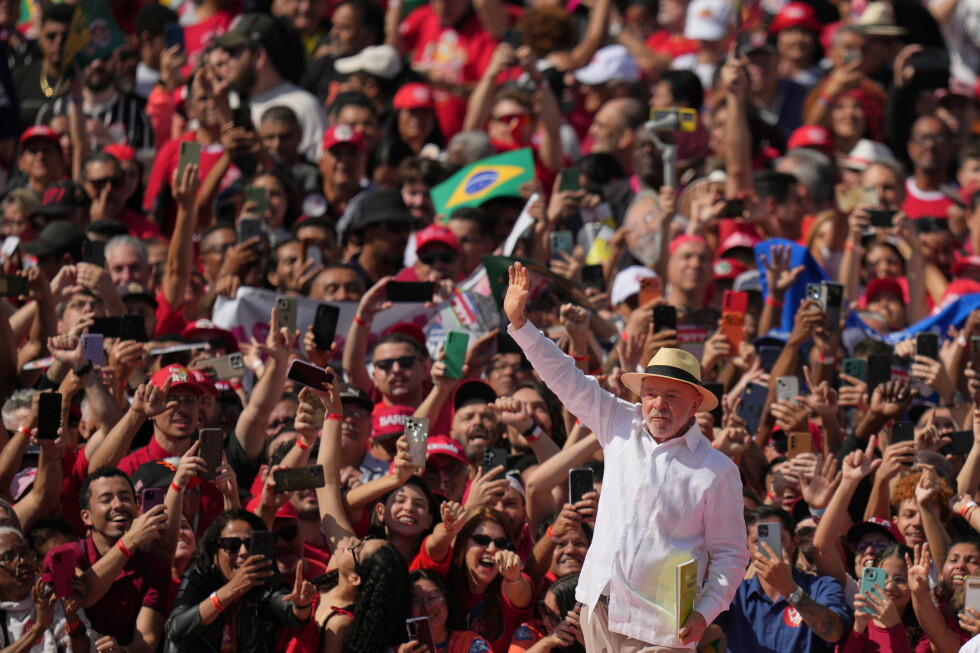
Brazil has officially entered a high-stakes election cycle as the two primary contenders for the presidency launched their campaigns this past Sunday. With the national vote scheduled for October, incumbent President Luiz Inácio Lula da Silva and Senator Flávio Bolsonaro held massive rallies in their respective political strongholds, signaling the start of what political analysts expect to be a deeply polarized and competitive race. The events highlighted the vastly different visions the two candidates hold for the future of South America’s largest economy.
What happened
On Sunday, President Lula da Silva addressed a crowd of more than 10,000 supporters at the Vila Euclides Stadium near Sao Paulo. The location held significant symbolic weight, as it was the site where Lula rose to prominence as a labor leader decades ago. At 80 years old, and recently diagnosed with skin cancer, the President appeared before the crowd wearing a protective hat, emphasizing a message of continuity. He argued that his administration’s policies are essential for the nation’s continued growth and stability.
Simultaneously, Senator Flávio Bolsonaro, the son of former President Jair Bolsonaro, gathered thousands of voters at Copacabana Beach in Rio de Janeiro. While Flávio headlined the event, his father was notably absent. The former president remains under house arrest following a conviction related to an attempted coup, leaving his son to carry the family’s political mantle. Flávio used the platform to position himself as a modern diplomat and economic strategist, aiming to distinguish his approach from the current administration.
Context
The campaign trail has already been marked by sharp geopolitical rhetoric. President Lula has taken a nationalist stance, particularly regarding Brazil’s natural resources. He recently asserted that the country’s significant reserves of rare minerals would be exploited solely for the benefit of the Brazilian population, rather than for foreign interests. Furthermore, Lula’s camp has raised concerns about international meddling, accusing the United States of attempting to influence the election in favor of the Bolsonaro campaign through trade pressures and diplomatic restrictions.
In contrast, Flávio Bolsonaro is leaning heavily on his international connections to bolster his image as a global leader. His campaign launch was attended by high-profile allies, including Argentine President Javier Milei. Flávio has also received public support from Israeli Prime Minister Benjamin Netanyahu and various former officials from the Trump administration. He argues that his ability to negotiate with major global powers like China, the U.S., and Israel makes him the superior candidate for securing lucrative trade deals for Brazil.
Why it matters
This election represents a critical juncture for Brazil, as it tests the endurance of Lula’s leftist labor-focused platform against the resilient right-wing movement led by the Bolsonaro family. The shift from Jair to Flávio Bolsonaro marks an evolution in the opposition’s strategy, attempting to maintain a populist base while navigating the legal challenges that have sidelined the family patriarch.
Beyond domestic politics, the outcome of this race will have significant implications for global trade and environmental policy. With Lula’s focus on resource nationalism and Bolsonaro’s emphasis on international alliances, the election will determine how Brazil manages its vast natural wealth and its position within the shifting dynamics of global diplomacy. As October approaches, the world will be watching to see if Brazil chooses to double down on its current path or pivot toward the “big deal” diplomacy promised by the Bolsonaro camp.