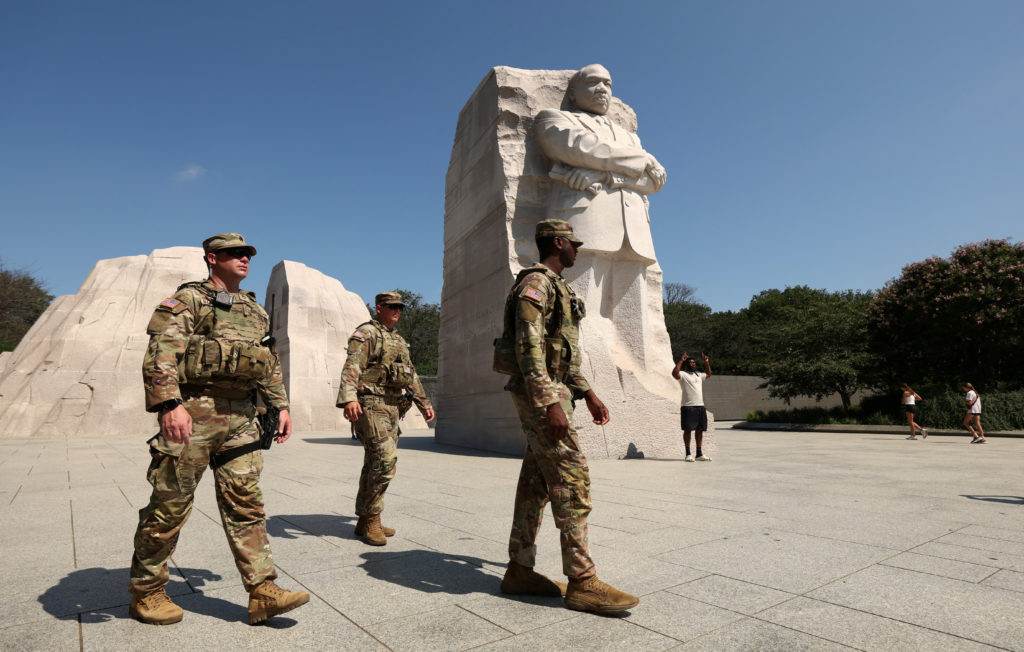
Washington, D.C., is currently at the center of an escalating debate over federal authority and municipal independence following the announcement of a massive extension for National Guard deployments. The plan, which carries a billion-dollar price tag, has reignited long-standing grievances regarding how the nation’s capital is governed and secured. For residents and local leaders, the move represents a concerning shift toward long-term militarization in a city already struggling for self-determination.
What happened
Federal authorities have moved forward with a proposal to sustain a National Guard presence in the District through 2029. This extension comes with a projected cost of approximately $1.4 billion, a sum that has drawn sharp criticism from both fiscal observers and civil rights advocates. The decision, largely driven by federal security assessments, ensures that uniformed personnel will remain a fixture of the city’s landscape for the foreseeable future.
Local representatives and a newly energized cohort of city officials have voiced strong opposition to the move. They argue that the decision was made with little regard for the preferences of the people who actually live and work in the District. This friction highlights the growing divide between the federal government’s security priorities and the local government’s desire for a return to civil normalcy.
Context
The relationship between Washington, D.C., and the federal government has always been unique and fraught with tension. Unlike the 50 states, the District lacks full control over its own National Guard units, which report to the President rather than a governor. This legal framework leaves D.C. vulnerable to federal directives that would be legally impossible to implement in a sovereign state without local consent.
Advocacy groups, including the ACLU of the District of Columbia, have been particularly vocal about the implications of this extension. Legal experts have pointed out the paradox of the “capital of the free world” being subject to security measures that many residents feel are excessive. This criticism stems from the visible presence of military forces in civilian spaces, which activists argue creates an atmosphere of surveillance rather than safety. The extension through 2029 suggests that what was once framed as a temporary response to national security concerns is now being integrated into the permanent infrastructure of the city.
Why it matters
This extension is more than just a budgetary issue; it is a fundamental challenge to the concept of local autonomy. For D.C. residents, the presence of federal military personnel serves as a constant reminder of their lack of statehood and limited legislative power. When the federal government can authorize a $1.4 billion security operation within city limits without significant local input, it reinforces the perception that the District is treated as a federal facility rather than a residential community.
Furthermore, the normalization of a long-term National Guard presence raises significant questions about civil liberties and the right to public assembly. Critics worry that an indefinite deployment could chill political expression and lead to the infringement of First Amendment rights during future demonstrations. If the federal government continues to prioritize a high-security perimeter over the daily freedoms of the District’s population, the democratic values the capital is supposed to represent will remain under scrutiny. As this deployment continues toward the end of the decade, the struggle for D.C. to control its own streets will likely remain a central point of political conflict.