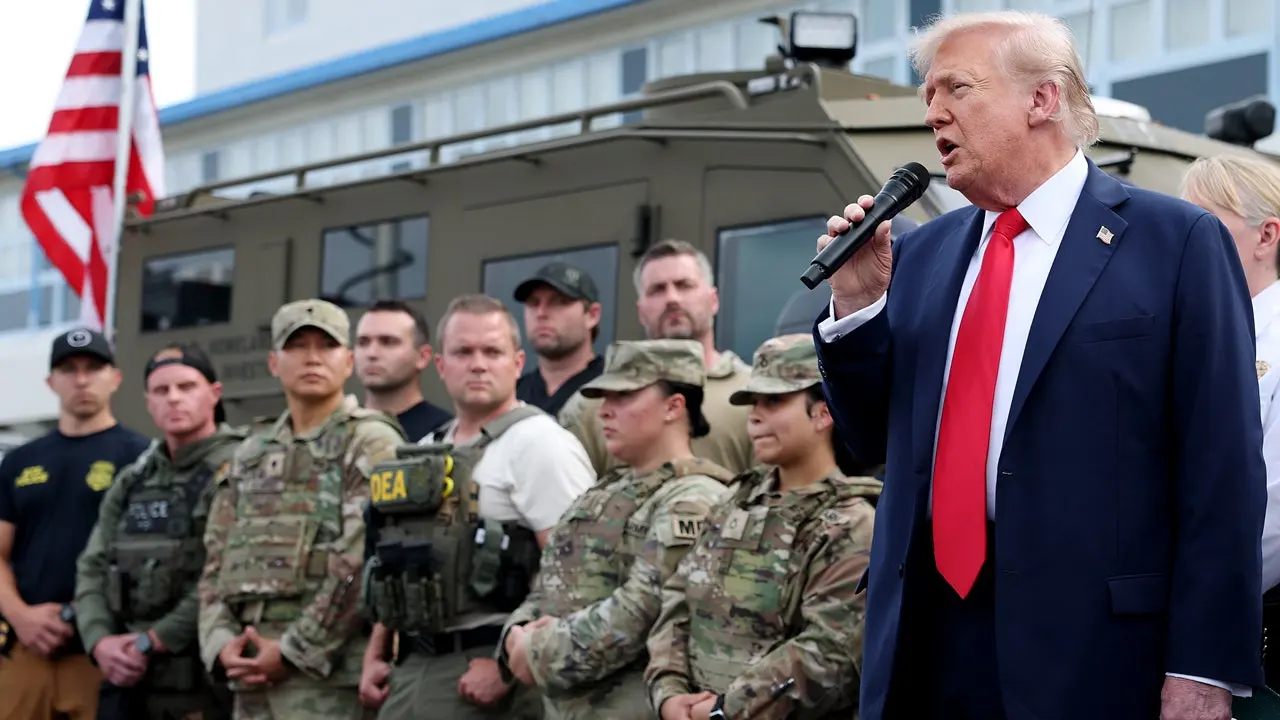
One year after its inception, the federal initiative tasked with revitalizing the nation’s capital has reported a significant impact on local crime rates. The “Make D.C. Safe and Beautiful Task Force” reached its first anniversary this week, with the Trump administration highlighting a massive surge in law enforcement activity. Since the operation began in August 2025, officials report that federal and local partners have conducted more than 16,000 arrests, signaling a major shift in the city’s approach to public safety and urban management.
What happened
The first year of the task force has been characterized by a high-intensity crackdown on both violent and organized crime. According to data released by the White House and the Department of Justice, the operation has resulted in the apprehension of 35 individuals suspected of homicide and more than 100 documented gang members.
The scope of the enforcement extends beyond violent offenders. Authorities have processed more than 3,200 narcotics-related arrests and removed nearly 2,000 illegal firearms from the streets of Washington, D.C. Additionally, the task force’s efforts led to a significant humanitarian success: the recovery and return of 25 missing children. Acting Attorney General Todd Blanche emphasized that these results represent a commitment to protecting neighborhoods that had previously struggled with rising instability. The administration views these figures as a testament to the “whole-of-government” strategy, which combines the resources of the U.S. Marshals Service, the Department of Justice, and various local agencies.
Context
The task force was established on August 11, 2025, following a formal declaration of a crime emergency in the District of Columbia by President Trump. This declaration paved the way for a federal takeover of the Metropolitan Police Department via the Home Rule Act and the controversial deployment of National Guard troops to assist in patrolling the city.
The impetus for this aggressive federal intervention was a series of high-profile violent incidents that shocked the capital in the summer of 2025. These included the tragic murder of 21-year-old congressional intern Eric Tarpinian and a brutal assault on a staff member of the Department of Government Efficiency (DOGE). Furthermore, the fatal shooting of a 14-year-old boy, linked to MS-13 gang activity, intensified the demand for a more robust law enforcement presence. While the federalization of D.C. policing drew criticism from some local Democratic leaders, the administration argued that the “crime-ridden” state of the city necessitated a drastic departure from previous policies.
Why it matters
The success of the Safe and Beautiful Task Force is being framed by supporters as a blueprint for urban renewal in other major American cities. By centralizing law enforcement efforts and utilizing federal resources to augment local police, the administration claims it has not only driven down violent crime but also improved the general “beautification” and quality of life for D.C. residents and visitors.
U.S. Marshals Service Director Gadyaces Serralta noted that the collaborative nature of the task force has created an “exponential” impact on the ability to track down and apprehend dangerous fugitives. Beyond the statistics of arrests and seizures, the administration suggests that the operation has restored a sense of order to the nation’s capital. As the task force enters its second year, the focus remains on maintaining this momentum and ensuring that the recent drop in violent crime—which some experts have noted as an astonishing turnaround for the city—becomes a permanent fixture of the District’s landscape.