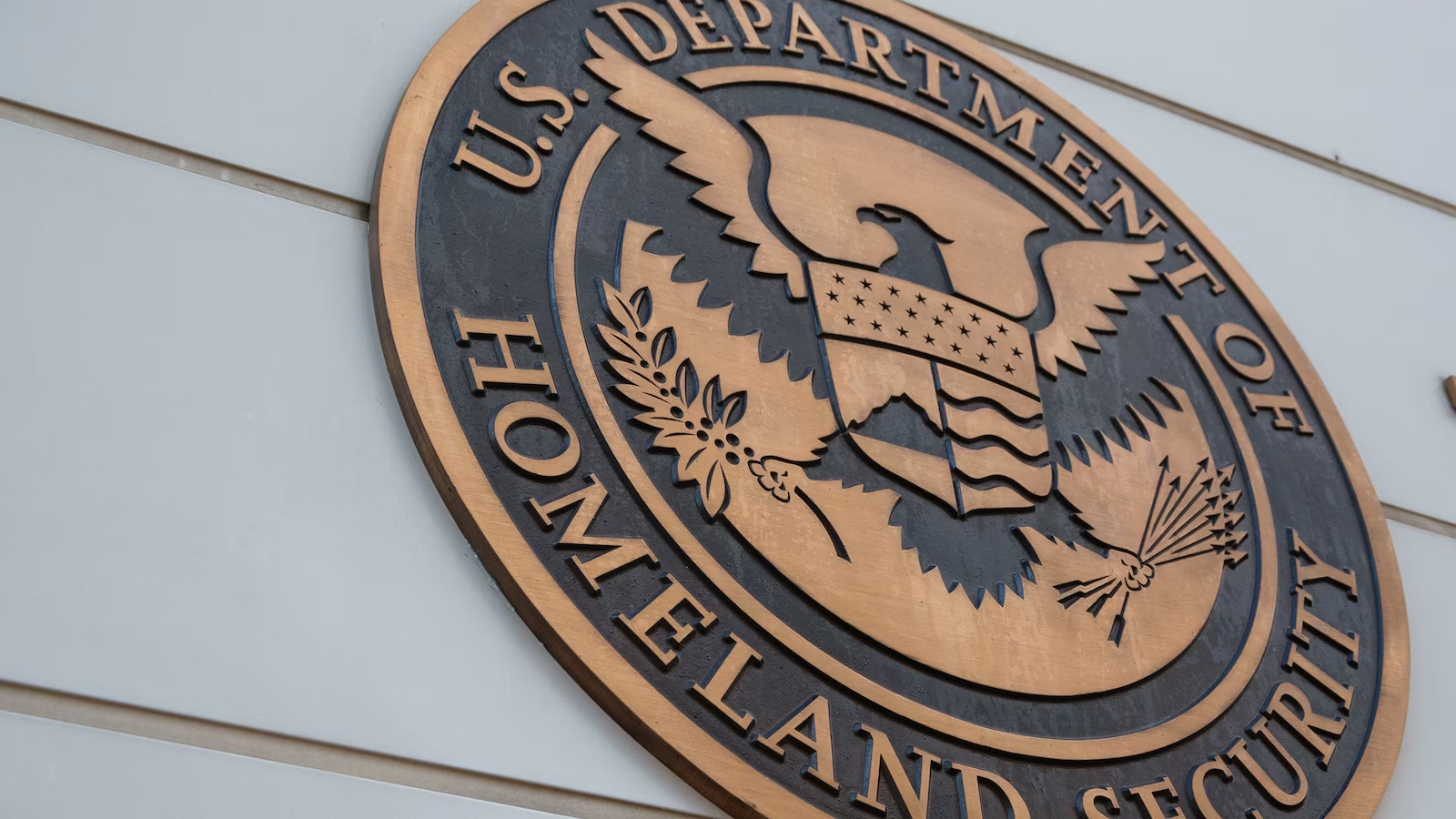
In a decisive move to purge unethical practices from global trade, the United States Department of Homeland Security (DHS) has implemented a sweeping ban on dozens of Chinese entities. This action represents the largest single-day enforcement effort in history aimed at curbing the importation of goods produced through forced labor. By targeting specific sectors and companies, the U.S. government is signaling a heightened era of scrutiny for international supply chains, emphasizing that economic access to the American market is contingent upon the fair treatment of workers.
What happened
On Friday, the Department of Homeland Security announced the immediate blocking of 43 Chinese companies from importing their products into the United States. This historic enforcement action was triggered by serious allegations of unethical labor practices, including what officials described as the use of “slave labor” within Chinese manufacturing hubs. The identification of these entities was a collaborative effort led by the Forced Labor Enforcement Task Force (FLETF), an interagency group dedicated to monitoring and removing illicitly produced goods from the American marketplace.
The scope of the ban is broad, impacting several critical industrial sectors. Companies now prohibited from doing business in the U.S. operate primarily in the aluminum, apparel, copper, cotton, and tomato industries. Among the notable names added to the restricted list are Kuitun Yadasi Textile Co. and Xinjiang Nuziline Bio-Pharmaceutical Co. This massive expansion of the restricted list underscores a rigorous approach to identifying and penalizing organizations that profit from human rights abuses.
Context
This latest enforcement action is rooted in the Uyghur Forced Labor Prevention Act (UFLPA), a federal law established in 2021. The UFLPA was designed specifically to address the exploitation of the Uyghur people, a Muslim minority group in China’s Xinjiang region. Under this act, there is a “rebuttable presumption” that any goods manufactured in Xinjiang are produced with forced labor. Consequently, companies placed on the UFLPA Entity List are banned from U.S. trade unless they can provide “clear and convincing evidence” that their supply chains are free of coercion.
With the addition of these 43 firms, the total number of restricted entities on the UFLPA list has grown to 187. The Department of Homeland Security has framed this expansion as an essential step in maintaining the integrity of the U.S. economy. By utilizing the UFLPA as a primary enforcement tool, the government aims to hold foreign corporations accountable for the exploitation of vulnerable populations while ensuring that American consumers are not inadvertently supporting human rights violations through their purchases.
Why it matters
The implications of this move extend far beyond simple trade logistics; they touch on matters of national security and economic fairness. Government officials have stated that the prevention of “illicit goods” entering the United States is a priority for protecting domestic industries. When foreign companies utilize forced labor, they significantly lower their production costs, creating an uneven playing field that undermines American businesses that adhere to ethical standards and fair wage laws.
Furthermore, the DHS views the enforcement of the UFLPA as a critical component of national security. By hardening the borders against products tied to unethical labor, the U.S. aims to decouple its critical infrastructure and consumer markets from regimes and entities that violate international human rights norms. This “uncompromising” stance, as described by DHS leadership, serves as both a moral statement and a strategic economic maneuver. As supply chain transparency becomes a global standard, this record-breaking enforcement action warns international manufacturers that the cost of unethical labor is the loss of one of the world’s most lucrative markets.