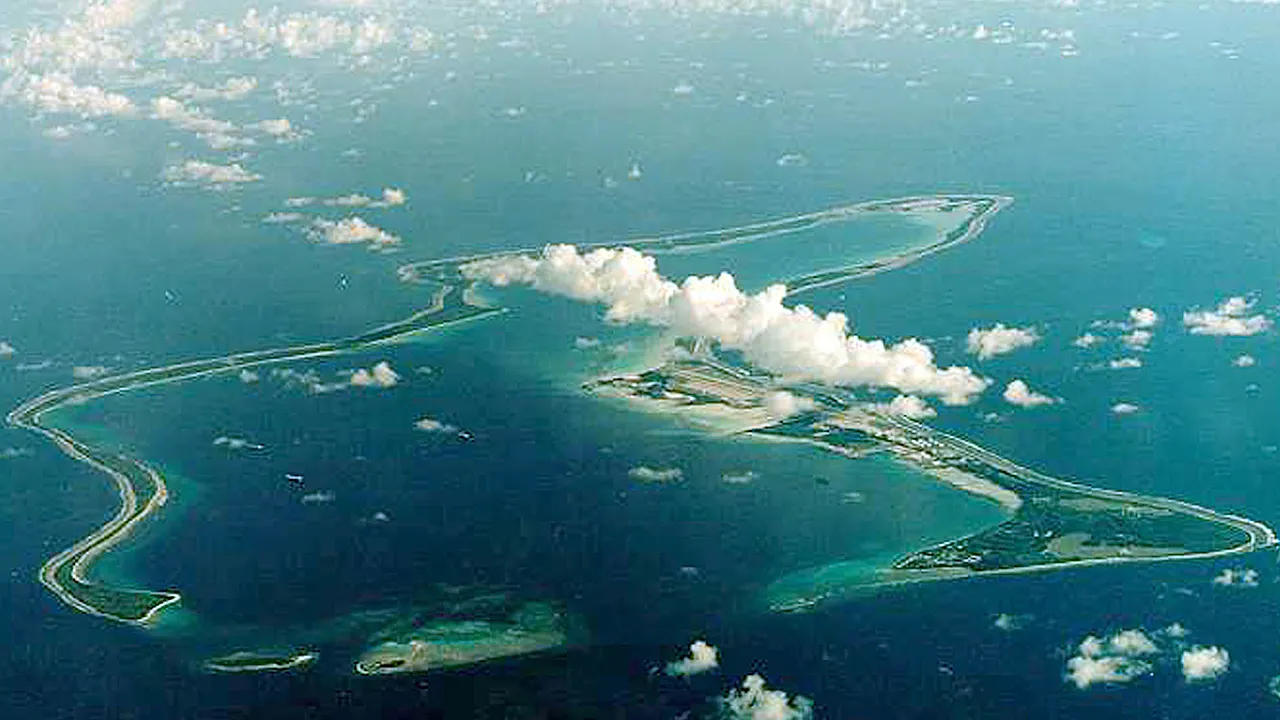
The landscape of military operations in the Middle East is undergoing a significant transformation as the United States adapts to escalating hostilities with Iran. In a strategic pivot necessitated by direct attacks on traditional regional strongholds, Diego Garcia—a remote footprint in the Indian Ocean—has emerged as the primary logistical nerve center for American forces. This shift highlights a fundamental change in how the Pentagon secures its assets while maintaining a persistent offensive posture in a volatile theater.
What happened
Following a significant Iranian missile strike on a major American military installation in Bahrain, the Pentagon redirected its primary logistics and supply operations to Diego Garcia. This shift was prompted by the vulnerability of coastal facilities to Iran’s expanding arsenal of intermediate-range ballistic missiles. By moving deeper into the Indian Ocean, U.S. forces have created a buffer zone that, while geographically distant, offers a level of security that mainland Middle Eastern bases currently lack.
The base at Diego Garcia is now facilitating a massive wartime logistics network. This involves a maritime supply route stretching approximately 2,200 miles. While this distance necessitates longer shuttle runs and results in a slower replenishment cycle for frontline units, it ensures that the “tail” of the military’s supply chain remains out of reach for most conventional Iranian strikes. Current operations supported by the base include the USS Abraham Lincoln carrier strike group, which has been instrumental in enforcing blockades of Iranian ports and conducting sustained air operations.
Context
The sudden elevation of Diego Garcia’s importance comes at a time of intense diplomatic and legal friction regarding the Chagos Archipelago. For years, the sovereignty of these islands has been a point of contention between the United Kingdom and Mauritius. In 2025, a treaty was signed that would officially recognize Mauritian sovereignty while granting the U.K. control over Diego Garcia for at least 99 years. However, the implementation of this agreement has faced hurdles, particularly due to concerns from the U.S. administration regarding the long-term security of the base under a new sovereign arrangement.
Furthermore, internal UK politics and the concerns of the Chagossian government-in-exile have added layers of complexity to the situation. Advocates for the base argue that the current conflict with Iran proves that Diego Garcia is not merely a relic of the Cold War, but a modern necessity for global stability. The ability to operate from a location that does not require the immediate, case-by-case permission of a host nation in the direct line of fire is a strategic advantage the U.S. is currently unwilling to risk.
Why it matters
The reliance on Diego Garcia underscores a critical vulnerability in modern warfare: the “reach” of regional adversaries. As Iran demonstrates its ability to strike precision targets across the Persian Gulf, the U.S. military must balance proximity with survivability. Diego Garcia provides that balance, acting as a “blue water” fortress that can project power into the Middle East and South Asia without being easily targeted by land-based missile batteries.
Beyond the immediate tactical benefits, the situation has broader geopolitical implications. It forces a reassessment of NATO’s role in securing vital trade routes like the Strait of Hormuz and places renewed pressure on the U.K. government to maintain its defense commitments. If the U.S. continues to view Diego Garcia as its most reliable fallback point, any political movement toward changing the island’s sovereignty will likely be met with significant resistance from Washington. The base is no longer just a refueling stop; it is now the backbone of the American military response in a high-stakes international conflict.