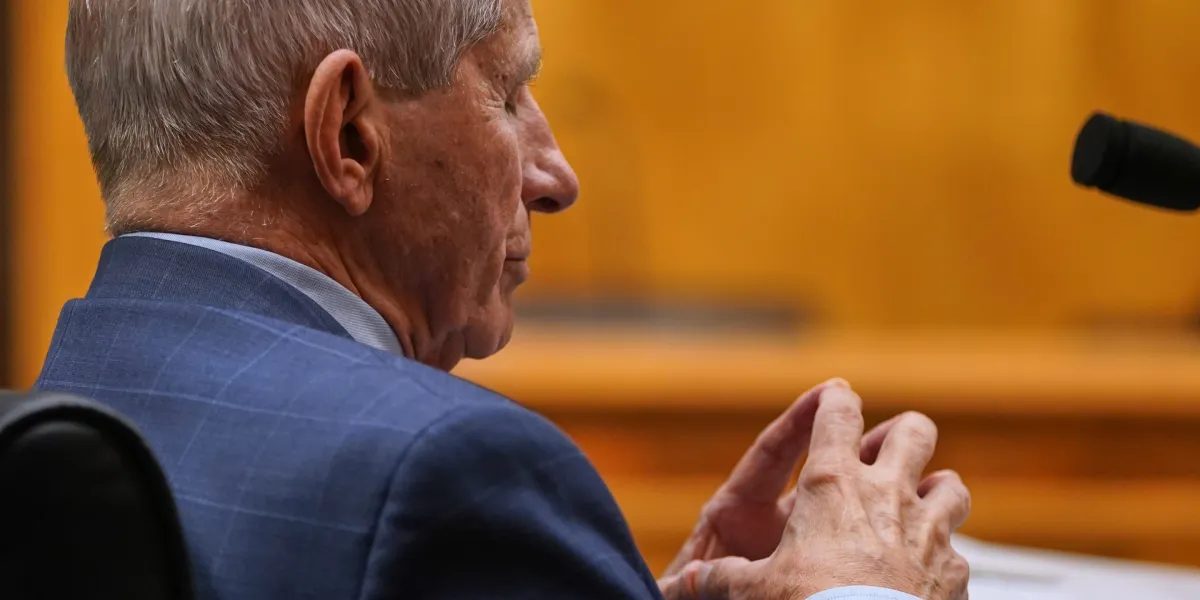
A massive collection of personal notes from Dr. Anthony Fauci has entered the public record, offering an unvarnished look at the internal mechanics of the United States’ pandemic response. These diary entries, totaling more than 1,000 pages, were brought to light during a recent Senate hearing, providing a rare glimpse into the private thoughts of the nation’s former top infectious disease expert. The documents detail everything from high-stakes medical crises within the White House to the evolving scientific theories regarding how the coronavirus first began to spread.
What happened
The release of the diary occurred during a contentious session led by Senator Rand Paul, a long-time critic of Dr. Fauci. The documents were reportedly obtained from government computers and provide a chronological account of the pandemic’s early days. Among the most striking revelations is the severity of former President Donald Trump’s bout with COVID-19; the notes indicate his temperature reached 103°F, prompting urgent consultations between White House staff and Fauci regarding the president’s health and his eventual return to public duties.
The diary also captures the intersection of science and celebrity culture. Fauci recorded his interactions with various public figures, including actress Julia Roberts, as the government sought to leverage star power to communicate health protocols. However, the core of the document focuses on the scientific fog of 2020. Fauci’s notes from January 2020 show him grappling with data from China, early on suspecting that the Wuhan market was likely an “amplifier” of the virus rather than its original source. He noted that the virus appeared to have been spreading among humans weeks before it was officially reported, giving it a significant head start.
Context
For years, the origins of COVID-19 have been a flashpoint for political and scientific debate. Senator Paul has frequently accused Fauci of being untruthful about the possibility of a laboratory leak in Wuhan. While the diary entries show that Fauci and other scientists did consider and discuss the lab-leak theory behind closed doors, they also reflect a consensus leaning toward natural zoonotic spillover—where a virus jumps from animals to humans.
The diaries also document the deteriorating relationship between the scientist and the former president. While Fauci initially noted that Trump asked “good questions” and seemed prioritized over the economy, the tone shifted as the pandemic wore on. By August 2020, Fauci’s entries describe a “raving” president who insisted that rising case numbers were merely a byproduct of increased testing. Fauci’s private records confirm his internal resistance to this logic, as he argued that rising hospitalizations and deaths were the true indicators of the virus’s spread.
Why it matters
The release of these papers is significant because it provides a real-time record of scientific decision-making during a global emergency. It highlights the discrepancy between private uncertainty and public messaging, a common necessity in public health that is often interpreted as duplicity in a polarized political environment. For historians and policymakers, these entries clarify the timeline of what the U.S. government knew and when they knew it.
Furthermore, the diary underscores the immense pressure placed on public officials during a crisis. It shows the struggle to manage a novel pathogen while navigating the temperament of a president who became increasingly skeptical of scientific data. As the debate over pandemic origins continues, these documents serve as a primary source for understanding the complexities of the 2020 response, illustrating that the path to scientific clarity is rarely a straight line.