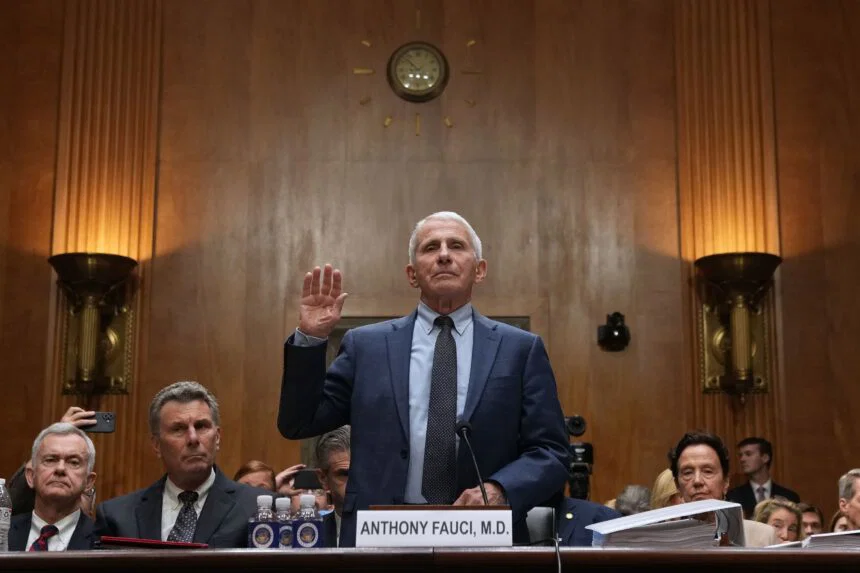
In a dramatic turn on Capitol Hill, Dr. Anthony Fauci recently invoked his Fifth Amendment rights during a tense Senate hearing. While the sight of high-profile figures refusing to answer questions has become a familiar fixture of American politics, Fauci’s situation presents a unique legal paradox: he was already granted a comprehensive pardon by former President Joe Biden. This move has sparked intense debate over whether a pardoned individual can—or should—claim constitutional protection against self-incrimination when the threat of prosecution for past acts has seemingly been removed.
What happened
During a high-stakes session held by the Senate Homeland Security and Governmental Affairs Committee, the former director of the National Institute of Allergy and Infectious Diseases remained silent in response to several inquiries. Senator Rand Paul, a long-time adversary of Fauci’s pandemic-era policies, led the questioning.
Fauci’s refusal to speak was not a shield against past actions, but rather a defense against future ones. He suggested that the committee was attempting to steer him into a “perjury trap.” By refusing to answer, Fauci aimed to prevent the committee from obtaining any statements that could be used by the current Justice Department to build a new criminal case for lying to Congress, an offense that would not be covered by his existing pardon.
Context
The backdrop to this confrontation is a preemptive and exceptionally broad pardon issued by Joe Biden in early 2025. As his term ended, Biden sought to protect various officials from what he characterized as “drummed-up” prosecutions by the incoming Trump administration. Fauci’s pardon was specifically designed to cover any government service actions taken between January 2014 and January 2025, a period that encompasses the entirety of the COVID-19 pandemic response.
Under normal legal circumstances, a person who has been pardoned cannot plead the Fifth Amendment because they no longer face “legal jeopardy” for the crimes covered by that pardon. However, the current political climate has complicated this standard. Prominent figures within the Trump administration, including Health and Human Services Secretary Robert F. Kennedy Jr., have publicly suggested that Fauci could still face legal consequences. Because a pardon only covers past conduct, any testimony given today is “new” conduct. If a witness is judged to have lied during a 2025 hearing, they can be prosecuted for perjury regardless of a 2024 pardon.
Why it matters
This standoff sets a significant precedent regarding the limits of executive power and the rights of former officials. For congressional Republicans, Fauci’s silence is being framed as an obstruction of oversight. There is already talk of holding the doctor in contempt of Congress, a move that would force the Justice Department to decide whether to prosecute one of the most famous public health figures in American history.
For legal scholars, the case tests the boundaries of the Fifth Amendment. If the court determines that Fauci’s fear of a “perjury trap” is a valid reason to remain silent, it could change how all pardoned witnesses interact with investigative bodies. Conversely, if he is forced to testify, it could signal that preemptive pardons offer far less protection than previously thought. Ultimately, the clash between Fauci and the Senate committee is about more than just pandemic policy; it is a battle over the use of the legal system as a tool for political accountability.