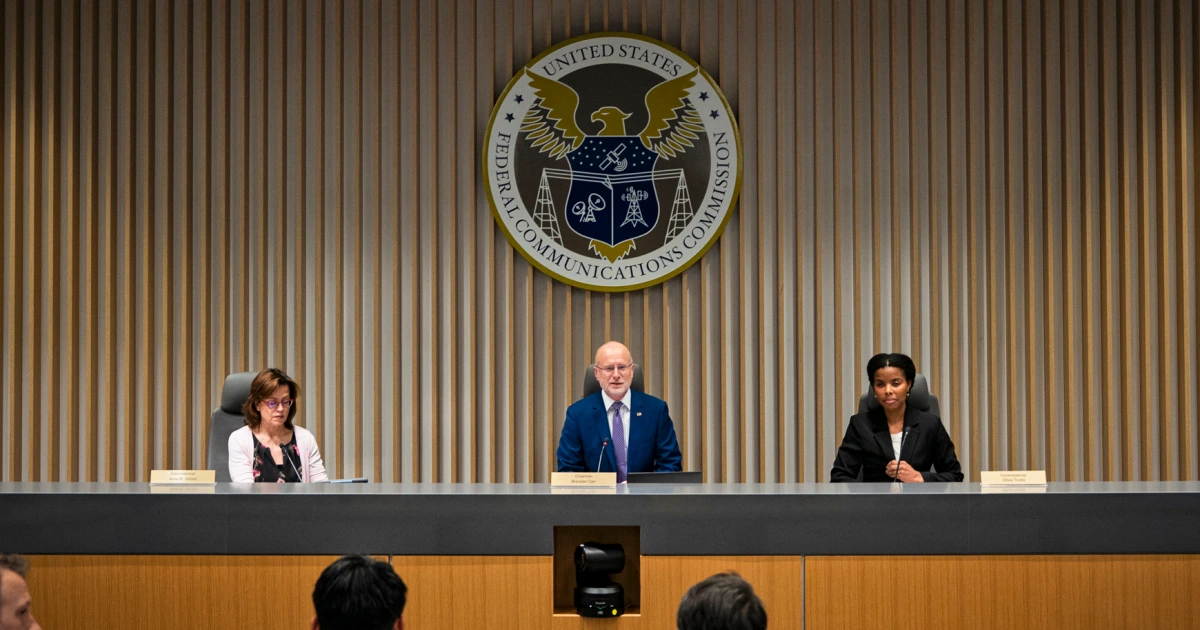
In a landmark decision that could fundamentally reshape the American media landscape, the Federal Communications Commission (FCC) voted on Thursday to abolish the long-standing restriction on national television ownership. By removing the cap that previously prevented any single company from reaching more than 39% of U.S. households, the regulatory body has opened the door for unprecedented corporate consolidation among local broadcast stations.
What happened
The FCC’s decision came via a 2-1 vote, reflecting a sharp partisan divide within the agency. Chairman Brendan Carr and Commissioner Olivia Trusty, both Republicans, voted to repeal the 22-year-old rule. In its place, the commission will transition to a “case-by-case” review process for future station acquisitions rather than adhering to a rigid percentage-based limit.
Chairman Carr defended the move by arguing that the 39% cap was an “outdated” relic of a bygone era. According to Carr, the restriction served only to handicap local broadcasters while their digital competitors—such as streaming giants and social media platforms—operate without similar constraints. He framed the repeal as a necessary step to create a “level playing field” in a modern media environment.
Conversely, the agency’s lone Democrat, Commissioner Anna M. Gomez, issued a scathing dissent. She characterized the vote as an “unlawful power grab,” arguing that the commission lacks the statutory authority to override a limit codified by Congress. Gomez expressed concern that the decision would not help local journalism but would instead allow national conglomerates to tighten their grip on local airwaves.
Context
The 39% ownership cap has been a cornerstone of media regulation since 2004, when it was established by Congress as an update to previous 1990s-era limits. For decades, the rule served as a firewall against total nationalization of local TV, ensuring a diversity of ownership across different regions.
The push to eliminate the cap has been led by major industry players, most notably Nexstar Media Group. As the largest owner of local stations in the country, Nexstar has long argued that the regulations are obsolete. Industry advocates point out that the rules were written before the rise of the iPhone, Netflix, or YouTube. From their perspective, forcing local stations to remain small prevents them from achieving the scale necessary to compete for advertising dollars against global tech titans.
The timing of this vote is particularly significant given Nexstar’s pending $6.2 billion acquisition of Tegna. That merger, currently stalled by antitrust litigation, would result in a combined entity reaching approximately 60% of American homes—a feat previously prohibited under the now-defunct 39% rule.
Why it matters
The elimination of the cap is expected to trigger a wave of mergers and acquisitions. Proponents believe this consolidation will allow broadcast groups to pool resources, invest more in local news, and survive in an era of “cord-cutting.” They argue that a stronger, larger broadcast entity is better equipped to negotiate with cable providers and digital platforms.
However, critics warn of the “homogenization” of local news. If a handful of national corporations own the majority of local stations, there are concerns that local editorial independence will be eroded in favor of centralized, nationalized content. Consumer advocacy groups, including Free Press, have already announced intentions to challenge the FCC’s decision in court, arguing that the agency exceeded its legal mandate.
As the industry prepares for a new era of expansion, the legal battle over this decision will likely determine whether the future of American television belongs to local voices or massive national networks.