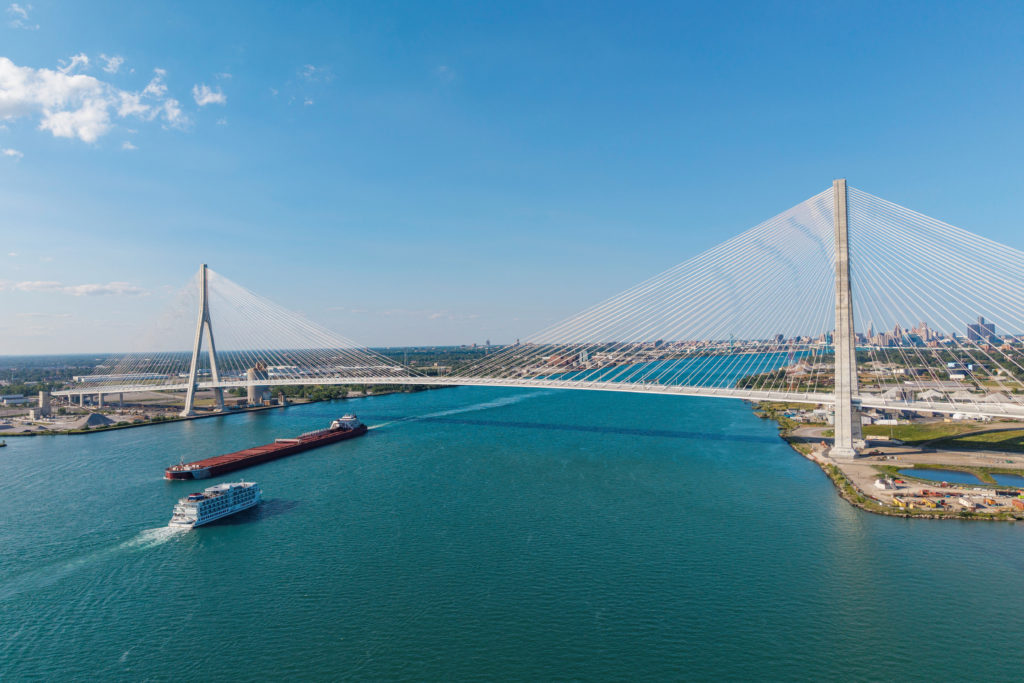
A major milestone in North American infrastructure has been reached as vehicles prepare to cross the newly completed Gordie Howe International Bridge. Connecting Detroit, Michigan, with Windsor, Ontario, this long-awaited project represents a significant engineering feat and a renewed commitment to the flow of commerce between the United States and Canada. As traffic begins to move across the Detroit River, the bridge stands as a testament to the deep economic and cultural ties shared by the neighboring nations.
What happened
On Monday, traffic officially began flowing across the Gordie Howe International Bridge, marking the end of a multi-year construction process. The bridge is named after the legendary “Mr. Hockey,” a Canadian icon who became a household name while playing for the Detroit Red Wings in the NHL. This naming choice reflects the shared heritage of the two border cities.
The new suspension bridge serves as a modern alternative to the aging, privately owned Ambassador Bridge, which has historically carried the bulk of the region’s commercial traffic. The Gordie Howe project includes state-of-the-art border inspection plazas and direct highway-to-highway connections, designed to eliminate the stop-and-go traffic that has long plagued local streets in Windsor and Detroit.
Context
The completion of this massive infrastructure project arrives at a complex moment for North American diplomacy. While the bridge was designed to foster seamless trade, its opening coincides with renewed threats of trade barriers. President-elect Donald Trump has recently signaled a potential shift in trade policy, including the possibility of significant tariffs on goods imported from Canada.
The bridge was largely funded by the Canadian government, highlighting Ottawa’s commitment to maintaining a robust trade corridor with its largest partner. For decades, the Windsor-Detroit crossing has been the busiest commercial land border in North America. The automotive industry, in particular, relies on a “just-in-time” delivery system where parts cross the border multiple times before a vehicle is finished. Any delay at the border can cost manufacturers millions of dollars in lost productivity, making the efficiency of this new crossing vital to the regional economy.
Why it matters
The Gordie Howe International Bridge is more than just a convenience for travelers; it is an economic insurance policy. By providing a second major crossing with modern facilities, it ensures that the movement of goods is not entirely dependent on a single, century-old bridge. Approximately 25% of all surface trade between the U.S. and Canada passes through this specific corridor, supporting thousands of jobs on both sides of the river.
Furthermore, the bridge represents stability in an era of political volatility. While political rhetoric regarding tariffs and trade agreements may fluctuate with each election cycle, the physical existence of the Gordie Howe International Bridge solidifies the long-term integration of the two economies. It provides the necessary capacity for future growth and serves as a reminder that, despite current tensions, the partnership between Canada and the United States remains a cornerstone of global commerce. For the residents of Detroit and Windsor, the bridge is a symbol of a shared future, easing the daily commute and strengthening the cultural bonds of a region that has always been defined by its proximity to the border.