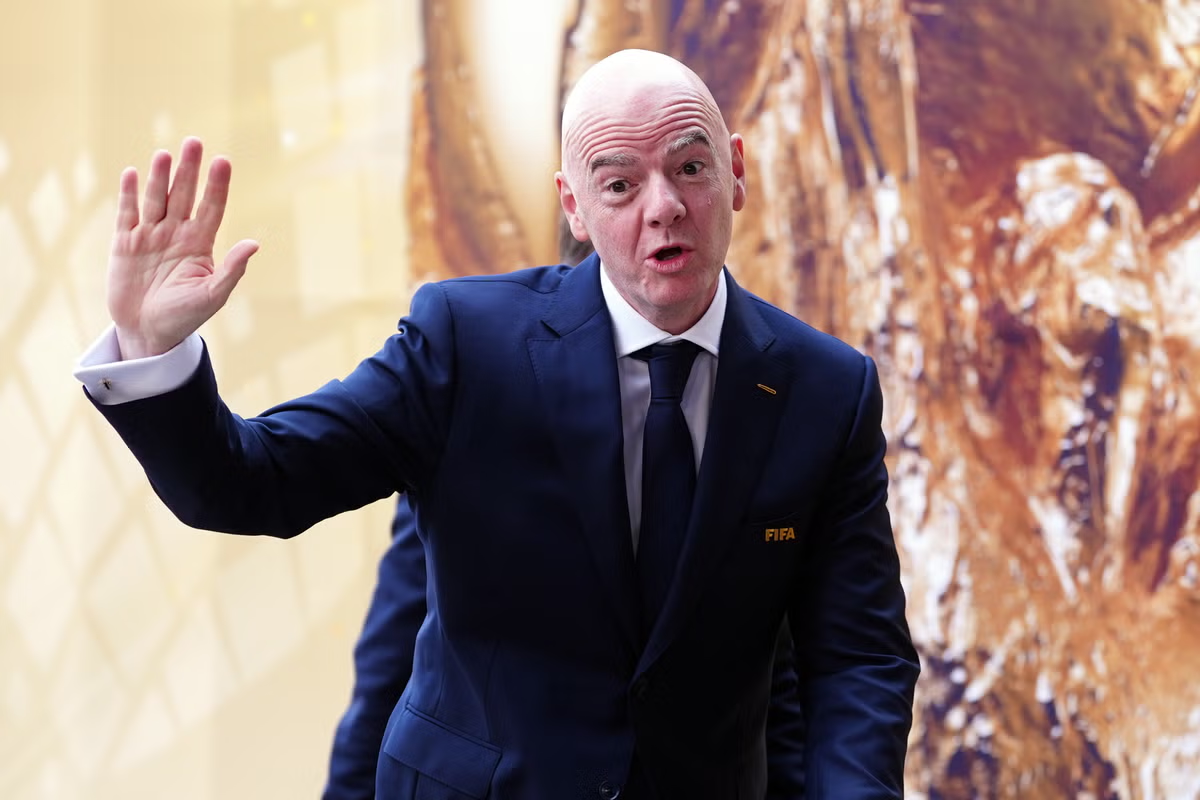
The global football landscape is reeling following revelations that FIFA President Gianni Infantino has been working on a massive, secretive project to privatize the World Cup. Reports suggest that Infantino bypassed the standard governing protocols, keeping even his closest advisors and the FIFA Council in the dark. This “rogue” operation has sparked a wave of fury among international football administrators, threatening to destabilize the president’s once-solid base of support.
What happened
The controversy erupted when details of a long-term privatization project began to leak through the New York financial community. While the center of the football world was focused on the World Cup final at the MetLife Stadium, high-level decision-makers at the Waldorf-Astoria began to hear whispers of a transformative financial shift. Despite being pressured for answers on the eve of the final, Infantino remained silent, offering no indication of the scale of the proposal.
The situation escalated when UEFA obtained concrete details of the plan and began briefing members of the FIFA Council. This internal pressure, combined with a report published by The Times, forced FIFA into a premature announcement. The rush to go public revealed a significant rift: Infantino had not discussed the proposal with the Council, leading members to find out about the future of their own organization through media reports.
Context
Sources indicate that this privatization plan is not a recent whim but a project that has been in development for over a year, dating back to the Club World Cup held in the United States. The proposal is being characterized as a “unilateral” move by Infantino, leading to accusations that he has gone rogue.
The financial architecture of the deal has raised eyebrows across the industry. There is widespread speculation that the project was developed alongside financial interests connected to the family of Donald Trump, specifically citing the recent presence of Josh Kushner within Infantino’s orbit. While some skeptics within the football world point out that a project of this magnitude requires a massive amount of manpower and capital, the fact that it remained hidden from FIFA’s internal governing bodies has caused unprecedented friction.
Why it matters
The fallout from this secrecy reaches far beyond mere office politics. By sidestepping traditional protocols, Infantino has alienated key allies in regions that were previously considered his strongholds, such as the Asian Football Confederation. The lack of transparency has prompted a list of urgent questions from the FIFA Council regarding who authorized the mandate, how the financial partners were selected, and why the governing body was excluded from the decision-making process.
Public criticism has been sharp. Bernd Neuendorf of the German Football Association has been vocal about the frustration felt by many, highlighting the disrespect shown to the Council by forcing them to learn of major policy shifts through the press. This incident calls into question the future of FIFA’s governance and whether the World Cup—a tournament traditionally viewed as a global public asset—can or should be transformed into a privatized entity. As the dust settles on the initial leak, Infantino faces a difficult battle to regain the trust of the very people he needs to keep his administration running.