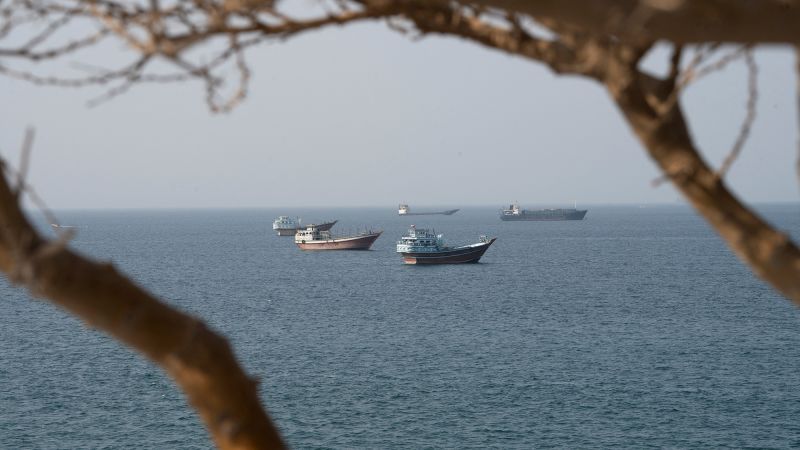
The strategic struggle for dominance over the Strait of Hormuz has emerged as a central pillar of the ongoing conflict involving Iran and the United States. As the world’s most critical maritime chokepoint for energy, the waterway has long been a site of rhetorical sparring and military posturing. However, recent data suggests that the balance of power is shifting. Despite Tehran’s assertions of sovereignty over the region, a combination of international naval protection and rerouted shipping lanes is significantly eroding Iranian influence over the passage.
What happened
Recent shipping data indicates a dramatic shift in how oil tankers navigate the region. According to the tracking firm Kpler, more than 80% of vessels passing through the Strait of Hormuz over the last two weeks have utilized the Omani route. This shipping channel, authorized by the United Nations, is one that Iran has historically and vehemently opposed. This represents a complete reversal from just one month ago, when traffic through the Omani route was virtually non-existent.
The shift in traffic has had immediate economic consequences for Tehran. By forcing ships into international or Omani waters, the international community has effectively bypassed Iran’s ability to demand tolls—a practice Iran attempted to enforce earlier this spring. Furthermore, major regional oil producers including Saudi Arabia, Kuwait, and the United Arab Emirates have adapted their logistics. These nations are now using Very Large Crude Carriers (VLCCs) to move oil out of the Persian Gulf and into the Gulf of Oman, where the cargo is transferred to customers in safer waters. To further minimize risk, many of these tankers have begun operating as “dark traffic,” turning off their transponders for weeks to evade Iranian detection.
Context
The Strait of Hormuz is the artery of the global energy market, historically handling approximately 20 million barrels of oil per day. For decades, Iran has used its proximity to the strait as a geopolitical lever, threatening to close the waterway whenever international tensions rose. In the current conflict, Iran has followed through on these threats by attacking dozens of vessels that attempted to navigate near the Omani coast.
However, the presence of the United States Navy has changed the calculus for global shipping companies. While Iran claims the strait is under its exclusive jurisdiction, the U.S. has maintained a robust military presence to safeguard commercial interests. This has led to conflicting narratives from both capitals. While President Donald Trump recently claimed the U.S. has achieved “total control” over the waterway, experts suggest the reality is more nuanced. While the U.S. has the eyes and the firepower to protect much of the traffic, Iran still maintains a degree of “deterrence” through its persistent attacks, and current oil flows of 15 million barrels per day still sit below pre-war levels.
Why it matters
The erosion of Iranian control over the Strait of Hormuz has profound implications for global energy security and Middle Eastern geopolitics. If the majority of global shipping can successfully ignore Iranian demands and bypass their preferred routes, Tehran loses its most potent tool for international blackmail. The ability to move 15 million barrels of oil per day during an active conflict suggests that the global economy is becoming more resilient to Iranian interference.
Furthermore, the failure of Iran to collect maritime tolls represents a loss of a key revenue stream at a time when the country is under intense economic pressure. While the conflict is far from over, the current trend suggests that the U.S. policy of naval protection is achieving its primary goal: ensuring that the world’s energy supply remains mobile, even in the face of direct military threats. As long as shipping companies feel emboldened by the promise of Western naval protection, Iran’s grip on the world’s most important waterway will likely continue to weaken.