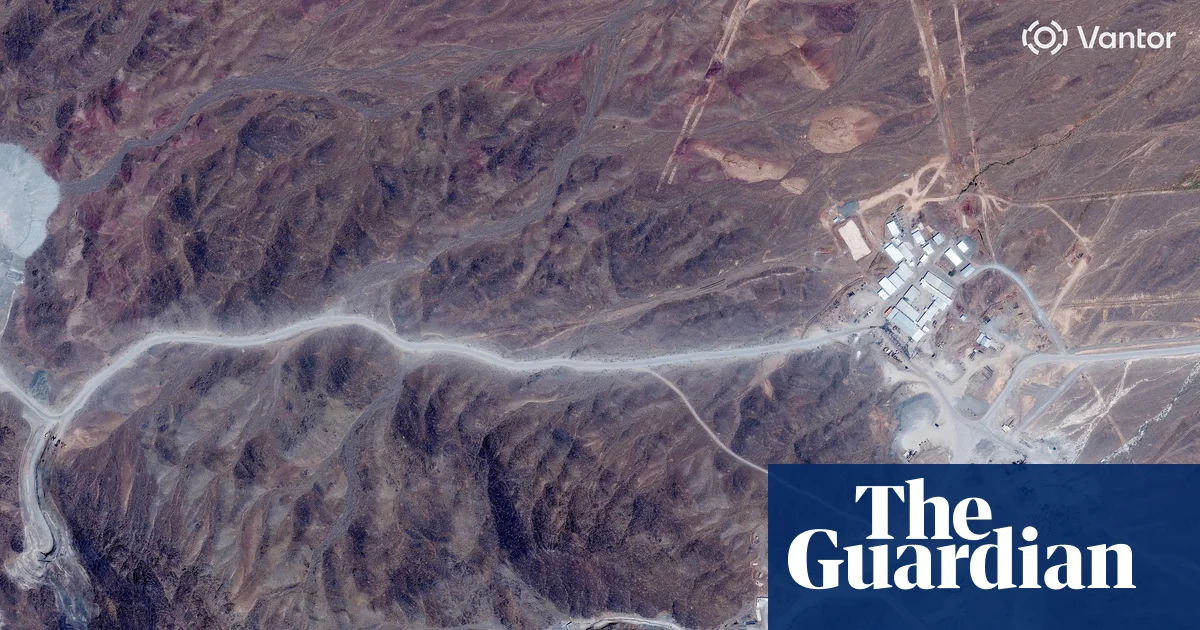
Tensions between the United States and Iran have escalated once again as the conflict enters a period of heightened volatility. Following a breakdown in the stability achieved during earlier ceasefires, the American administration has pivoted its focus back to Iran’s nuclear infrastructure. Specifically, Donald Trump has signaled a renewed willingness to authorize military action against Iranian nuclear sites, putting the spotlight on a secretive and heavily fortified facility known as Pickaxe Mountain.
What happened
In recent statements, the U.S. president reaffirmed his administration’s commitment to preventing Iran from developing a nuclear weapon. While current military operations have focused on maintaining maritime traffic in the Strait of Hormuz, the rhetoric has shifted toward more strategic, high-value targets. Trump specifically identified Pickaxe Mountain—known in Iran as Kuh-e Kolang Gaz La—as a site of concern, indicating that the military may target the area with heavy strikes in the near future.
Pickaxe Mountain is a subterranean complex situated approximately 220 kilometers south of Tehran. It sits only two kilometers away from the well-known Natanz nuclear facility, which has been the site of numerous conflicts and acts of sabotage over the last several years. According to intelligence reports and nuclear experts, the facility at Pickaxe Mountain is buried nearly 100 meters beneath the earth, making it one of the most protected sites in Iran’s nuclear network.
Context
The origins of the Pickaxe Mountain facility trace back to 2020. Following a major explosion and alleged sabotage at the surface-level Natanz plant, Iranian officials announced a shift in their strategy. Ali Akbar Salehi, who then led Iran’s nuclear program, stated that the country would begin constructing a more advanced and secure hall deep within the nearby mountains to house its centrifuge operations. These machines are essential for uranium enrichment, a process critical for both civilian nuclear energy and potential weaponization.
International observers have kept a close watch on the site’s development. Rafael Grossi, head of the International Atomic Energy Agency (IAEA), previously noted that Iran’s move toward underground facilities was a systematic effort to protect its most sensitive operations from aerial bombardment. Satellite imagery analyzed by various think tanks, including the Institute for Science and International Security (ISIS), reveals that the site features multiple tunnel entrances and a recently completed security perimeter. Despite being located near previously bombed areas, the specific facility inside Pickaxe Mountain reportedly avoided damage during the military strikes that occurred in 2025 and 2026.
Why it matters
The focus on Pickaxe Mountain highlights the growing difficulty of using conventional military force to halt nuclear proliferation. Because the facility is located so deep underground, it is remarkably resilient to standard airstrikes. Recent satellite data suggests that Iranian engineers have been “hardening” the tunnel entrances, using backfilling techniques to limit access and protect the interior from penetrating munitions.
For military planners, the depth of the complex poses a significant challenge. Experts suggest that only the most advanced “bunker buster” bombs would have a chance of reaching the facility’s core. Furthermore, the move to these deep-earth sites represents a long-term strategic shift for Iran, as it seeks to create a “sanctuary” for its nuclear technology that is immune to external interference. As the U.S. administration considers its next steps, the standoff at Pickaxe Mountain serves as a symbol of the enduring and complex struggle over nuclear sovereignty and regional security.