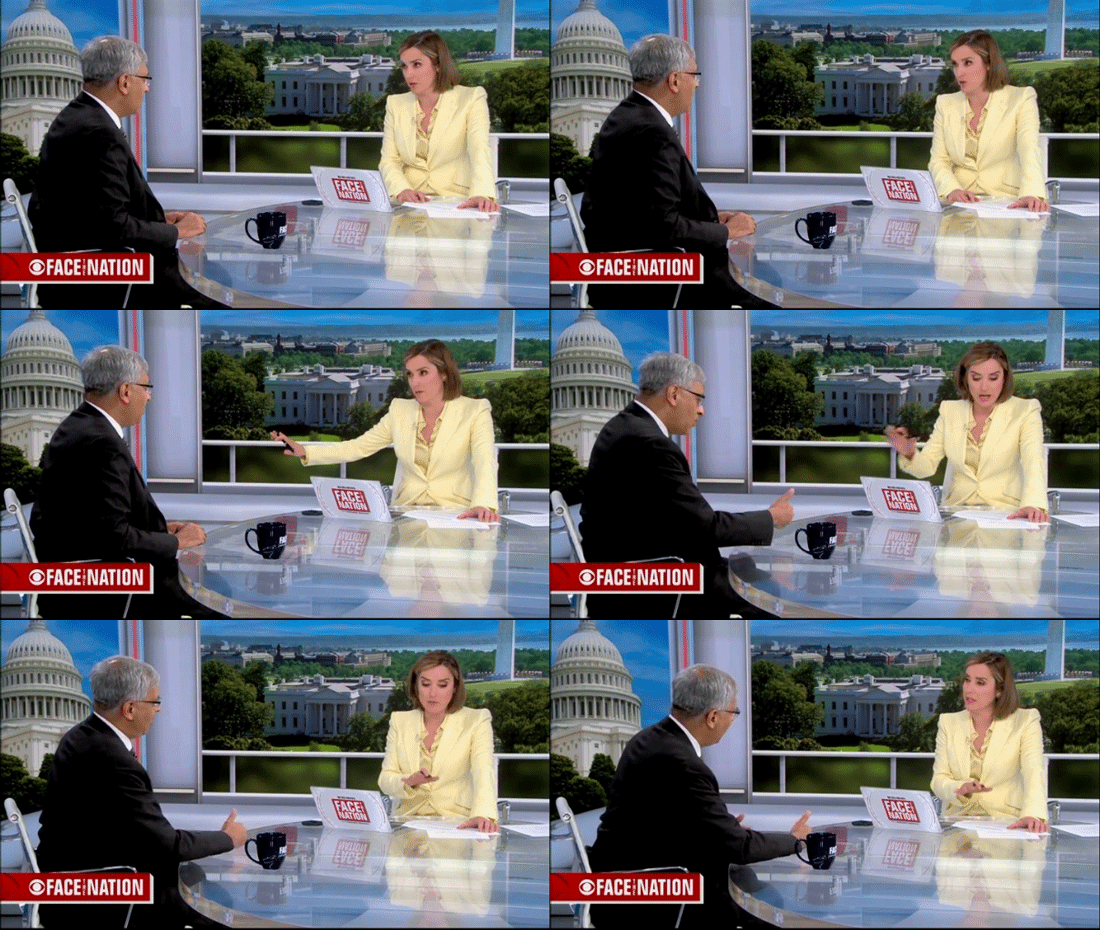
The Director of the National Institutes of Health (NIH), Dr. Jay Bhattacharya, recently engaged in a heated debate with CBS host Margaret Brennan over the erosion of public confidence in health institutions. During an appearance on “Face the Nation,” the two clashed over whether government policy decisions or media-driven misinformation is the primary catalyst for the current state of public skepticism.
What happened
The confrontation began when Brennan questioned the NIH director—who is also currently serving as the acting head of the Centers for Disease Control and Prevention (CDC)—about a violent incident at the CDC’s Georgia headquarters in 2025. The suspect in that shooting was reportedly motivated by a fixation on COVID-19 vaccines. Brennan used the incident to ask Bhattacharya if the current administration was doing enough to combat vaccine misinformation.
Bhattacharya responded by shifting the focus away from the shooter’s motivations and toward the institutional failures he believes caused the public to turn away from official health guidance. He argued that the loss of trust was fueled by a “single point of view” promoted by major media networks, including CBS, during the pandemic. He specifically cited the long-term harm caused by school closures as a major factor in the public’s growing resentment.
Brennan quickly pushed back against the director’s narrative, defending her program’s coverage of the pandemic and dismissing his line of reasoning as “not a productive line of claims.” The tension escalated as Brennan pointed toward officials from the Trump administration as the source of misinformation, while Bhattacharya pointed to the mandates and closures that occurred under President Joe Biden.
Context
Dr. Jay Bhattacharya has been a prominent and often controversial figure in the world of public health, known for his early opposition to broad lockdowns and school closures. His appointment to lead the NIH and CDC represents a significant shift in the leadership style of these organizations compared to the early pandemic years.
The exchange on “Face the Nation” reflects a broader, ongoing debate about the handling of the COVID-19 crisis. While media outlets and some health officials focus on the dangers of “misinformation” spread via social media and political rhetoric, others, like Bhattacharya, argue that the government’s own mandates—including mask requirements and vaccine requirements—damaged the credibility of health agencies.
The White House also weighed in on the interview, issuing a statement through spokesperson Kush Desai. The administration criticized the media for its role in supporting “unscientific lockdowns” and for what it described as a lack of contrition regarding the censorship of dissenting scientific opinions during the pandemic.
Why it matters
This clash highlights a fundamental disagreement over how to restore the relationship between the American public and its health institutions. If the leaders of the nation’s top health agencies and the journalists who cover them cannot agree on what went wrong during the pandemic, creating a unified strategy for future health crises will be difficult.
The debate also underscores the lasting social and political consequences of pandemic-era policies. Issues such as school closures and vaccine mandates are no longer just medical discussions; they have become central to the debate over institutional accountability. As the public continues to grapple with the aftermath of these decisions, the transparency and humility of both the media and government officials will likely remain under intense scrutiny. This interview suggests that the path to restoring trust is still obstructed by deep-seated disagreements over who bears the responsibility for the current state of public distrust.