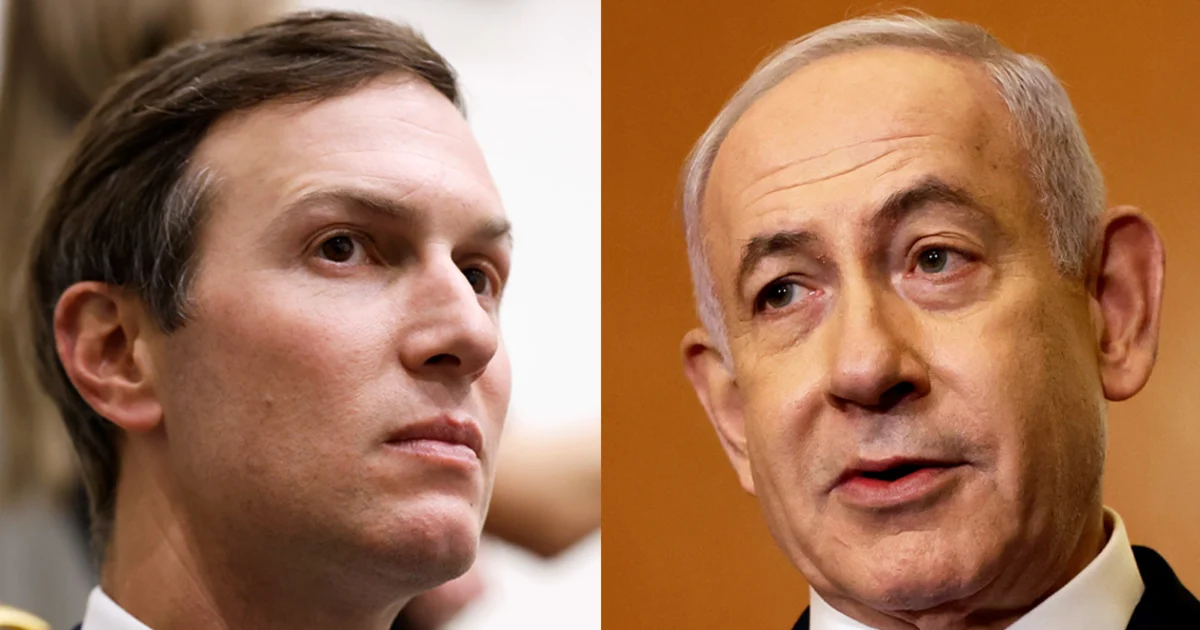
In a significant development for diplomatic efforts regarding the future of the Gaza Strip, Israeli Prime Minister Benjamin Netanyahu and Jared Kushner, representing Donald Trump’s Board of Peace, have reached an agreement on a framework for the “demilitarization” of Hamas. According to a senior Israeli official, the two leaders concluded that the process should begin with the handover of Hamas’ weaponry under the direct supervision of a United States military general.
What happened
The agreement was the result of an extensive meeting involving high-profile international figures, including U.S. Ambassador to Israel Mike Huckabee, former British Prime Minister Tony Blair, and Trump’s Gaza envoy Nickolay Mladenov. This meeting follows a rare series of discussions between Trump’s peace team and Hamas leadership as part of an ongoing effort to revitalize a regional peace plan.
The Prime Minister’s Office confirmed that the discussions resulted in the establishment of two specialized working groups. The first will focus on the logistics of disarmament and demilitarization, while the second will address urgent humanitarian and infrastructure needs, such as water sanitation and environmental health. A core tenet of the agreement is the sequence of events: both the Board of Peace and the Israeli government insist that Hamas must be fully disarmed before any large-scale reconstruction of the Gaza Strip can commence.
Context
This diplomatic push arrives at a time of friction between the United States and Israel regarding the long-term roadmap for the Palestinian enclave. While Trump’s 15-point plan previously called for an Israeli withdrawal alongside Hamas’ disarmament, Netanyahu had initially rejected the proposal. The Prime Minister has consistently maintained that the Israel Defense Forces (IDF) will not retreat until a “genuine” disarmament is verified, and he reiterated during this meeting that the IDF will continue to operate as necessary to protect Israeli citizens and military personnel.
Hamas has signaled a conditional willingness to lay down arms, but their demands remain at odds with the current Israeli administration. The group has called for an immediate cessation of strikes and an Israeli military withdrawal. Furthermore, Hamas has previously stated that the surrender of its heavy weaponry would only occur in exchange for international recognition of a Palestinian state—a condition that the Netanyahu government has categorically rejected.
Why it matters
The involvement of a U.S. military general marks a potential shift in how the international community engages with security oversight in Gaza. By placing an American officer in a supervisory role, the plan attempts to provide a layer of neutral verification that could satisfy Israeli security concerns while facilitating a path toward stability.
However, the “disarmament-first” requirement remains a significant hurdle. With Gaza facing a mounting humanitarian crisis, the delay of reconstruction efforts until full demilitarization is achieved could exacerbate already dire living conditions. Furthermore, Netanyahu is facing intense domestic political pressure. As Israeli elections approach in October, the Prime Minister must balance these international negotiations with the demands of his far-right coalition partners, who remain skeptical of any concessions.
The success of this new framework depends on whether the working groups can reconcile the starkly different timelines proposed by Israel and Hamas. While the agreement on U.S. oversight suggests a narrowing of the gap between the Trump-led peace initiative and the Israeli government, the path to implementation remains fraught with political and military challenges.