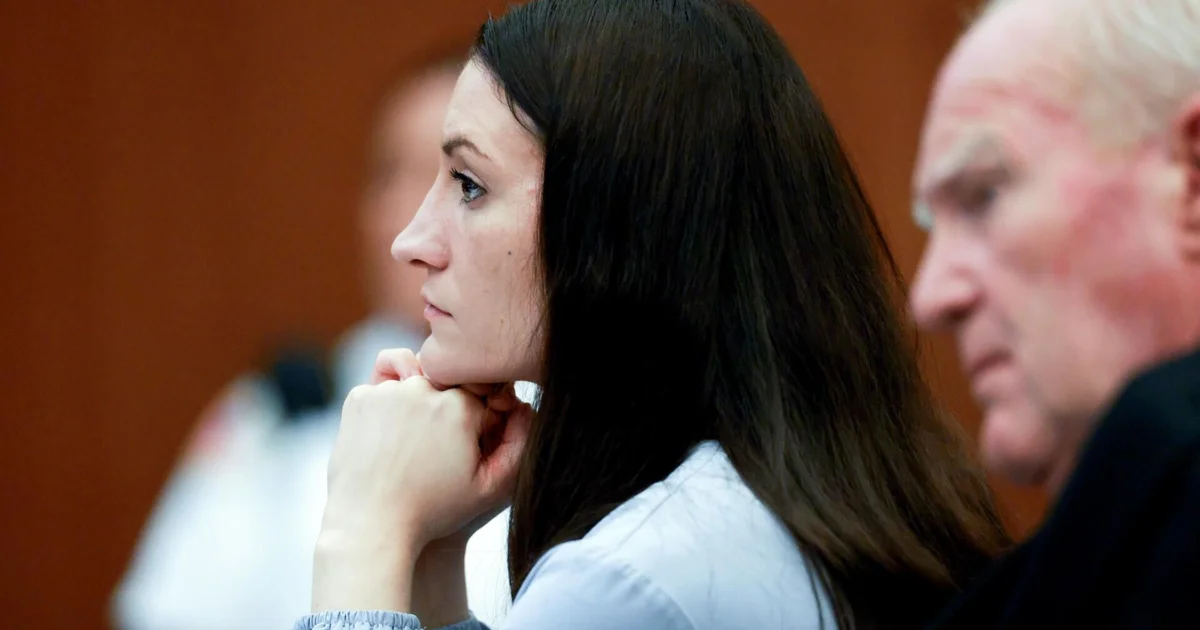
The murder trial of Lindsay Clancy resumed in a Massachusetts courtroom this week, marked by critical testimony regarding the defendant’s mental health history and a significant milestone as Clancy spent her 36th birthday in the courtroom. As the legal proceedings move forward, the focus has shifted toward the professional assessments of the medical staff who treated Clancy in the months leading up to the deaths of her three young children in January 2023.
What happened
On Tuesday, the prosecution called Rebecca Jollotta, a psychiatric nurse practitioner from South Shore Health, to the stand. Jollotta provided clinical care to Clancy for several weeks starting in November 2022. Much of the day’s testimony revolved around the specific medications Clancy was prescribed and her observable behavior during their sessions.
A pivotal moment occurred during redirect questioning by Assistant District Attorney Jennifer Sprague. When asked directly if she had ever developed concerns that Clancy was experiencing postpartum psychosis during their time together, Jollotta answered that she had not. This testimony is a strategic win for the prosecution, which maintains that the killings were planned and not the result of a sudden psychotic break.
Defense attorney Kevin Reddington countered this by highlighting the concerns of Clancy’s then-husband, Patrick Clancy. Reddington questioned Jollotta about Patrick’s involvement in his wife’s treatment, noting that he had attended appointments and expressed worry that the heavy rotation of medications was significantly altering her personality. Although Jollotta testified she did not recall Patrick describing his wife as being turned into a “zombie,” the defense continues to lean heavily on the argument that Clancy was over-medicated and suffering from severe postpartum depression and bipolar disorder.
Context
The trial stems from the tragic events of January 24, 2023, in Duxbury, Massachusetts. On that evening, 5-year-old Cora, 3-year-old Dawson, and 8-month-old Callan Clancy were killed. Lindsay Clancy has pleaded not guilty to charges of first-degree murder.
The defense’s core strategy is to prove that Clancy was not criminally responsible for her actions due to a lack of mental capacity. They argue she was in the grips of postpartum psychosis, a rare and severe mental health emergency. Conversely, the state is attempting to build a narrative of premeditation, using medical testimony like Jollotta’s to suggest that while Clancy may have been struggling with depression, she did not meet the clinical criteria for psychosis in the period preceding the incident.
Since the tragedy, the family dynamic has also changed significantly. The court noted that Patrick and Lindsay Clancy have divorced, and Patrick has since remarried.
Why it matters
The Lindsay Clancy case has become a focal point for national conversations regarding maternal mental health and the legal standards for the insanity defense. The testimony of psychiatric professionals like Jollotta is crucial because it provides the jury with a clinical baseline of the defendant’s mental state before the tragedy occurred.
The conflict between the nurse’s observations and the defense’s claims of psychosis underscores the difficulty of diagnosing and treating complex postpartum mood disorders. Furthermore, the defense’s focus on medication management raises questions about the healthcare system’s approach to treating postpartum patients who do not respond to initial interventions.
As Judge William Sullivan noted that the trial is currently ahead of schedule, the coming days will likely bring more expert testimony. The jury’s eventual decision will hinge on whether they view the tragedy as a calculated criminal act or the result of a profound and debilitating mental health crisis.