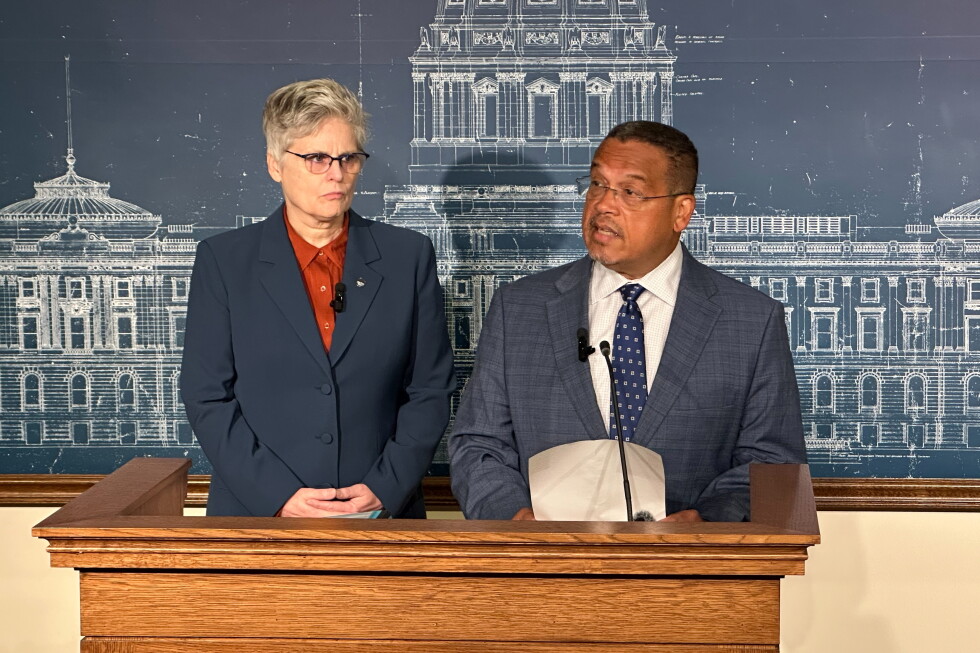
Minnesota Attorney General Keith Ellison has initiated a federal lawsuit against Texas Governor Greg Abbott, escalating a legal standoff over a federal immigration agent charged with violent misconduct. The lawsuit seeks to compel the extradition of Christian Castro, an Immigration and Customs Enforcement (ICE) officer who is currently being held in Texas but faces serious criminal charges in Minneapolis. The case highlights a rare and high-stakes legal confrontation between state executives over the accountability of federal law enforcement officers.
What happened
The charges against 52-year-old Christian Castro stem from a January 14, 2026, immigration enforcement operation in Minneapolis. According to prosecutors, Castro fired his weapon through the front door of a home, wounding a man named Julio Cesar Sosa-Celis. The bullet reportedly traveled through the victim’s leg and lodged in the wall of a child’s bedroom. Following the shooting, Castro is accused of fabricating a story to justify his actions, claiming that he and his fellow officers were under attack by individuals wielding a snow shovel and a broom handle.
Castro was eventually apprehended in Cameron County, Texas, in May 2026. He faces charges in Minnesota for assault and filing a false police report. However, despite a formal extradition request from Minnesota Governor Tim Walz, Governor Abbott has not signed the necessary warrant to transfer Castro back to Minnesota to face trial. Attorney General Ellison warns that under Texas law, Castro could be released from custody as early as late August if the extradition remains stalled. There are significant concerns that if released, Castro will flee across the nearby border into Mexico to avoid prosecution.
Context
This legal battle is set against a backdrop of intense political and jurisdictional tension. The relationship between Minnesota’s Democratic leadership and the Republican administration in Texas has grown increasingly strained, particularly regarding federal immigration policy and state-level oversight of federal agents. Minnesota officials have argued that federal officers must be held accountable to state laws when their on-duty conduct involves criminal violence against civilians.
Governor Abbott has justified his refusal to cooperate by pointing to unrelated investigations into government social service fraud in Minnesota. These investigations have been cited by the Trump administration as a justification for the very immigration crackdowns that led to the shooting in question. Meanwhile, Ellison’s office has presented evidence from jailhouse phone calls suggesting that Castro is already making plans to relocate to Mexico, where he intends to marry and purchase property.
Why it matters
The outcome of this lawsuit could have far-reaching implications for the American legal system and the principle of interstate cooperation. Usually, extradition between states is a routine administrative process; however, this case demonstrates how political friction can disrupt the standard mechanisms of justice. If a federal judge does not compel the extradition, it may create a loophole where federal agents charged with state-level crimes can avoid trial by seeking refuge in states with sympathetic political leadership.
Furthermore, the case touches on the complexities of international law. If Castro successfully flees to Mexico, the process of bringing him back to the United States would become significantly more difficult and time-consuming, requiring the intervention of the U.S. Department of Justice and potentially years of diplomatic negotiations. For the victim and the state of Minnesota, the lawsuit represents a critical attempt to ensure that law enforcement officers are not placed above the law, regardless of their federal status or the political climate.