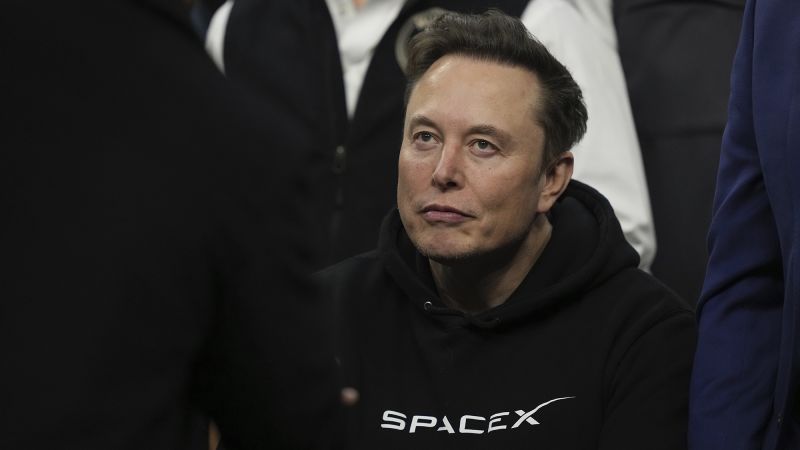
Elon Musk has announced an ambitious new project for his artificial intelligence platform, Grok Imagine, aiming to disrupt the traditional film industry. Following the recent release of a high-profile Hollywood adaptation of Homer’s The Odyssey, Musk revealed that his AI technology will produce its own full-length version of the ancient Greek epic. The billionaire entrepreneur claims the project will prioritize historical authenticity, directly challenging contemporary cinematic interpretations of classical literature.
What happened
Taking to his social media platform X, Elon Musk informed his followers that Grok Imagine is currently being leveraged to develop a feature-length motion picture based on The Odyssey. According to Musk, the project is slated for completion before the end of the current year. He emphasized that the AI-driven production would remain “historically accurate” and stay faithful to the original artistic vision of Homer.
To demonstrate the current capabilities of the technology, Musk shared a three-minute teaser clip depicting an interaction between the legendary hero Odysseus and the nymph Calypso. The announcement came shortly after a discussion on the platform regarding the feasibility of a high-budget, traditionally filmed adaptation. While some users suggested Musk should fund a live-action version directed by Mel Gibson—featuring authentic period ships and dialogue in Homeric Greek—Musk appears to be doubling down on the efficiency and control offered by generative AI.
Context
The timing of Musk’s announcement is not accidental. It follows the global theatrical release of a new Odyssey blockbuster directed by Christopher Nolan. Despite the film’s massive commercial success—earning over $264 million in its opening weekend—Musk has been a vocal critic of the production. He has specifically targeted Nolan’s creative choices, accusing the director of compromising the source material to adhere to modern social standards.
Musk’s grievances center largely on casting decisions, particularly the choice of Black actress Lupita Nyong’o to play Helen of Troy. The Tesla CEO has used harsh language to describe Nolan’s work, suggesting that the director prioritized industry accolades over historical fidelity. This public feud highlights Musk’s ongoing dissatisfaction with “woke” narratives in mainstream entertainment, a sentiment he has frequently shared with his millions of followers.
Why it matters
The move to create a full-length AI film marks a significant milestone in the evolution of generative media. While AI has been used for short clips and visual effects, the production of a coherent, feature-length narrative remains a formidable technical challenge. If successful, Musk’s project could signal a shift in how content is produced, allowing individuals or smaller entities to bypass the traditional Hollywood studio system.
Furthermore, this project underscores the growing ideological divide in cultural storytelling. By framing the Grok version of The Odyssey as the “historically accurate” alternative to a Hollywood production, Musk is positioning AI as a tool for cultural preservation—or at least a tool for creators who feel alienated by contemporary industry trends. As AI continues to integrate into the creative arts, the debate over “truth” in adaptation versus artistic license in casting and direction is likely to intensify. Whether an AI can capture the nuance and emotional depth of a 3,000-year-old poem remains to be seen, but the tech mogul is clearly betting on a digital future for the classics.