Despite a historic debut on the public markets, Elon Musk’s aerospace giant, SpaceX, has experienced a volatile first month of trading that has seen its market capitalization plummet by trillions of dollars. However, the downward trend in the space sector has not slowed Musk’s ambitions elsewhere. As SpaceX grapples with a significant market correction, the billionaire entrepreneur is reportedly shifting his focus toward securing a massive new capital injection for his infrastructure venture, The Boring Company.
What happened
In the weeks following its high-profile initial public offering, SpaceX has seen its valuation undergo a staggering contraction. After hitting an all-time high of $225.64 per share in mid-June—which pushed the company’s market cap to approximately $3 trillion—the stock has faced a sharp decline. Closing recently at a record low of $113.50, the company has effectively lost half of its peak value.
This $1.5 trillion wipeout is particularly notable because the lost value alone exceeds the entire market capitalization of Tesla, Musk’s electric vehicle company, which currently sits around $1.2 trillion. Despite this unprecedented evaporation of equity, Musk is moving forward with plans to raise $4 billion for The Boring Company. This new funding round is expected to value the tunneling startup at roughly $20 billion as it seeks to expand its footprint in the alternative transportation sector.
Context
The Boring Company began as an internal project at SpaceX before being established as an independent entity in 2018. Its primary mission is to revolutionize urban transit through high-speed underground tunnels, utilizing proprietary boring machines designed to be faster and more cost-effective than traditional industry standards.
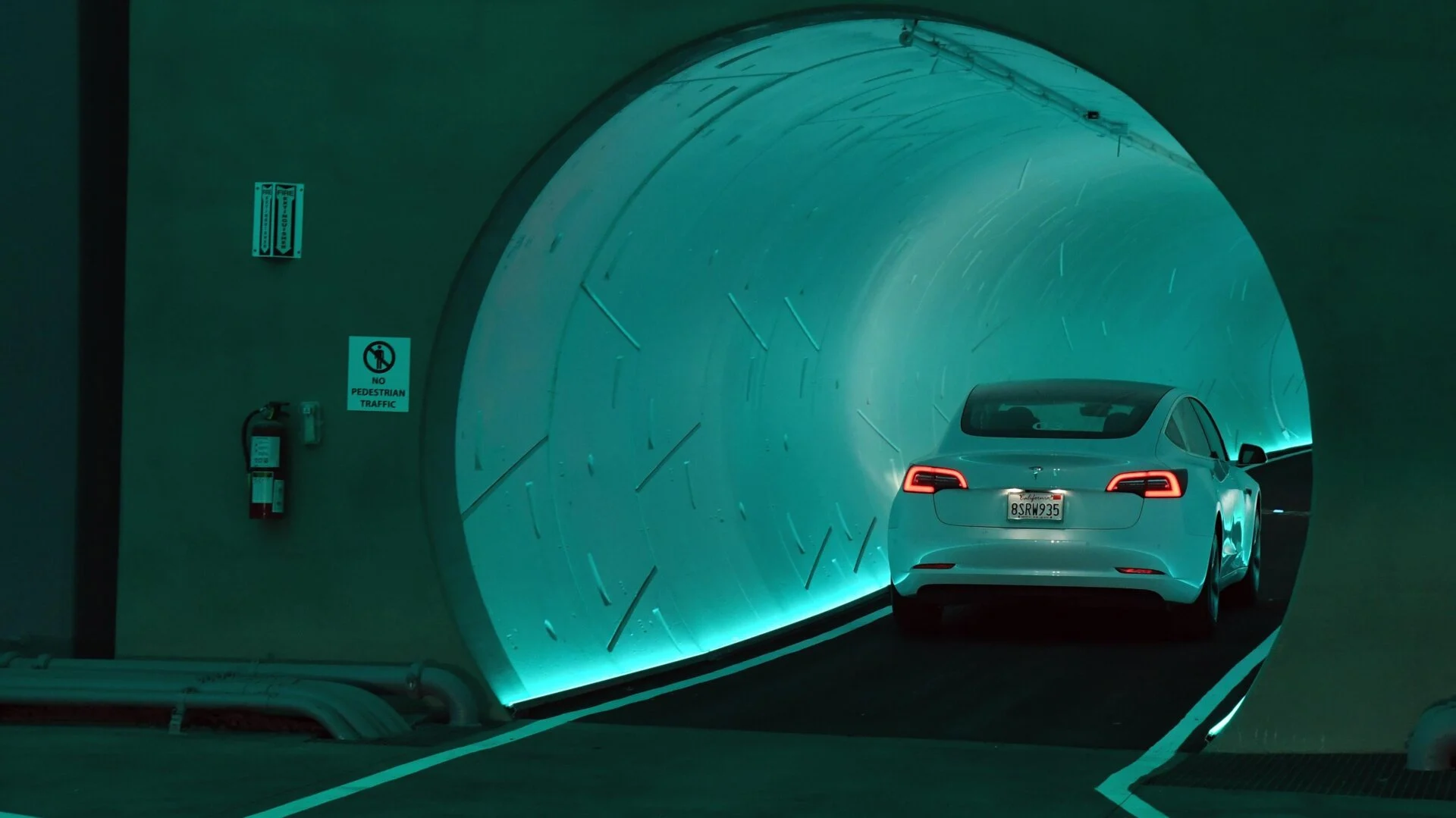
To date, the company’s most prominent success is the “Vegas Loop,” a transit system utilizing Tesla vehicles to move passengers beneath the Las Vegas Convention Center and the surrounding Strip. However, the company’s track record is mixed. While it has proposed ambitious international and domestic projects in locations like Dubai and Nashville, several high-profile domestic initiatives in cities such as Baltimore and Chicago have failed to move past the planning stages.
The current financial pressure on SpaceX also reflects a broader cooling in the technology sector. Investors have grown increasingly cautious regarding companies with heavy capital expenditures, particularly those tied to artificial intelligence. SpaceX’s IPO filing made bold claims about its future, citing a total addressable market of $28.5 trillion, with the vast majority of that revenue expected to stem from AI-related services.
Why it matters
The ability of Musk to seek billions in new funding while his flagship aerospace company loses record-breaking value highlights the unique “Musk premium” in private markets. Historically, investors have shown a high tolerance for risk regarding Musk-led ventures, often viewing them as safe long-term bets regardless of short-term volatility. This was evidenced by the complex financial maneuvers involving X (formerly Twitter), xAI, and SpaceX, where investors eventually saw pathways to profit despite initial losses.
However, the upcoming weeks will be a critical test for SpaceX and the broader Musk ecosystem. The company is set to report its first quarterly results as a public entity next week. If the earnings report fails to justify the company’s massive AI-focused valuation, the stock’s decline could accelerate, potentially complicating fundraising efforts for secondary ventures like The Boring Company. For now, the focus remains on whether Musk can convince the market that his vision for an AI-driven, multi-trillion-dollar space economy is a reality rather than an overestimation of market potential.