The conflict in Ukraine has reached a fresh peak of intensity following a devastating series of aerial strikes on Kyiv that have left at least 12 people dead and dozens more injured. As the humanitarian toll rises within Ukraine’s borders, the ripples of the “massive attack” launched by Vladimir Putin’s forces are being felt acutely by neighboring NATO members. From the Black Sea to the Arctic Circle, frontline nations are shifting from passive observation to active defensive mobilization to protect their sovereignty and critical infrastructure.
What happened
In the latest escalation of the war, Russian forces targeted the Ukrainian capital with a heavy barrage, resulting in significant civilian casualties and widespread damage. The severity of the strikes prompted Poland to immediately activate defensive measures, signaling heightened concern over potential airspace violations or spillover effects near its border.
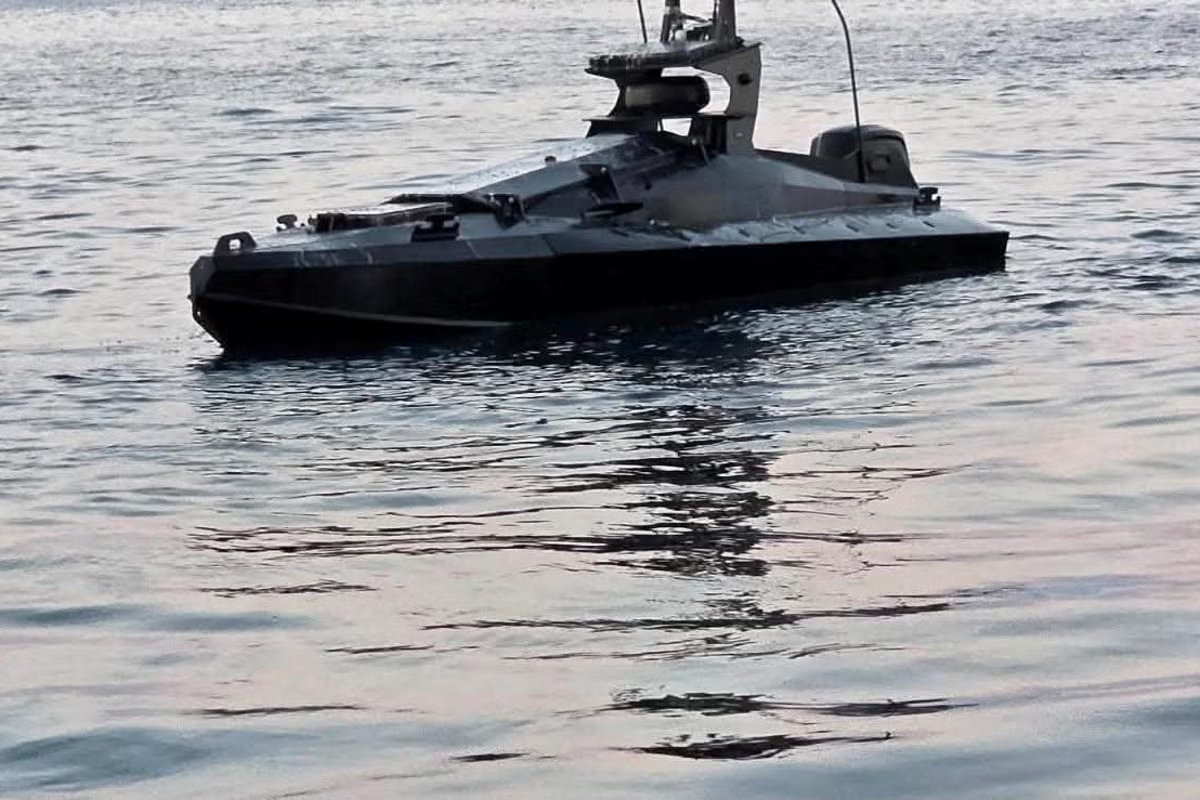
Simultaneously, Romania was forced into a direct military intervention in the Black Sea. Romanian authorities scrambled F-16 fighter jets to intercept and neutralize a marine drone discovered just a few hundred meters from the Neptun Deep gas project. The drone, which was later confirmed to be carrying explosives, was ultimately destroyed through a coordinated effort involving the aircraft and a naval vessel.
Further north, Norway announced a significant expansion of its Finnmark Brigade. This military unit, headquartered in the Arctic, is receiving an influx of resources, including an artillery battalion and specialized air defense batteries. This move marks a substantial increase in Norway’s capability to monitor and defend its 198-kilometer border with Russia.
Context
These defensive maneuvers are not isolated incidents but rather a response to a long-standing pattern of regional instability. Romania, which shares a 614-kilometer border with Ukraine, has spent the last four years dealing with stray drones and drifting sea mines that threaten vital trade and energy corridors. The Neptun Deep facility is particularly sensitive, as it is projected to make Romania the largest gas producer in the European Union by 2027.
In Norway, the expansion of the Finnmark Brigade represents the country’s first major brigade development since the end of the Cold War. The Nordic nation has dramatically increased its military investment, with current defense spending reaching an estimated 3.17 percent of its GDP. This surge in spending is driven by the immediate threat of the Ukraine war and ongoing pressure for European allies to assume a greater share of the collective NATO defense burden.
Why it matters
The recent actions by Poland, Romania, and Norway underscore a fundamental shift in European security. The destruction of an explosive-laden drone near Romanian energy infrastructure highlights how the war is no longer confined to the battlefield; it is actively threatening the energy security of the entire European Union. Had the drone struck the Neptun Deep platform, the environmental and economic consequences would have been catastrophic.
Furthermore, the militarization of the Arctic and the Black Sea suggests that NATO’s eastern and northern flanks are being permanently reshaped. The expansion of Norway’s firepower—allowing for coordinated strikes between land, sea, and air forces—indicates that NATO members are preparing for a long-term period of high-intensity deterrence. As Russia continues to utilize heavy strikes against Ukrainian urban centers, the surrounding nations are making it clear that they will no longer tolerate the encroachment of the conflict upon their own territories or vital resources.