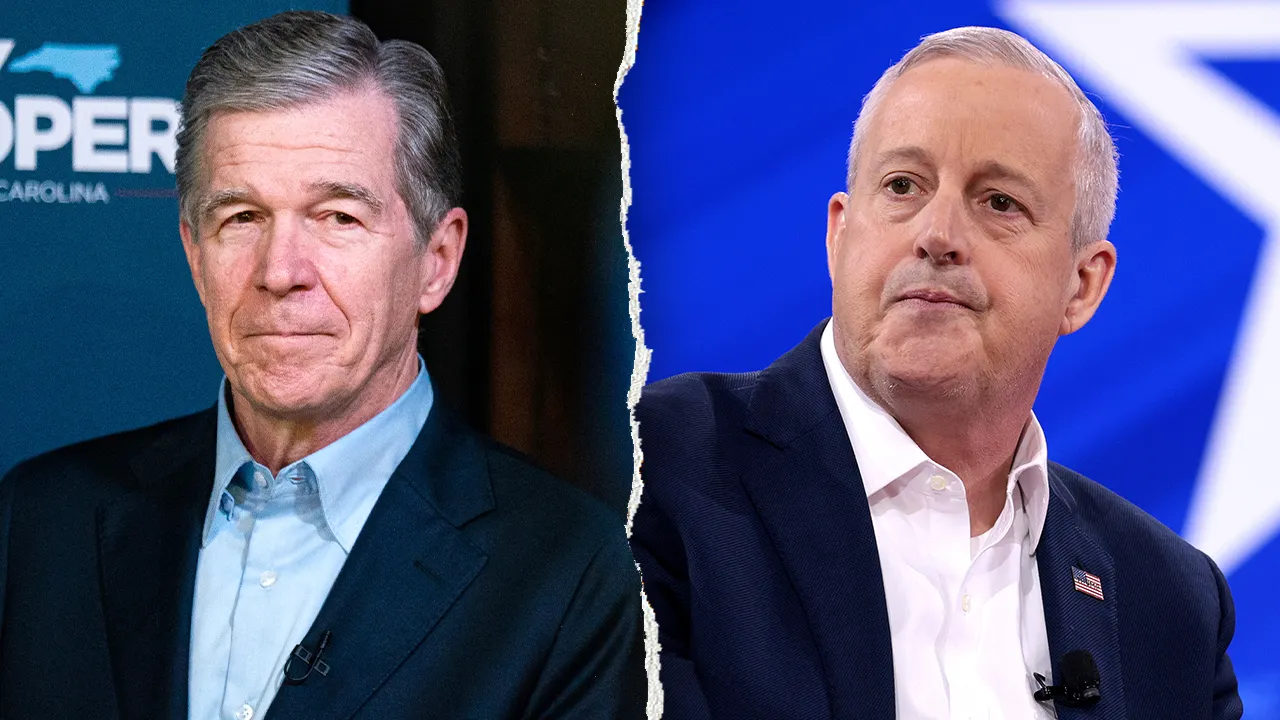
As the race for North Carolina’s open U.S. Senate seat intensifies, a recent Fox News poll indicates that former Governor Roy Cooper has established a significant early lead over Republican challenger Michael Whatley. With 100 days remaining until the midterm elections, the contest to replace retiring Republican Senator Thom Tillis is emerging as a critical battleground that could determine the balance of power in Washington.
What happened
The latest survey of North Carolina voters shows Cooper, a Democrat who served as the state’s governor from 2017 to 2025, leading Whatley 53% to 44%. This nine-point margin is bolstered by a notable enthusiasm gap between the two parties. According to the data, 58% of Democrats describe themselves as extremely motivated to vote, compared to 50% of Republicans. Among those who are most engaged in the election cycle, Cooper’s lead expands even further, reaching a 15-point advantage.
Cooper’s coalition is built on strong performances across several key demographics. He maintains a commanding lead among independent voters, moderates, women, and those under the age of 30. Perhaps most concerning for the Republican camp is Cooper’s ability to siphon off nearly 20% of support from non-MAGA Republicans and self-identified conservatives.
In contrast, Whatley, the former chairman of the Republican National Committee, finds his strongest support among rural voters, White evangelical Christians, and those without a college degree. While he remains competitive, the poll suggests his base is more motivated by opposition to the Democratic candidate than by personal affinity for his platform. Only 52% of Whatley’s supporters say they are voting specifically for him, while a significant 46% admit their vote is primarily a move against Cooper. Conversely, 84% of Cooper’s supporters say their vote is a positive endorsement of his candidacy.
Context
The political landscape in North Carolina is currently defined by a “toss-up” environment, reflecting a broader national trend where control of both the House and Senate remains uncertain. The race features two high-profile figures with deep roots in their respective parties. Cooper brings the name recognition of a two-term governor, while Whatley carries the weight of his former leadership role within the national GOP.
A significant factor complicating the race for Whatley is the influence of Donald Trump. The former president’s favorability in North Carolina has dipped significantly, currently sitting at 18 points underwater (40% favorable vs. 58% unfavorable). Whatley’s close association with Trump appears to be a double-edged sword; nearly half of all voters expressed concern over his ties to the former president, including a significant portion of moderates and independents who are essential for a statewide victory.
While voters expressed some concern regarding Cooper’s connection to the Democratic establishment, those worries appear more confined to partisan lines. Only 30% of independents and moderates shared those concerns, compared to the much wider anxiety regarding Whatley’s alignment with the MAGA movement.
Why it matters
North Carolina has traditionally been a “purple” state where Republicans often hold a slight edge in statewide contests. However, this poll suggests a potential shift in the current cycle. If Cooper maintains his lead among independents and continues to pull support from moderate Republicans, it could signal a difficult path forward for the GOP in a state they have historically defended successfully.
The “bleeding” of non-MAGA Republicans is the most pressing issue for the Whatley campaign. To bridge the current nine-point gap, political analysts suggest Whatley must find a way to appeal to disaffected, less partisan voters who are currently leaning toward the former governor.
Despite the current lead, the race remains fluid. Approximately 20% of voters indicated they could still change their minds before Election Day. With the national spotlight focused on a handful of key Senate seats, the results in North Carolina will likely serve as a bellwether for the political direction of the country as the midterm elections approach.