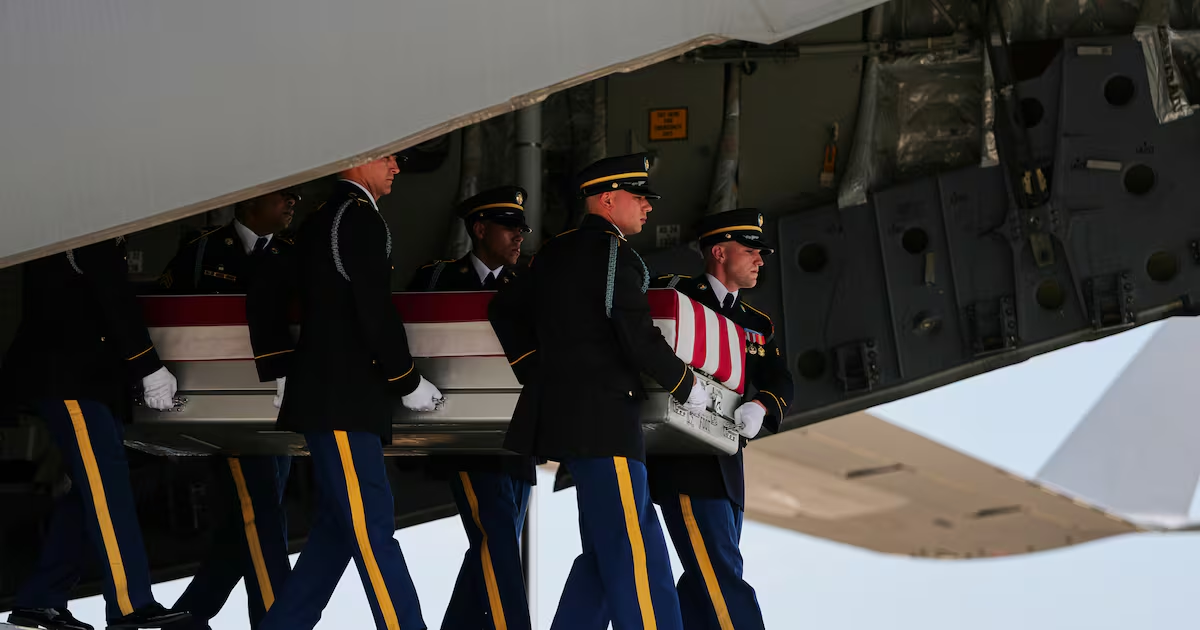
The U.S. Department of Defense has officially adjusted how it tracks casualties resulting from recent hostilities with Iran. Following the formal conclusion of “Operation Epic Fury”—the military’s designated name for combat actions against Tehran—the Pentagon has moved several recent deaths and injuries into a new administrative category. This shift in the Defense Casualty Analysis System (DCAS) reflects a transition in how the military characterizes ongoing friction in the Middle East, even as sporadic violence continues to claim American lives.
What happened
According to the Pentagon, the official mission known as Operation Epic Fury has reached its conclusion. As a result, officials have established a separate category within the DCAS titled “Overseas Operations.” This new designation now houses the records for four soldiers killed and dozens of others wounded during the most recent exchanges of fire with Iranian-backed forces.
Previously, these casualties were listed under the specific Iran conflict tally. By moving them, the Pentagon effectively separates the costs of the formal mission from more recent “renewed” fighting. Despite this administrative separation, the human cost remains significant; the combined total of wounded personnel across both Operation Epic Fury and the new “Overseas Operations” category currently stands at 642 troops.
Defense officials clarified on Tuesday that the change was a matter of internal classification rather than an attempt to obscure the numbers. They noted that once a formal operation is declared over, subsequent casualties must be categorized differently to maintain the integrity of historical data.
Context
The recent spike in violence follows a period of high tension in the Middle East, particularly near the Strait of Hormuz, a vital global shipping lane. Hostilities appeared to pause briefly mid-year as mediators attempted to facilitate a ceasefire and an interim deal. However, those efforts proved tenuous. By late June, Iranian-backed groups resumed strikes using ballistic missiles and drones against American interests.
The four fatalities now listed under “Overseas Operations” represent the lethal reality of these failed negotiations. Three of the soldiers were killed during a drone strike on a base in Jordan, while a fourth succumbed to injuries sustained during a ballistic missile attack on a facility in Iraq. Both attacks were attributed to Iranian-controlled proxy groups.
Despite the continued volatility, Secretary of State Marco Rubio recently suggested that the primary objectives of the formal military operation had been met. Furthermore, Defense Secretary Pete Hegseth testified before Congress regarding the financial and human costs of the conflict, which had been calculated through the end of September.
Why it matters
The reclassification of casualties is more than just a bureaucratic update; it changes the narrative of how the conflict is presented to the public and lawmakers. By closing the book on Operation Epic Fury, the administration can argue that a specific chapter of the war has ended, even if the region remains a kinetic combat zone.
Critics often view such changes with skepticism, fearing that fragmenting data across different categories makes it more difficult for the public to grasp the total scale of the conflict. The Pentagon has pushed back against these concerns, describing recent online data fluctuations as “temporary anomalies” or the result of “human error” during the transition, rather than a deliberate effort to hide the toll of the war.
As the military shifts these figures into the “Overseas Operations” bucket, it underscores a pivot toward a long-term, perhaps less-defined presence in the region. While the “Epic Fury” phase is technically over, the 642 wounded troops and the ongoing threats in Iraq and Jordan serve as a stark reminder that the confrontation with Iran is far from a closed chapter.