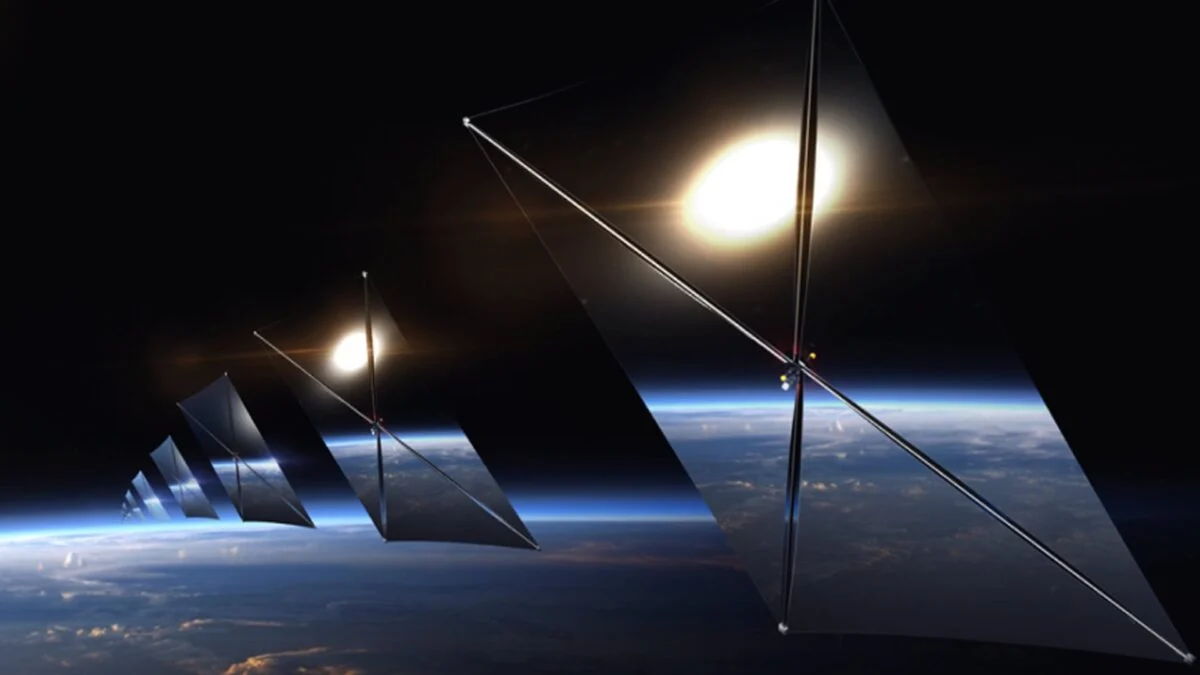
A California-based startup named Reflect Orbital is moving forward with an ambitious plan to deliver “sunlight on demand” during nighttime hours. However, the Federal Communications Commission’s (FCC) recent approval of the company’s prototype satellite has sparked a firestorm of criticism from the scientific and environmental communities. While the company envisions a future of clean energy and illuminated emergency zones, medical and astronomical experts are warning that these man-made sunbeams could cause permanent eye damage to those gazing at the night sky.
What happened
The FCC recently granted permission for Reflect Orbital to launch its inaugural prototype, dubbed Earendil-1. This satellite is designed to test a specialized 59-foot (18-meter) film reflector intended to bounce solar rays from low-Earth orbit down to specific locations on the ground. If this initial test proves successful, the company aims to deploy a massive constellation of up to 50,000 similar mirrors.
The technical specifications of the light beams have raised immediate concerns. Reflect Orbital plans to illuminate areas approximately three miles wide with an intensity ranging from 0.8 to 2.3 lux. To put that in perspective, a typical full moon on a clear night provides an illumination of only 0.05 to 0.3 lux. The proposed satellite beams would be several times brighter than the brightest natural light source in the night sky, creating a significant shift in the nocturnal environment.
Context
Reflect Orbital justifies the project as a humanitarian and environmental endeavor. According to company statements, the ability to redirect sunlight could bolster the clean-energy sector by providing solar power after dark and offer critical lighting for search-and-rescue operations or disaster relief. The company has also emphasized that it is working with the International Astronomical Union to mitigate interference with space observation.
Despite these claims, the pushback has been swift and formal. Four environmental organizations have filed a petition with the FCC to reverse the approval of the prototype. Similarly, DarkSky International has called for more rigorous environmental reviews and public accountability before such technology is allowed to proliferate. Critics argue that the private commercialization of the night sky sets a dangerous precedent, especially when the potential side effects are so severe.
Why it matters
The primary concern shared by experts is the physical safety of human vision. Looking at the reflected beam would be akin to staring directly at the sun during a solar eclipse. Because the light is redirected sunlight, it retains the intensity required to cause retinal burns. Optical engineers have warned that it is not a matter of “if” someone’s eyesight will be damaged, but “when,” particularly if thousands of these mirrors are eventually orbiting the planet.
For astronomers, the project represents a double-edged sword of disruption and physical danger. Amateur and professional astronomers often use telescopes to observe the heavens; if a telescope were accidentally pointed at one of these high-intensity mirrors, the magnification could lead to instantaneous and permanent blindness. Furthermore, the unpredictable nature of when and where these beams will appear makes it difficult for researchers to plan their observations, potentially ruining sensitive long-exposure photography of the cosmos.
As the Earendil-1 nears its launch date later this year, the tension between commercial innovation and the preservation of the natural night sky continues to mount. The mission will serve as a high-stakes test case for whether “sunlight at night” is a revolutionary utility or a hazardous form of light pollution.