The conflict between Russia and Ukraine has reached a volatile new peak in 2026, as both nations exchange heavy aerial bombardments that have resulted in significant loss of life and infrastructure damage. In what is being described as the most extensive Ukrainian drone operation of the year so far, hundreds of unmanned aerial vehicles targeted the Russian capital and surrounding regions. Simultaneously, Russian missile and drone strikes have intensified across Ukraine, leaving a trail of destruction in Kyiv and several other major provinces.
What happened
Over the weekend, Ukrainian forces deployed an estimated 822 drones in a coordinated effort to penetrate Russian airspace. According to regional authorities, approximately 600 of these aircraft were directed toward Moscow, marking one of the most substantial aerial assaults on the city since the start of the war. The strikes claimed at least seven lives within Russia, including five individuals in the southwestern Rostov region. In the Belgorod border area, a woman died when a civilian bus was hit, while an elderly man was killed during a strike in the Moscow suburbs.
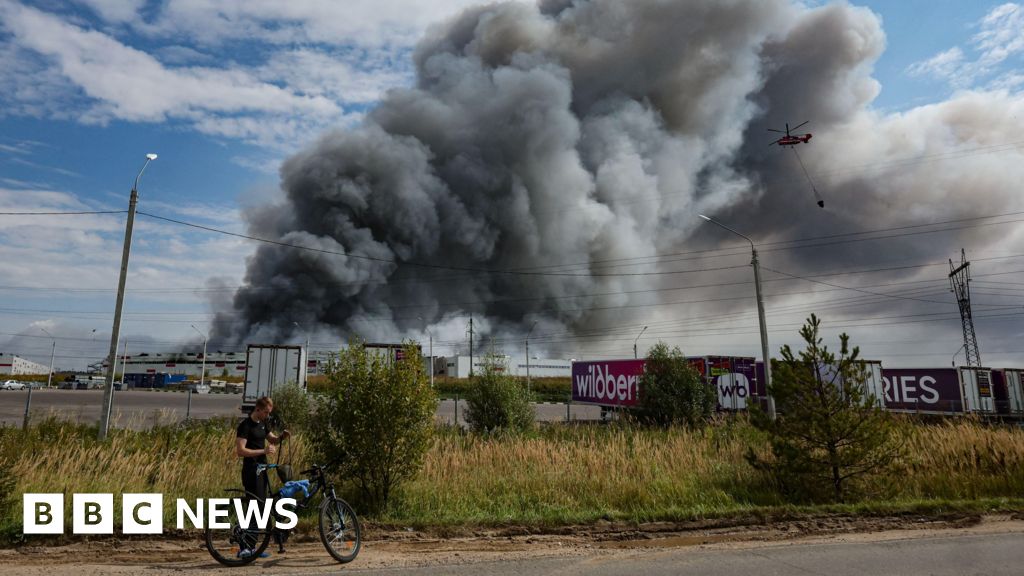
A significant focal point of the attack was a massive logistics hub in Koledino belonging to Wildberries, a prominent Russian e-commerce platform. The facility, located roughly 25 kilometers from Moscow’s center, was seen engulfed in flames as thick plumes of smoke rose into the sky.
Reciprocally, Russia launched a series of lethal strikes against Ukrainian territory. Ukrainian officials reported at least seven deaths and nearly 40 injuries. The capital city, Kyiv, was subjected to four separate air-raid alerts overnight as Russian forces targeted what they claimed were industrial sites producing missile and drone components. Outside the capital, fatalities were reported in the Zaporizhzhia, Dnipropetrovsk, Sumy, Donetsk, and Kherson regions, with civilian homes and infrastructure bearing the brunt of the impact.
Context
The targeting of Wildberries warehouses has become a recurring element of Ukraine’s strategy. Ukrainian defense officials have previously stated that these logistics centers are not merely commercial hubs but are vital to the Russian military’s supply chain, allegedly used for the distribution of tactical equipment. With this latest operation, Ukraine claims to have successfully disabled 70% of the company’s largest distribution centers.
This escalation comes at a time when both nations have significantly bolstered their long-range capabilities. While Ukraine has increasingly sought to bring the reality of the war closer to the Russian heartland through deep-state drone strikes, Russia has continued its campaign of “scorched earth” missile tactics designed to cripple the Ukrainian energy grid and defense manufacturing base.
Why it matters
The scale of these latest attacks indicates a shift toward more aggressive, high-volume drone warfare that tests the limits of modern air defense systems. For Ukraine, the ability to launch over 800 drones in a single window demonstrates a sophisticated level of domestic production and tactical planning. For Russia, the persistent strikes on Kyiv and other urban centers serve to strain civilian morale and exhaust defensive resources.
Perhaps most concerning is the mounting toll on non-combatants. Despite both Moscow and Kyiv asserting that they only target military or strategic objectives, the reality on the ground shows a different story, with residential houses and public transportation becoming accidental or intentional casualties of the escalating violence. As 2026 progresses, the frequency and intensity of these exchanges suggest that the war is moving into an even more destructive phase, with logistics and domestic stability becoming the primary targets for both sides.