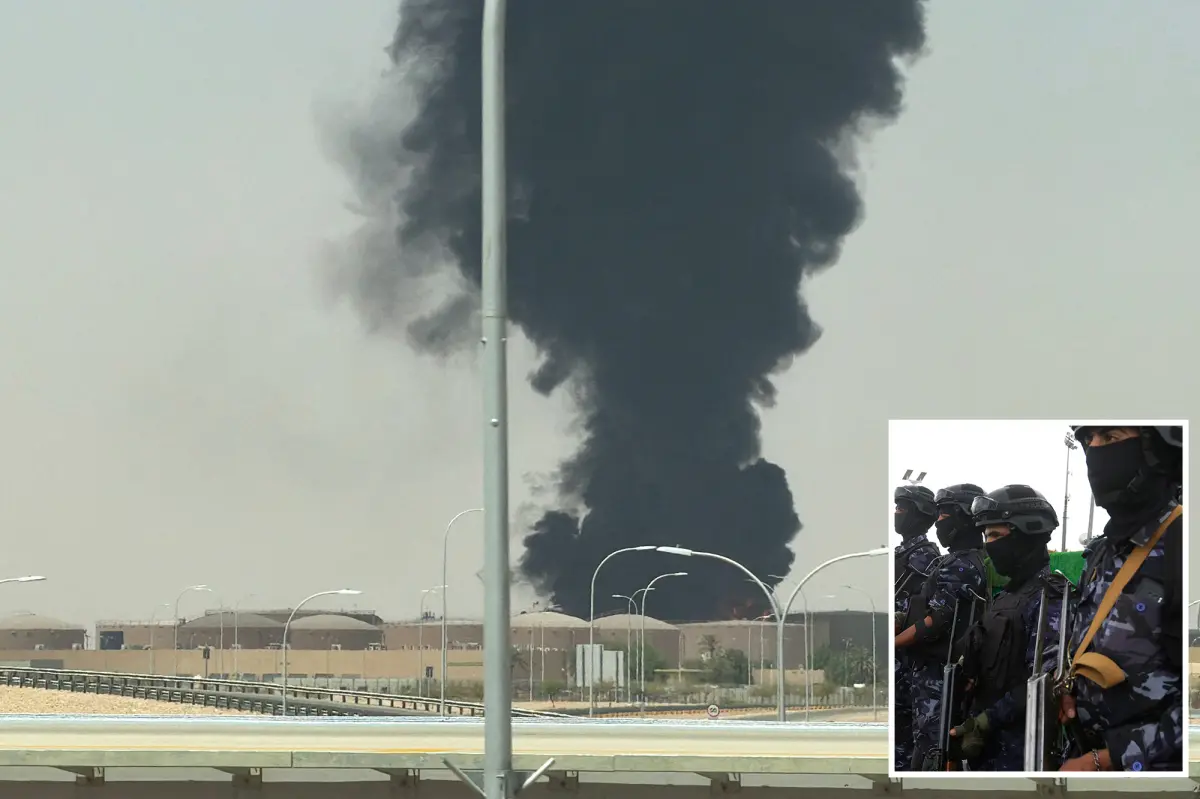
The long-standing conflict between Saudi Arabia and the Iran-backed Houthi rebels reached a critical flashpoint this weekend following a direct strike near the kingdom’s capital. As visible signs of war reached Riyadh, the global energy market reacted sharply, with crude oil prices climbing above $100 per barrel. This latest surge in violence has ignited fresh concerns that the regional struggle could expand into a broader international crisis, further destabilizing already fragile trade routes.
What happened
On Saturday, residents of Riyadh were shaken by loud explosions and the sight of dense columns of dark smoke rising near King Khalid International Airport. The incident prompted Saudi authorities to issue their first air-raid alert in the capital since the latest round of hostilities began. In response to the perceived threat, flights were grounded and the government warned of a potential aerial bombardment before eventually signaling an all-clear.
On the ground in Yemen, the situation remains equally volatile. The Houthis recently secured strategic territory along the Red Sea coast, specifically seizing the historic port city of Mokha from the Saudi-aligned Yemeni government. This capture has reportedly turned the once-vibrant trade hub into a ghost town, with local businesses shuttered and streets deserted. Meanwhile, the Houthi leadership accused Saudi forces of conducting more than two dozen air strikes against their positions within a single 24-hour period.
Context
The escalation is deeply rooted in the control of vital maritime corridors. By capturing territory along the Bab el-Mandeb Strait, the Houthis have effectively gained a stranglehold on a primary alternative route that Saudi Arabia utilizes to bypass the Strait of Hormuz. This maneuver is particularly significant given the ongoing naval standoff between the United States and Iran in the region.
Diplomatic efforts to contain the violence appear to be stalling. Reports indicate that Saudi Crown Prince Mohammed bin Salman recently sought direct military assistance from the United States, though President Trump has yet to commit to such support. The American administration is currently weighing its options at Camp David, with the President hinting at possible severe actions against the Iranian regime ahead of a scheduled diplomatic summit at the United Nations.
While the regional powers clash, the U.S. military has maintained a heavy presence in the area. Admiral Brad Cooper, commander of U.S. Central Command, recently highlighted that American forces have successfully escorted thousands of commercial vessels through the Strait of Hormuz, ensuring the flow of over a billion barrels of oil while simultaneously working to block Iranian exports.
Why it matters
The implications of this escalation extend far beyond the borders of the Middle East. The immediate impact is visible in the energy sector; Saudi Aramco has already informed its European clientele that crude shipments will be reduced next month. This supply crunch is attributed to recent Houthi attacks on the East-West pipeline, a critical piece of infrastructure for Saudi oil distribution.
Furthermore, the threat to the Bab el-Mandeb Strait endangers one of the world’s most essential shipping lanes. If the Houthis maintain control over this passage, the cost of global shipping and energy will likely remain volatile, contributing to inflationary pressures worldwide. As the rhetoric between Washington and Tehran sharpens, the risk of a direct confrontation grows, leaving the international community to wonder if the “momentum” cited by military leaders will lead toward stability or a much larger conflagration.