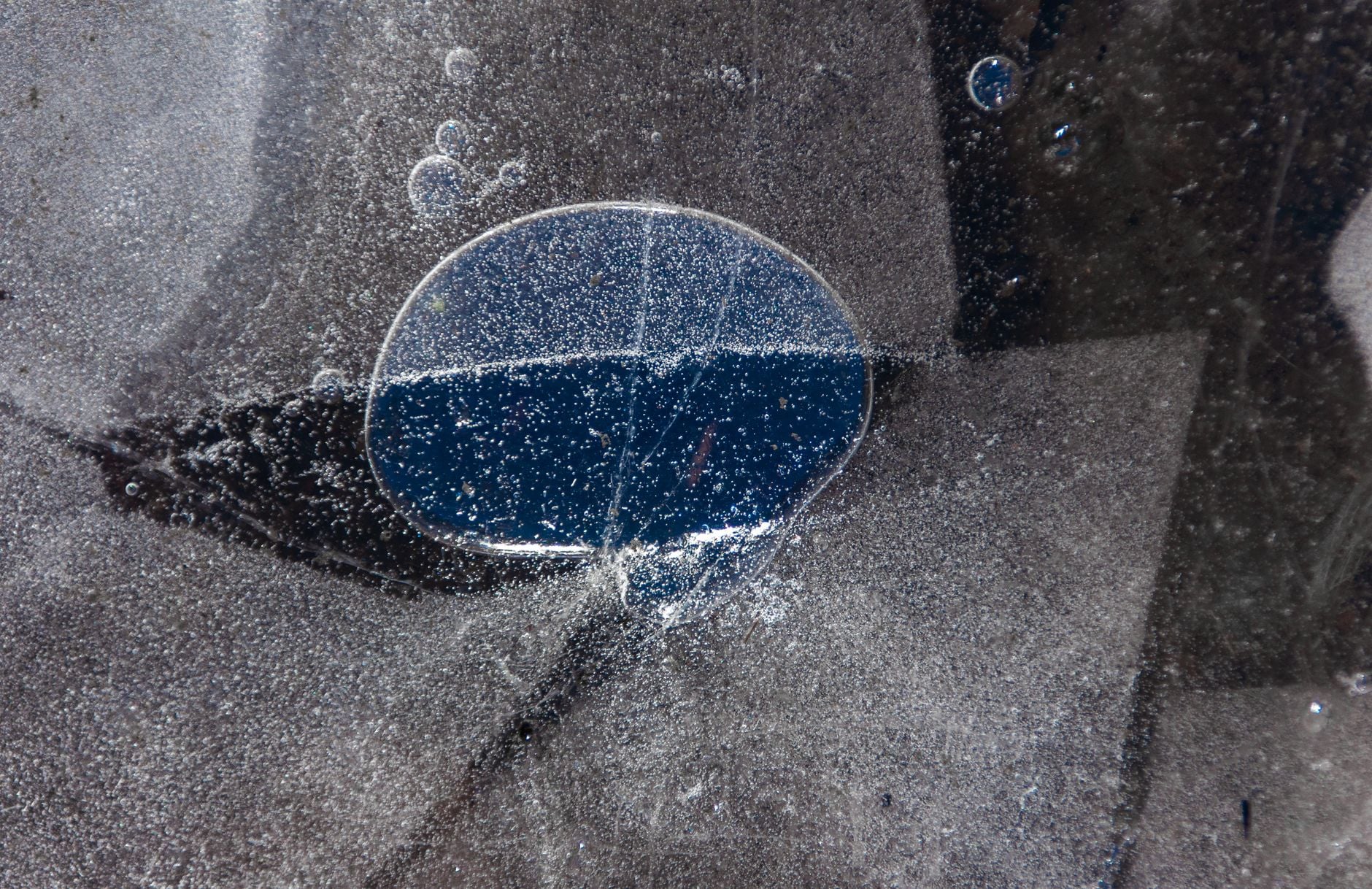
Our search for life beyond Earth is increasingly shifting away from the surfaces of rocky planets toward the frigid, icy moons of the outer solar system. Recent advancements in planetary modeling and the re-analysis of legacy spacecraft data have confirmed that at least six moons in our cosmic neighborhood likely harbor vast, liquid water oceans beneath their frozen exteriors. These “ocean worlds” represent a significant shift in our understanding of where habitable environments can exist.
What happened
Astronomers and planetary scientists have identified a growing list of moons that contain internal reservoirs of liquid water. While Earth’s water is sustained by its proximity to the Sun, these distant moons maintain liquid oceans through internal heat generated by tidal forces, radioactive decay, and the presence of chemical “antifreezes” like salts and ammonia.
The core group of ocean worlds includes Jupiter’s moons Europa, Ganymede, and Callisto, alongside Saturn’s Enceladus and Titan. In 2024, Mimas—a small moon of Saturn previously thought to be a solid block of ice—was added to the list following a sophisticated analysis of its orbital eccentricities. While none of these oceans have been seen with the naked eye, their existence is supported by a robust framework of magnetic, gravitational, and geological data collected by missions such as Cassini and Galileo.
Context
The evidence for these hidden seas varies in strength and type depending on the moon. For example, Enceladus provides the most undeniable proof; the Cassini spacecraft actually flew through and sampled plumes of water vapor and organic molecules erupting from fractures in its southern pole. This direct sampling revealed a salty, global ocean that interacts with a rocky core, a key ingredient for potential biological activity.
Europa is another high-priority target, believed to contain more than double the volume of all Earth’s oceans combined. Its young, crisscrossed surface suggests a dynamic interior where warm water occasionally reaches the crust. Ganymede, the largest moon in the solar system, likely features a complex layered interior where water is sandwiched between different phases of high-pressure ice.
The recent addition of Mimas is particularly noteworthy because the moon shows no outward signs of geological activity. Unlike Europa’s cracks or Enceladus’s geysers, Mimas is heavily cratered and appears dormant. However, re-evaluating its “wobble” in orbit suggested the presence of a relatively young ocean—potentially less than 25 million years old—hidden 20 to 30 kilometers beneath its surface. This discovery suggests that many other moons, such as those orbiting Uranus or Neptune’s Triton, may also be “stealth” ocean worlds.
Why it matters
The discovery of these subsurface oceans fundamentally changes the requirements for habitability. It suggests that a world does not need to be within a star’s “Goldilocks zone” to host liquid water, provided it has an alternative heat source like gravitational stretching from a host planet.
Furthermore, these moons offer a diverse range of chemical environments. Worlds like Europa and Enceladus, where water may sit directly on a rocky seafloor, are of particular interest to astrobiologists because these interfaces can create hydrothermal vents. On Earth, such vents support thriving ecosystems independent of sunlight.
As the list of candidate moons grows, so does the scope of upcoming space exploration. Missions like the European Space Agency’s Juice and NASA’s Europa Clipper are currently en route or in development to investigate these watery depths. If these missions find evidence of life—or even just the precursors to it—it would prove that the building blocks of biology are common throughout the universe, tucked away beneath the ice of otherwise desolate-looking moons.