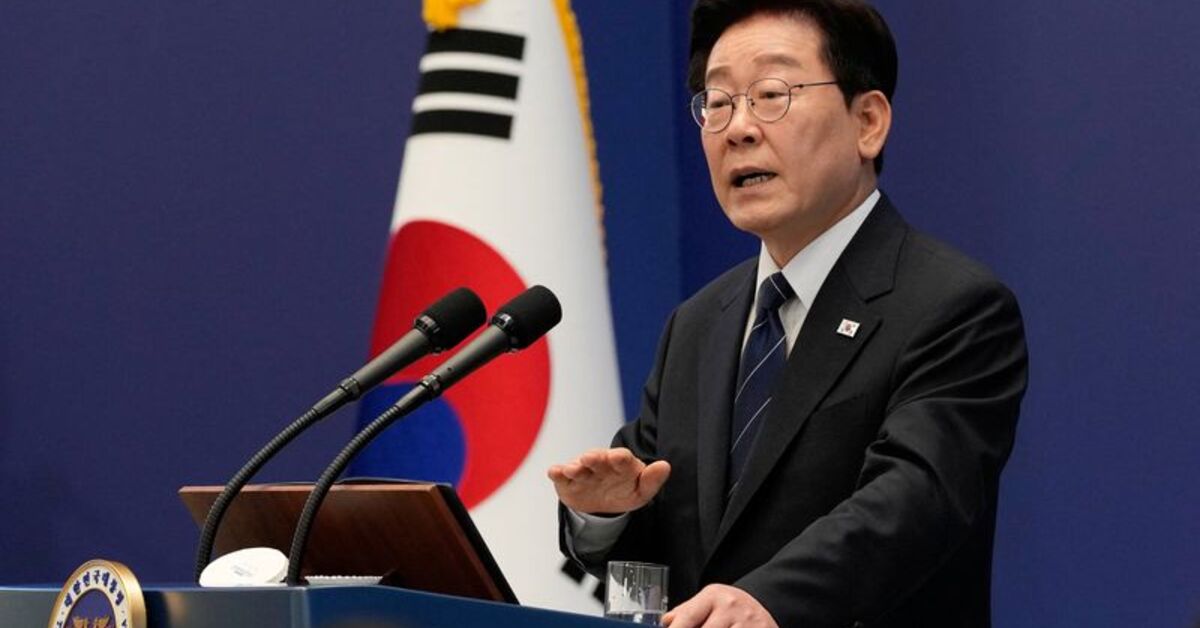
South Korean President Lee Jae Myung has officially clarified the nation’s stance regarding the volatile situation in the Middle East, signaling a preference for caution over combat. In a recent press conference, Lee stated that Seoul would not deploy military assets in any capacity that could lead to the country becoming an active participant in regional hostilities. This announcement highlights the delicate balancing act South Korea must perform as it navigates its security alliance with the United States while addressing domestic concerns and national interests.
What happened
During an address on Friday, President Lee explicitly ruled out any military movements that would draw South Korea into a hot war. He emphasized that the government has no intention of sending assets for the purpose of engagement in conflict. However, the President did reveal that the administration is currently reviewing how the nation can contribute to the “minimum” required safety standards for international navigation. This review focuses specifically on the Strait of Hormuz, a critical corridor for global energy supplies.
The administration is attempting to reconcile the need to protect commercial vessels and crude oil shipments with a public that remains largely skeptical of foreign military entanglements. While Lee was firm about avoiding war, he maintained that protecting the lives of South Korean citizens and the country’s economic lifelines remains a primary responsibility of the state.
Beyond defense, Lee addressed ongoing economic tensions with Washington. A significant sticking point remains a $350 billion investment commitment in U.S. manufacturing, which was pledged in exchange for lower tariffs on Korean goods. Lee noted that concerns over the commercial viability of these projects have slowed progress, though he expressed optimism that an agreement with the United States is within reach.
Context
South Korea’s military presence in the region is currently limited to anti-piracy operations off the coast of Somalia. While this mission is widely accepted, the U.S. government has been applying pressure on Seoul to take a more aggressive stance, particularly regarding tensions with Iran. Former President Donald Trump has been a vocal critic of what he perceives as a lack of military support from Seoul, a disagreement that resulted in the scaling back of joint military exercises earlier this summer.
The political climate within South Korea adds another layer of complexity. President Lee’s approval ratings have seen a decline, making controversial foreign policy decisions—such as a deployment to the Strait of Hormuz—politically risky. Additionally, Lee addressed rumors regarding his tenure, confirming his commitment to the current constitutional framework which sees his term ending in 2030. This statement was aimed at quelling speculation that his party might seek constitutional amendments to allow for his reelection.
Furthermore, the backdrop of North Korean diplomacy continues to loom large. While Lee remains hopeful for a potential summit between U.S. leadership and Kim Jong Un, he acknowledged that several factors must align for such a meeting to take place. He reiterated that Seoul is working closely with Washington to ensure that channels for dialogue remain open.
Why it matters
The decision to limit military involvement in the Middle East is a significant indicator of South Korea’s evolving foreign policy. It demonstrates a pivot toward “strategic autonomy,” where the nation seeks to honor its alliance with the U.S. without being forced into secondary conflicts that do not serve its immediate security interests. For global energy markets, South Korea’s focus on maritime safety over combat suggests a preference for stability and the secure passage of oil, which is vital for the resource-poor peninsula.
The friction over trade and investment also highlights the changing nature of the U.S.-South Korea relationship. As the two nations haggle over the details of a multi-billion dollar manufacturing deal, it is clear that economic sovereignty is becoming just as important as defense cooperation.
Finally, Lee’s stance on North Korea and his own political future suggests a leader trying to stabilize his domestic position while keeping a steady hand on the peninsula’s fragile peace. By ruling out military escalation abroad and focusing on internal economic and diplomatic goals, Lee is attempting to navigate a period of intense global and domestic pressure. How the U.S. responds to this refusal for direct military support will likely define the strength of the alliance in the coming years.