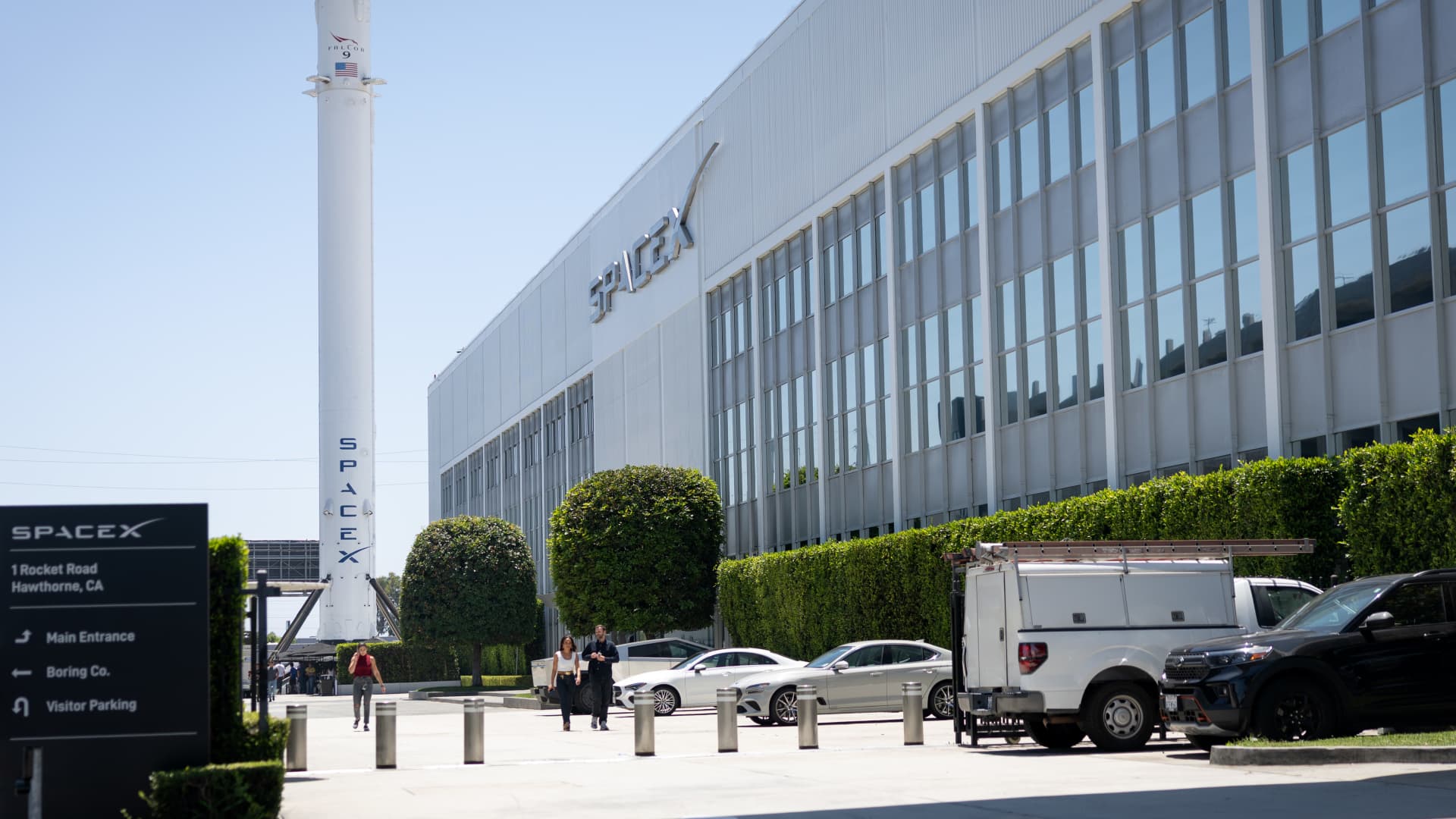
SpaceX’s transition from a private aerospace juggernaut to a public entity has faced its first significant test on Wall Street. Following the company’s debut earnings report since its June IPO, executives found themselves on the defensive, attempting to justify a massive surge in artificial intelligence spending that far exceeded analyst expectations. While the company is touting a revolutionary “one-year payback” on its investments, the market’s initial reaction was one of skepticism, as shares dipped significantly following the announcement.
What happened
In its first quarterly report as a public company, SpaceX revealed a complex financial picture. On one hand, the company’s growth remains explosive, with second-quarter revenue climbing 92% compared to the previous year. However, this growth was overshadowed by a staggering $18.4 billion in capital expenditures—a sixfold increase that more than doubled the total sales for the quarter.
The vast majority of this spending, over 80%, was funneled into artificial intelligence infrastructure. This figure blew past the $13.22 billion consensus estimate from analysts, leading to a 7.5% drop in after-hours trading. This decline effectively erased previous gains, leaving SpaceX shares trading roughly 20% below their initial June debut price.
To soothe investor nerves, CFO Bret Johnsen argued that the traditional lens for viewing capital expenditure does not apply to their AI buildout. According to Johnsen, the efficiency of their deployment allows the company to see a return on investment in less than 12 months. He pointed to $6.7 billion in recently contracted cloud services revenue and several high-profile deals—including a massive agreement with Google and a multi-billion dollar contract with Anthropic—as evidence of this rapid monetization.
Context
SpaceX’s pivot into the AI sector was solidified earlier this year through a merger with xAI, Elon Musk’s specialized artificial intelligence firm. Since then, the company has shifted from focusing solely on orbital logistics to becoming a major provider of compute capacity. Through its “Colossus” data center in Memphis, Tennessee, SpaceX is now competing directly with established cloud giants like Amazon, Microsoft, and Google by selling the processing power necessary to train large-scale models.
The company is currently on an aggressive path toward a $100 billion annualized recurring revenue (ARR) target by the end of 2026. CEO Elon Musk expressed absolute confidence in this trajectory, stating that such a milestone is virtually guaranteed even without further strategic shifts. This goal is particularly ambitious considering the company’s total revenue for 2025 was under $19 billion. The projection also hinges on the successful integration of Cursor, a coding platform SpaceX is in the process of acquiring for $60 billion.
Why it matters
The tension between SpaceX and Wall Street reflects a broader anxiety currently permeating the tech sector. Investors are increasingly wary of “AI fatigue,” as the world’s largest companies—including Meta, Alphabet, and Amazon—pour hundreds of billions of dollars into data centers and Nvidia chips without always providing a clear, short-term path to profitability.
SpaceX’s strategy is unique because it combines long-term “frontier” ambitions with immediate infrastructure reselling. While Musk’s ultimate goal involves proprietary AI models like Grok and futuristic concepts such as space-based data centers, the current revenue is being driven by leasing out excess capacity. This “dual monetization strategy” allows SpaceX to fund its massive 20-gigawatt power and cooling projects by serving the needs of its competitors.
The coming months will determine if SpaceX can maintain its breakneck speed. If the company successfully hits its $100 billion ARR target, it will validate Musk’s high-stakes gamble on AI infrastructure. However, if the “one-year payback” fails to materialize, the company may find that Wall Street’s patience for astronomical spending has a very low ceiling.