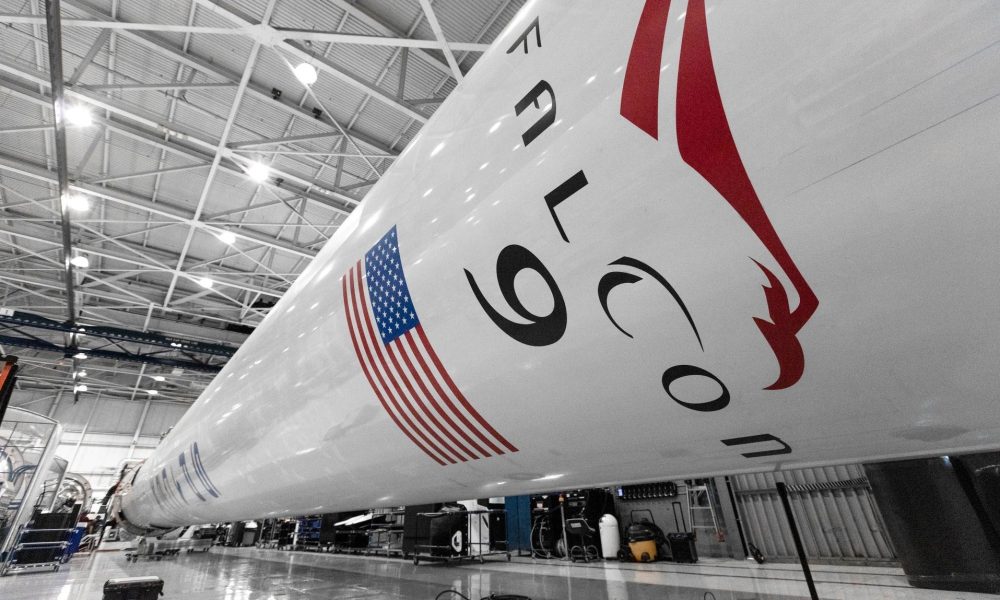
On a clear day in Southern California, SpaceX once again demonstrated its dominant position in the aerospace sector. A Falcon 9 rocket roared into the sky from Vandenberg Space Force Base, carrying a payload shrouded in mystery. As the private space company continues to shatter records for launch frequency, this latest mission highlights the growing intersection between commercial innovation and national defense.
What happened
The mission took place under a veil of confidentiality, utilizing the reliable Falcon 9 booster to carry undisclosed equipment into orbit. Unlike standard Starlink missions, where the deployment of satellites is often shared via a public livestream, this launch concluded its broadcast shortly after the successful return of the first-stage booster. While official details regarding the cargo remain scarce, independent analysts and orbital trackers have pointed toward the U.S. Space Force as the primary client.
The consensus among industry experts is that the cargo likely consisted of Starshield units. Starshield is a specialized, government-focused branch of SpaceX’s satellite technology, designed specifically to provide secure communications, Earth observation capabilities, and encrypted data transmission for military applications. The secrecy surrounding the launch is typical for national security missions, which often skip the detailed telemetry updates provided during commercial flights.
Context
This launch comes at a pivotal moment for SpaceX as Elon Musk pivots the company toward increasingly high-stakes government contracts. While the public’s attention is frequently captured by the dramatic Starship tests in Texas, the Falcon 9 fleet remains the operational backbone of the company’s revenue stream. Musk has recently communicated to staff that the company’s “next trillion-dollar bet” involves far more than just the rockets themselves; it is about the data and connectivity infrastructure they enable.
The Starshield program is a direct evolution of the massive Starlink constellation. By leveraging the same launch efficiency and mass-production techniques used for commercial internet, SpaceX can deploy military-grade hardware at a speed and scale that traditional defense contractors struggle to match. This mission also fits into a broader narrative of integration across Musk’s various ventures. From testing Starlink-integrated Cybercabs on public roads to massive AI investment gambles, the common thread is a reliance on a robust, space-based communications layer that SpaceX is uniquely positioned to provide.
Why it matters
The successful deployment of this secret payload underscores the critical role SpaceX now plays in the United States’ national security architecture. By serving as a primary provider for the Space Force, SpaceX has transitioned from a disruptive startup into a vital strategic partner for the Department of Defense.
The Starshield initiative represents a paradigm shift in how modern intelligence and communication are conducted. Rather than relying on a few large, expensive, and vulnerable satellites, the government is moving toward “proliferated” constellations—hundreds of smaller satellites that ensure resilient connectivity even if individual units are compromised. As SpaceX continues to execute these missions with high frequency and reliability, it cements its hold on the orbital economy. For both Wall Street and global competitors, this launch is a reminder that SpaceX is no longer just a rocket company; it is becoming the foundational infrastructure for the next generation of global and orbital security.