The lunar surface is about to receive an uninvited visitor from Earth. A spent SpaceX rocket stage, left to drift in the vacuum of space after a mission more than a year ago, is now on an irreversible path toward the moon. This high-speed collision, while unintentional, has captured the attention of astronomers and space agencies worldwide, offering a rare chance to study the mechanics of impact in a low-gravity environment.
What happened
An upper stage of a SpaceX Falcon 9 rocket is projected to slam into the moon this Wednesday. According to orbital tracking specialist Bill Gray, the nearly five-ton piece of hardware is traveling at approximately 5,400 mph—roughly seven times the speed of sound. The impact is expected to occur near the Einstein Crater, located on the western limb of the moon’s sunlit side.
While the actual flash of the collision will likely be too faint for the naked eye to detect, the resulting debris cloud could be significant. Scientists anticipate the crash will carve out a crater measuring roughly 90 feet wide and 16 feet deep. The impact is expected to kick up a massive plume of dust and lunar soil that could rise several miles into space. For observers in South America and the eastern regions of the United States and Canada, telescopes may be able to capture the dust trail as it lingers in the moon’s thin atmosphere for several minutes following the strike.
Context
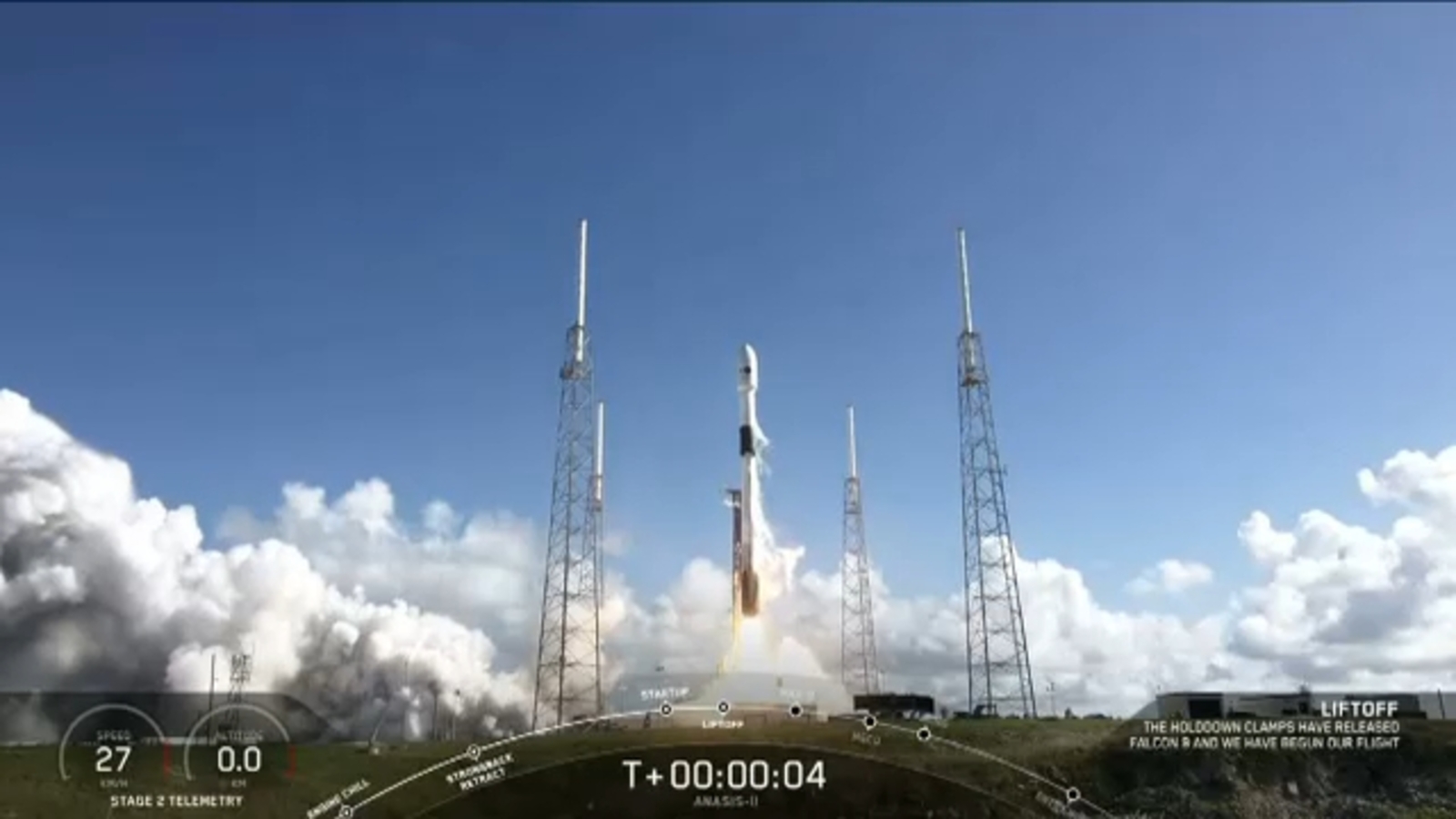
The rocket segment in question was originally used to launch a pair of lunar missions on January 15, 2025. During that flight, the booster successfully deployed two private landers: Firefly Aerospace’s Blue Ghost, which achieved a historic successful landing, and a lander from the Japanese company ispace, which unfortunately crashed during its descent.
Following the deployment of these payloads, the 40-foot-long upper stage was left in a chaotic orbit. Space experts note that this collision could have been avoided if the rocket had been directed into a graveyard orbit around the sun. Instead, it remained trapped within the Earth-moon system, eventually succumbing to gravitational forces. This event marks only the second known instance of a discarded rocket stage accidentally hitting the lunar surface; the first occurred in 2022 when a segment of a Chinese rocket created a double crater on the moon’s far side.
Why it matters
Beyond the spectacle of the crash, the event serves as a critical case study for space agencies. Benjamin Fernando of the Los Alamos National Laboratory has emphasized that observing the impact helps researchers understand the risks that space debris poses to future human inhabitants. As NASA and other international partners prepare for long-term lunar bases, knowing how high-velocity impacts affect the surface is vital for astronaut safety.
Furthermore, the collision provides a unique opportunity for active lunar orbiters. NASA’s Lunar Reconnaissance Orbiter and South Korea’s Danuri spacecraft are both positioned to monitor the site. Danuri, in particular, is expected to pass within two miles of the rocket just moments before it hits the surface. By comparing “before and after” imagery of the Einstein Crater area, scientists can calculate the density of the lunar soil and the energy transfer of the impact, which is estimated to be equivalent to three tons of TNT.
Finally, the incident highlights the growing concern regarding orbital congestion. As more private and governmental missions head toward the moon, the “crowded” nature of cis-lunar space is becoming a pressing logistical and environmental issue. This accidental collision serves as a reminder that the debris we leave behind in orbit eventually has to go somewhere, sometimes with explosive results.