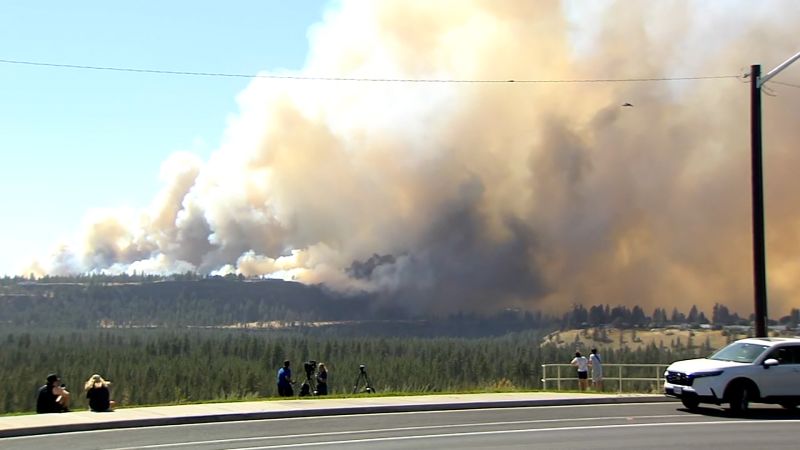
Spokane County, Washington, is currently grappling with a severe wildfire crisis that has forced tens of thousands of residents to flee their homes. As three major blazes continue to burn with zero percent containment, local authorities have declared a state of emergency to mobilize resources and address the widespread destruction. With hundreds of buildings already lost to the flames, the region is facing one of its most challenging environmental emergencies in recent history.
What happened
The crisis began on Saturday when three separate fires—identified as the Old Trails Fire, the Fairview Fire, and the Autumn Lane Fire—ignited and rapidly intensified. By Sunday evening, fire officials reported that the combined blazes had scorched more than 7,000 acres of land. Despite the aggressive efforts of emergency crews, the fires remained completely uncontained as of the latest updates.
The scale of the disaster has necessitated the evacuation of approximately 60,000 people. While no deaths or injuries have been officially confirmed, the damage to property is extensive. Hundreds of structures have been reduced to ash, and many residents who were forced to leave with only the items they could carry are now waiting in shelters or with relatives. Some homeowners who managed to revisit their properties described a harrowing landscape of hot rubble and charred remains as they searched for any salvageable belongings.
In response to the displacement of families, local institutions are stepping in to provide support. Spokane Public Schools announced the launch of a free emergency day camp at Shadle Park High School. This initiative is designed to offer a safe environment for children aged four and up, allowing parents and caregivers the time needed to manage insurance claims, run essential errands, or seek permanent housing solutions.
Context
The current situation in Spokane County is part of a much larger, more alarming trend across the Pacific Northwest. Currently, fifteen major wildfires are burning throughout Washington, collectively consuming more than 250,000 acres. Fire officials have noted that this year represents the most destructive fire season the region has experienced in over three decades.
While the specific causes of the Spokane County fires remain under investigation, the environmental conditions surrounding them are well-documented. Experts point to the ongoing climate crisis as a primary driver for these “supercharged” blazes. Rising temperatures and prolonged periods of drought have turned the landscape into a tinderbox, allowing small ignitions to transform into uncontrollable infernos within hours.
Why it matters
The immediate priority for officials is the safety of residents and the eventual containment of the flames, but the long-term implications are profound. The loss of hundreds of homes creates a housing and economic vacuum that will take years to recover from. Furthermore, the psychological toll on the 60,000 evacuees highlights the human cost of increasingly volatile weather patterns.
Major General Gent Welsh of the Washington National Guard has urged the public to remain patient as crews work to secure the perimeter of the affected neighborhoods. Re-entry into these areas is a slow and dangerous process, as officials must ensure that hotspots are extinguished and utility lines are safe before allowing families to return.
This disaster serves as a stark reminder of the urgent need for robust disaster preparedness and climate adaptation strategies. As wildfires become more frequent and more intense, the resilience of local communities is being tested like never before. The collaboration between schools, emergency services, and state officials in Spokane County provides a blueprint for crisis management, but the sheer scale of the destruction underscores the formidable challenge posed by modern wildfire seasons.