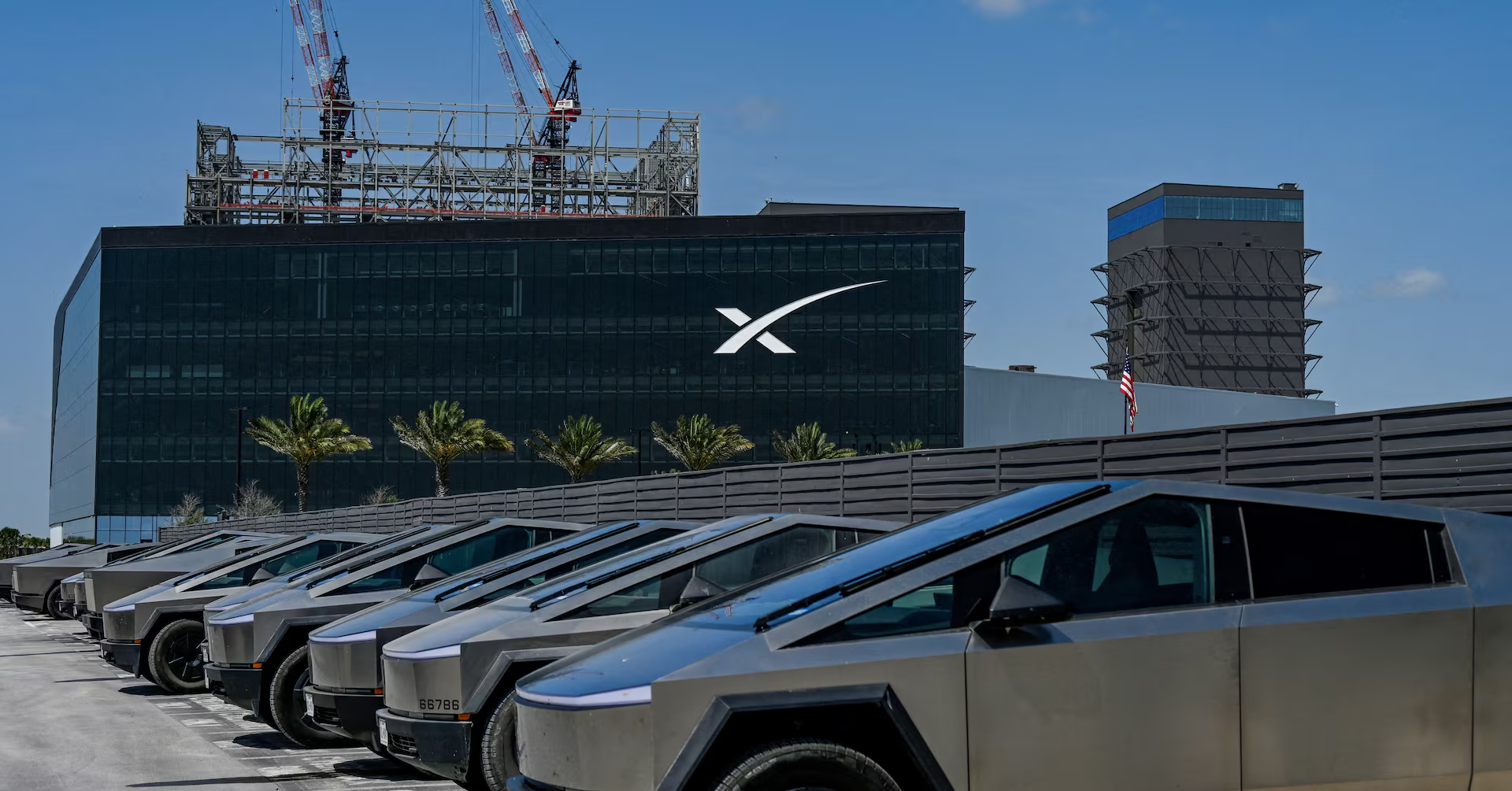
As Elon Musk contemplates the massive logistical undertaking of merging Tesla and SpaceX, a significant roadblock looms: Tesla’s extensive footprint in China. To make a unified “X” conglomerate a reality, analysts suggest that the automaker may need to decouple its Chinese operations to satisfy national security concerns. However, untangling one of the world’s most integrated supply chains is proving to be a challenge of historic proportions.
What happened
Financial analysts and industry experts are identifying three primary avenues for Tesla to distance itself from its Chinese business unit. The first involves a corporate spin-off, where Tesla China would become an independent entity, potentially listed on a local exchange. The second option is a licensing model, where Tesla would allow a third party to operate the brand and utilize its proprietary technology within the region. The final, and perhaps most drastic, option is a complete sale of the Chinese assets.
While these paths offer a theoretical solution to the “China problem,” each is mired in regulatory and financial complexity. A spin-off would require a massive restructuring of equity, while a sale could potentially strip Tesla of its most efficient manufacturing hub. Even a licensing agreement raises difficult questions regarding how much control Musk would retain over the brand’s reputation and technical standards in Asia.
Context
The fundamental conflict lies in the nature of Musk’s two largest ventures. SpaceX is a vital partner to the United States government, holding sensitive contracts with NASA and the Department of Defense. It is a cornerstone of American aerospace and national security infrastructure. Conversely, Tesla has spent years building a symbiotic relationship with Beijing, relying on its Shanghai Gigafactory for a massive portion of its global production and profit.
In an era of heightened U.S.-China tension, the idea of a primary defense contractor having such deep ties to a foreign adversary is a non-starter for many Washington regulators. The potential for technology transfer or economic leverage from Beijing creates a “red line” for the U.S. government. To merge the two companies, Musk must effectively “de-risk” the corporate structure, ensuring that SpaceX’s aerospace secrets are completely walled off from any influence or pressure stemming from Tesla’s operations in the Chinese market.
Why it matters
This potential separation is more than just a corporate shuffle; it represents a landmark test case for how multinational corporations navigate an era of deglobalization. For investors, a spin-off or sale of Tesla China could lead to a massive valuation shift. The Chinese market currently accounts for a substantial chunk of Tesla’s growth narrative and bottom-line profitability; removing it from the core balance sheet would fundamentally change the company’s risk profile.
Furthermore, the intellectual property issues are staggering. If Tesla China is separated, the parent company faces the monumental task of protecting its Full Self-Driving (FSD) algorithms and battery chemistry. There is a high risk that proprietary technology could be absorbed by local competitors once the direct oversight of the American parent company is removed. The outcome of this strategy will likely dictate the future of Musk’s vision for a unified “everything” company and could redefine the boundaries between commercial enterprise and national security in the 21st century.