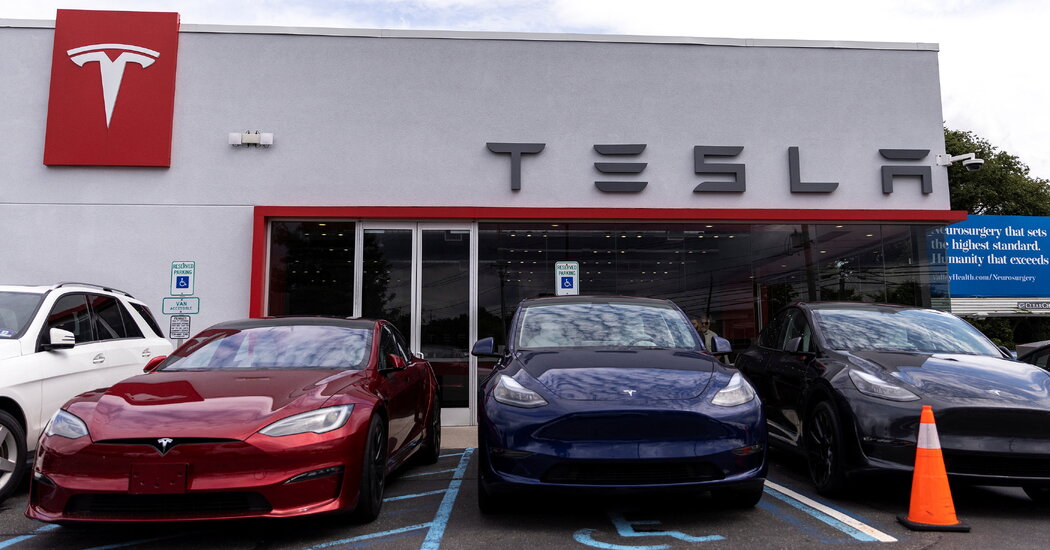
Tesla is currently navigating a complex financial landscape where increased delivery volume does not automatically equate to higher bottom-line returns. In its latest quarterly earnings report, the electric vehicle pioneer revealed a paradoxical trend: while the company successfully moved more units off the lot than in previous periods, its overall profitability took a noticeable hit. This shift underscores the intensifying pressure within the global automotive market as manufacturers grapple with cooling demand and heightened competition.
What happened
For the second quarter, Tesla disclosed a net profit of $1.1 billion, representing a decline from the $1.2 billion recorded during the same timeframe the previous year. This dip occurred despite a significant “rebound” in actual car sales. While the company saw a sharp rise in the number of vehicles delivered to customers, the financial gain per sale has thinned considerably.
Two primary factors contributed to this earnings contraction. First, Tesla has engaged in a series of aggressive price reductions across its core lineup, including the popular Model 3 and Model Y. While these discounts were successful in stimulating consumer interest and clearing inventory, they effectively squeezed the company’s profit margins. Second, Tesla reported a surge in operating expenses. These costs are largely attributed to the company’s massive investments in new technology, research and development, and the scaling of production facilities for newer projects like the Cybertruck and artificial intelligence infrastructure.
Context
The current automotive climate is vastly different from the one Tesla dominated just a few years ago. The initial “gold rush” of early EV adoption has transitioned into a more mature, price-sensitive market. High interest rates have made vehicle financing more expensive for the average consumer, forcing many automakers to rethink their pricing strategies to keep assembly lines moving.
Furthermore, Tesla is no longer the sole titan in the electric space. The company faces stiff competition from established legacy automakers in the United States and Europe, as well as a formidable wave of low-cost, high-tech manufacturers from China. By cutting prices, Tesla is effectively defending its market share, choosing to prioritize long-term dominance and fleet size over immediate per-unit profitability. This strategy, often referred to as a “price war,” has forced competitors to either follow suit or risk losing their foothold in the transition to sustainable transport.
Why it matters
Tesla’s latest financial results serve as a bellwether for the broader electric vehicle industry. If the most efficient and high-margin EV maker in the world is seeing its profits eroded by price cuts, it suggests that smaller or less efficient competitors may face even more dire financial straits. For investors, the report highlights a shift in Tesla’s identity from a high-margin growth stock to a company in a heavy investment phase.
The focus on “volume over margin” is a calculated risk. CEO Elon Musk has frequently suggested that the short-term pain of lower profits is a necessary trade-off for getting more Tesla vehicles on the road. The ultimate goal is to monetize this massive fleet through future software updates and autonomous driving subscriptions. However, the rising expenses also point toward a massive pivot into AI and robotics. As Tesla spends billions on the computing power required for its Full Self-Driving (FSD) software and its humanoid robot, Optimus, the company is betting that its future value will come from being a technology powerhouse rather than just a traditional car manufacturer. Whether shareholders remain patient during this period of margin compression will be the defining story for the company in the coming year.