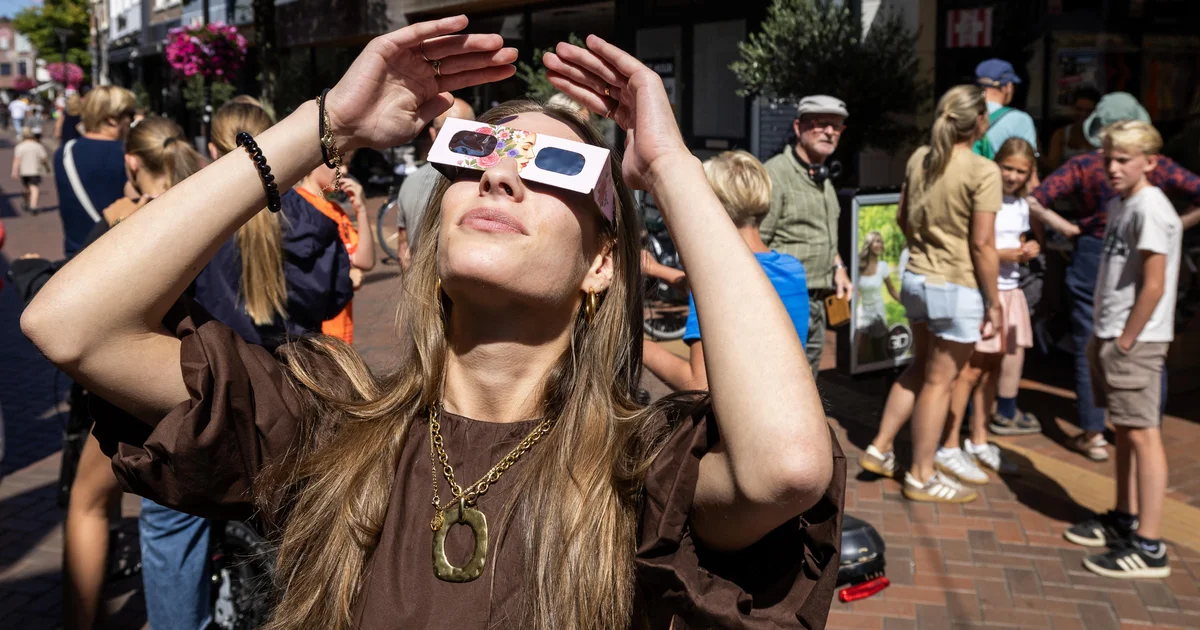
Skywatchers across the Northern Hemisphere are preparing for a rare astronomical spectacle as the moon prepares to obscure the sun on Wednesday, August 12, 2026. This event marks the only total solar eclipse of the year, promising a dramatic display of celestial alignment for those positioned along its narrow path. While the full shadow will touch only a few specific regions, millions more will witness a partial eclipse that will darken the afternoon skies across Europe and parts of North America.
What happened
The 2026 total solar eclipse will follow a relatively short trajectory across the northern part of the globe, lasting approximately one hour and 45 minutes from start to finish. The journey begins in remote northern Russia at 17:00 UTC (1:00 PM ET) before moving across the Arctic. The path of totality—the area where the moon completely covers the sun—will then sweep through northeast Greenland and western Iceland.
By 1:45 PM ET, the shadow will reach western Iceland, with the capital city of Reykjavík experiencing totality at 5:48 PM local time. After crossing the North Atlantic, the eclipse will make its final landfall in northern Spain. Residents in Valencia and surrounding northern regions will witness the peak of the event at roughly 8:32 PM local time (2:30 PM ET). Because the path is concentrated in the high latitudes, the window for viewing the full eclipse is brief but significant for the regions involved.
Context
A total solar eclipse occurs when the moon passes directly between the Earth and the sun, casting a deep shadow on the planet’s surface. While these events take place somewhere on Earth roughly every 18 months, they are notoriously rare for any specific geographic location. In many cases, centuries can pass before a single city finds itself in the path of totality again.
For Spain, the 2026 eclipse is a historic milestone, as the country has not witnessed a total solar eclipse since 1905. This event also follows the highly publicized “Great North American Eclipse” of 2024. However, unlike that event, which crossed the heart of the United States, the 2026 path is more isolated, crossing through largely uninhabited stretches of Greenland and the Atlantic Ocean before reaching the Iberian Peninsula.
Why it matters
The 2026 eclipse is notable not just for those in the path of totality, but for the sheer number of people who will experience a near-total blackout. Data suggests that approximately 230 million people live in areas that will see at least 90% obscuration. Major European hubs, including London, Paris, and Madrid, will see the sun significantly covered, creating a surreal twilight effect during the day. London, for instance, is expected to see about 91% totality during the mid-afternoon.
In North America, the event will be less dramatic than the 2024 eclipse but still visible for some. Residents in Fairbanks, Alaska, will have the best vantage point in the United States with 37% coverage. Major cities along the East Coast will see much smaller fractions, with New York City experiencing about 9% and Boston seeing 16%. Despite the varying levels of visibility, the event remains a major focus for scientists and tourists alike, as it provides a unique opportunity to study the solar corona and brings a renewed sense of wonder to the public.