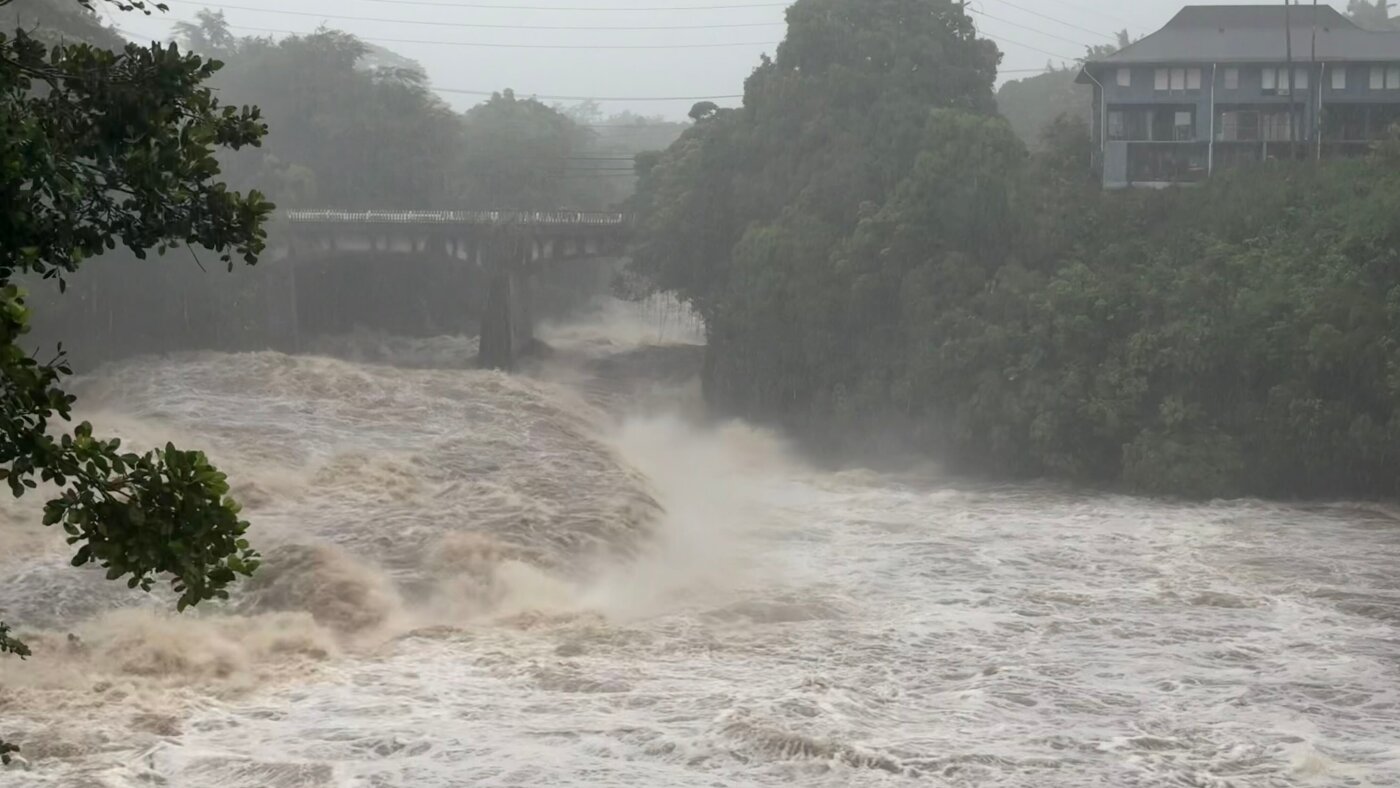
As Tropical Storm Lala tracks across the Hawaiian island chain, the region is facing severe weather conditions that have left thousands without power and triggered emergency rescue operations. Although the system weakened from a hurricane on Sunday, its impact remains formidable, bringing torrential downpours and dangerous wind gusts that continue to threaten the state’s infrastructure and public safety. Residents across the islands are currently navigating a landscape of rising waters and treacherous debris as the storm moves westward.
What happened
While Lala was downgraded to a tropical storm after skirting the Big Island without making direct landfall, it still delivered hurricane-force gusts and relentless rain. Forecasters have warned that some higher windward slopes could see up to 35 inches of total rainfall, a volume capable of turning rivers into dangerous torrents and triggering significant mudslides. The human and structural toll has already been significant; officials confirmed at least one fatality following a car accident in the South Point area, and nineteen homes lost their roofs during the peak of the storm.
The utility infrastructure has taken a heavy hit, with more than 130,000 households losing electricity across Maui, Oahu, and the Big Island. Governor Josh Green noted that the situation was critical enough to force at least three hospitals to switch to emergency generator power. Meanwhile, in the southern coastal communities of Na’alehu and Wai’ohinu, search-and-rescue teams including the National Guard and Coast Guard have been deployed. These teams are searching for residents after flash floods reportedly swept several homes off their foundations. Hawaii County Mayor Kimo Alameda emphasized the difficulty of these operations, citing the combination of rushing water, boulders on the roads, and total darkness.
Context
Tropical Storm Lala was located roughly 105 miles west-northwest of Kailua-Kona as of early Sunday morning, moving northwest at approximately 15 mph. With sustained winds of 70 mph, the storm is just shy of hurricane strength, a status forecasters believe it will regain later in the week once it moves further away from the islands. This event comes at a time when many residents are still recovering from major flooding incidents that occurred earlier in March, making the current precautions and evacuations even more urgent.
The geography of the islands plays a major role in the severity of the storm’s impact. The National Hurricane Center pointed out that wind speeds on mountain peaks and slopes can be up to 30% stronger than those recorded at sea level. This topographic acceleration explains why “tropical storm” conditions can still result in hurricane-level destruction on the ground. To prepare for the arrival of the storm, local authorities opened emergency shelters and advised agricultural workers to move livestock to open pastures to avoid injuries from collapsing structures.
Why it matters
The passage of Tropical Storm Lala serves as a stark reminder of the vulnerability of island chains to rapidly changing weather patterns. Beyond the immediate threat of wind and rain, the storm has introduced secondary hazards, such as the potential for wildfires fueled by high winds and the risk of catastrophic mudslides on the steep, volcanic slopes of Mauna Kea. Many residents in these areas live in improvised or off-the-grid housing, making them particularly susceptible to the environmental shifts caused by such heavy precipitation.
The ongoing search-and-rescue missions and the widespread loss of power highlight the strain on local resources during multi-island emergencies. As the storm continues its path toward Maui, Oahu, and Kauai, the threat of destructive flooding remains high. For the people of Hawaii, the focus is now on immediate survival and the long-term challenge of repairing infrastructure that has been battered by a series of increasingly frequent and intense weather events. The resilience of the community is being tested once again as they wait for the “enormous storm” to finally move out to sea.