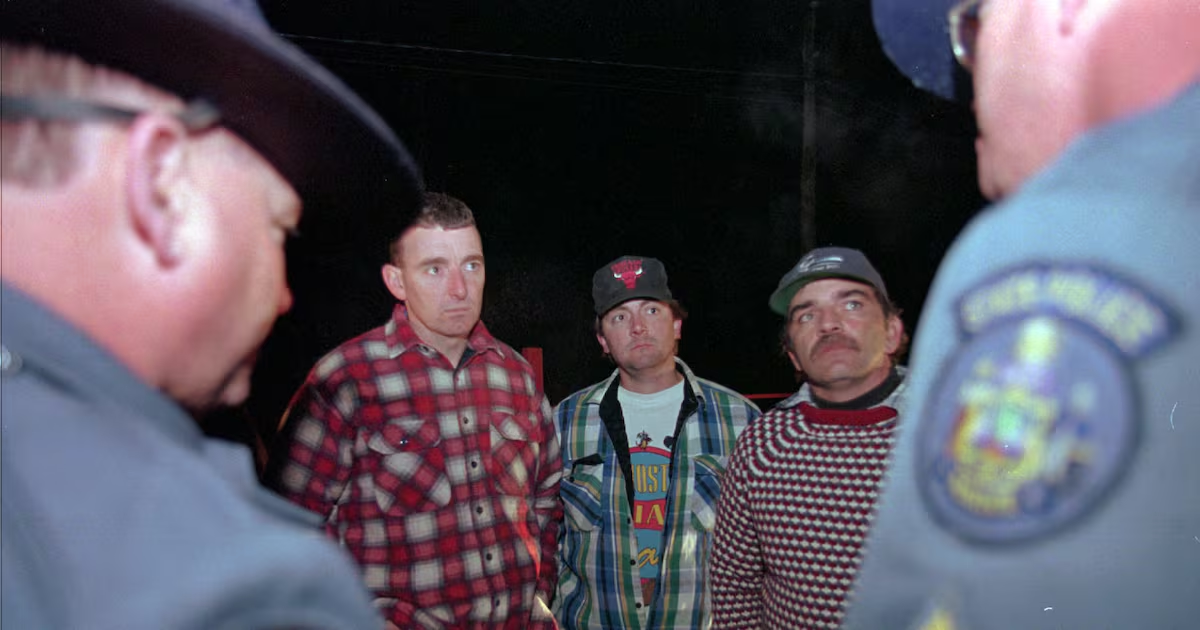
Deep in the rugged timberlands of northern Maine, Troy Jackson’s political identity was forged not in a debating hall, but on a logging road. Decades ago, Jackson was among a group of frustrated woodsmen who stood their ground against state troopers, using their trucks to blockade the Canadian border. They were protesting international labor competition that threatened their livelihoods. While the blockade didn’t solve the immediate crisis, it sparked a realization in Jackson: to truly protect his community, he would have to trade his chainsaw for a seat at the table in government.
What happened
Troy Jackson, a fifth-generation lumberjack, has officially secured the Democratic nomination to challenge long-standing Republican Senator Susan Collins. His path to this high-stakes race was unconventional. Jackson rose through the ranks of the Maine Legislature by championing the labor issues he lived through personally. His ascent to the nomination follows the exit of the initial Democratic frontrunner, Graham Platner, who withdrew from the race following allegations of misconduct.
Jackson’s campaign is built on the foundation of his “blue-collar” persona. He frequently speaks about the grueling realities of life in the woods—waking up at 2:30 a.m. for 12-hour shifts, performing dangerous work without the safety net of health insurance, and watching as local industries shuttered. By leaning into his background, Jackson hopes to appeal to a demographic that often feels ignored by the modern political establishment.
Context
The battleground for Jackson’s political identity is Aroostook County, a massive, sparsely populated region known to locals simply as “The County.” This area is culturally and economically distinct from the more liberal coastal regions of Maine. It is a place where residents are notoriously independent and often lean toward conservative populism; notably, the region supported Donald Trump for president even as it continued to send Jackson to the State House.
This geographic and cultural divide is central to Jackson’s strategy. He represents Allagash, a tiny town where opinions on his political career remain split. However, his history in the timber industry gives him a unique “in” with rural voters who are typically skeptical of Democratic candidates. Jackson often recounts how the decline of the 1970s and 1990s—characterized by disappearing jobs and the loss of local school pride—informed his desire to fight against corporate interests and billionaires on behalf of the working class.
Why it matters
The race between Jackson and Collins is more than just a local contest; it is a battle that could decide which party controls the U.S. Senate. Susan Collins is a formidable opponent, having successfully defended her seat for five terms. She is known for her moderate reputation, though she has faced increasing criticism from the left in recent years.
Jackson represents a different kind of Democratic challenger—one who speaks the language of the rural voter and understands the economic anxieties of the “forgotten” parts of the country. If he can successfully bridge the gap between his party’s platform and the needs of rural, independent Mainers, he could provide a roadmap for Democrats struggling to win back the working-class vote across the United States. His candidacy tests whether a candidate’s personal history and shared struggle can overcome the deep-seated partisan divisions of modern American politics.