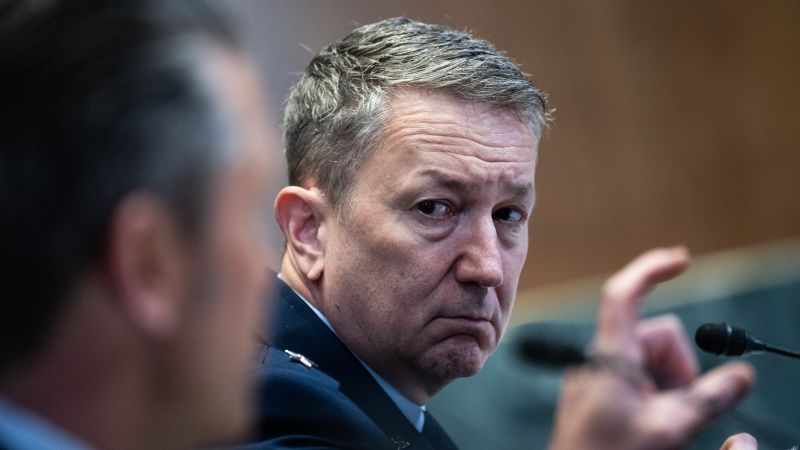
Tensions within the highest levels of the U.S. national security apparatus are reportedly mounting as the conflict with Iran enters a critical phase. General Dan Caine, the Chairman of the Joint Chiefs of Staff, has begun privately advising the Trump administration to seek a strategic exit—or “off-ramp”—from the ongoing hostilities. Sources close to the matter suggest that the military’s top leadership is increasingly concerned that current escalation patterns are unsustainable and unlikely to deliver the political outcomes desired by the White House.
What happened
General Caine has recently held a series of private discussions with key members of President Trump’s cabinet to voice his concerns regarding the trajectory of the war. According to sources familiar with these exchanges, Caine has met with Vice President JD Vance, Secretary of State Marco Rubio, and CIA Director John Ratcliffe to harmonize their assessments of the conflict. The General’s primary objective appears to be establishing a unified front among top advisors before they present military options to the President.
The core of Caine’s argument is that the military options currently available carry significant risks of backfiring. While President Trump has leaned heavily on the prospect of using airpower to force Tehran into a favorable deal, Caine has cautioned that reliance on aerial bombardment is insufficient to meet the administration’s stated goals. By building a consensus among other cabinet members, Caine is reportedly attempting to protect the long-term integrity of the U.S. military from a conflict that lacks a clear path to victory.
Context
The conflict with Iran has now persisted for nearly six months, originally launched with the intent of dismantling Tehran’s military capabilities and ensuring the nation never acquires a nuclear weapon. Despite early claims from the administration that Iran’s defense infrastructure had been severely weakened, the war has reached a stalemate. President Trump has remained steadfast in his refusal to deploy ground troops, preferring a strategy of “maximum pressure” through targeted strikes.
This strategic preference faced a major test in late July. Internal reports indicate that the administration was prepared to greenlight a “massive” military operation to further escalate the pressure on Tehran. However, the plan met with internal resistance. While certain elements of U.S. Central Command and regional allies like Israel supported the escalation, General Caine and other senior officials remained skeptical of the potential fallout. The operation was ultimately shelved after Middle Eastern allies expressed deep concerns that Iranian retaliation would target their vital energy infrastructure, potentially destabilizing the global economy.
Why it matters
The General’s push for an off-ramp signals a significant disconnect between the White House’s rhetoric and the military’s tactical reality. If the nation’s highest-ranking officer is signaling that military solutions have reached their limit, it suggests that the administration’s current “airpower-only” doctrine may be reaching a point of exhaustion.
Furthermore, this internal friction highlights the influence of regional allies on U.S. decision-making. The fact that concerns over energy infrastructure were enough to halt a major military operation suggests that the U.S. is not operating in a vacuum and must contend with the economic vulnerabilities of its partners in the Persian Gulf.
As the war continues, the pressure on the Trump administration to either escalate further or pivot toward diplomacy will only increase. For now, General Caine’s efforts represent a cautious attempt to manage the President’s expectations and prevent the U.S. from becoming entrenched in a conflict where the risks of escalation far outweigh the potential for a decisive strategic breakthrough.