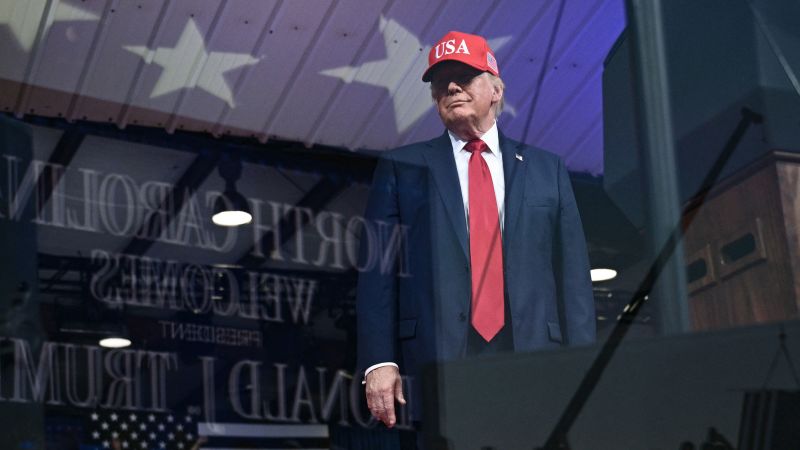
While Donald Trump remains a constant fixture in the daily news cycle and national political discourse, he has become a rare sight in one specific arena: Republican television advertisements. Despite the president’s personal request for supporters to treat the midterm elections as if he were on the ballot himself, the candidates actually running for office appear to be keeping their distance from his brand in their high-stakes media buys.
What happened
A recent analysis of campaign finance and broadcast data reveals a significant disparity in how the two major parties are utilizing the president’s image. Between September 1 and September 15, Republican groups aired only 12 unique television spots that mentioned Trump. This represents a tiny sliver of the party’s overall output; out of more than 500 different ads produced in that window, less than 1% of the $160 million spent by the GOP was dedicated to messaging that featured the president.
In contrast, the Democratic Party is leaning heavily into Trump’s presence as a central theme of their campaign. During the same two-week period, Democratic advertisers spent nearly $23 million on 95 different ads that invoked the president’s name. This accounts for roughly 20% of their total advertising expenditure. These spots typically aim to tie Republican incumbents and challengers to the president’s policy agenda and his standing in the polls, utilizing his image as a tool to mobilize opposition voters.
Context
The decision to sideline the president in GOP advertising appears to be a calculated move by party strategists. Despite Trump’s popularity with his base, his broader national approval rating has hovered around 36%. Political consultants working on competitive Senate and House races have indicated that, in the current climate, the president is not viewed as the most effective messenger for reaching undecided or moderate voters.
Instead of highlighting the administration’s achievements or the president’s personality, Republican media buys are pivoting toward aggressive “attack ads.” These spots focus on defining Democratic opponents as out of touch or unacceptable. Even well-funded super PACs closely aligned with Trump’s own political network—some of which have unleashed over $100 million in spending—are largely omitting him from their scripts. For example, recent ads in Michigan and Ohio have focused entirely on criticizing Democratic figures like Abdul El-Sayed and Sherrod Brown rather than praising the commander-in-chief.
Why it matters
This trend underscores a growing tension between the president’s desire to be the center of the political universe and the cold mathematical realities of midterm campaigning. While Trump continues to hold massive rallies to energize his core followers, the strategists tasked with maintaining a Republican majority in Congress clearly view him as a potential liability in swing districts and battleground states.
By contrast, the Democratic strategy suggests they believe Trump is their strongest asset for reclaiming power. By spending millions to link local Republican candidates to the president, Democrats are betting that public dissatisfaction with the administration will outweigh the GOP’s efforts to focus the election on individual candidate matchups. This divergence in strategy highlights a high-stakes gamble for both parties: Republicans are betting that silence on Trump will help them survive, while Democrats are betting that making him the face of every race will lead them to victory.