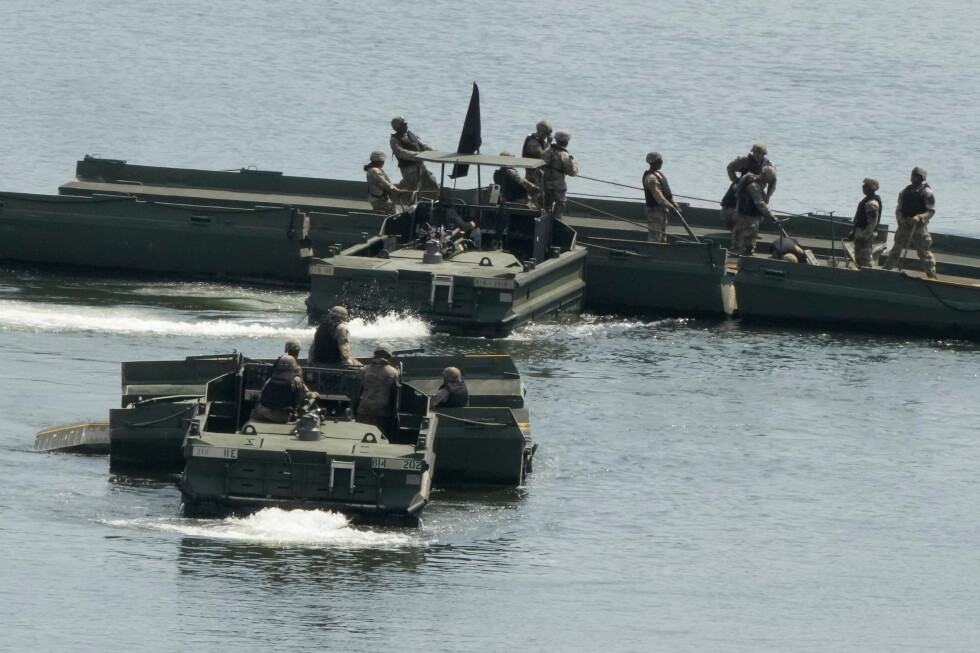
President Donald Trump has issued a directive to significantly reduce the scale of upcoming joint military maneuvers with South Korea. This decision, announced just as the annual “Ulchi Freedom Shield” exercises were set to commence, represents a sharp departure from established regional security protocols. The move has raised immediate concerns among defense analysts regarding the future of the long-standing strategic alliance between Washington and Seoul.
What happened
On Monday, the White House instructed the Pentagon to “substantially” diminish the scope of the Ulchi Freedom Shield (UFS), a critical 11-day military exercise designed to bolster the defense of the Korean Peninsula. President Trump justified the reduction by highlighting his personal rapport with North Korean leader Kim Jong Un, stating that the leader treats him with “great respect.”
However, diplomacy was not the only factor cited. The President also voiced significant criticism toward South Korea, linking the military cuts to Seoul’s decision not to participate in the ongoing U.S. military conflict in Iran. The sudden nature of the order has created logistical uncertainty for both nations. Prior to this directive, the South Korean military had prepared for a robust exercise involving approximately 18,000 personnel and 14 distinct field training events. While the exact extent of the cancellations remains unclear, the shift disrupts a program that was intended to integrate modern combat lessons, including observations from the Russia-Ukraine front.
Context
The security partnership between the United States and South Korea was forged in the aftermath of the 1950-53 Korean War. For decades, the two nations have relied on biannual large-scale exercises to ensure their forces can operate as a cohesive unit. The Ulchi Freedom Shield is a cornerstone of this effort, typically combining computer-simulated command post exercises with live-fire field maneuvers.
While Washington and Seoul maintain that these drills are strictly defensive, they have remained a persistent flashpoint for regional tension. North Korea has long characterized these maneuvers as a rehearsal for an invasion. In anticipation of this year’s exercises, Pyongyang’s Foreign Ministry labeled the planned drills a provocation and threatened to respond with a “new level of a deterrent.” President Trump’s decision to scale back the maneuvers aligns with his previous skepticism of the cost and utility of large-scale “war games,” but it adds a new layer of geopolitical tension by connecting Pacific security to Middle Eastern policy.
Why it matters
The decision to scale back these drills carries profound implications for the operational readiness of the combined forces. Military experts warn that reducing the frequency or intensity of joint training can degrade “interoperability”—the ability of different military branches and nations to communicate and fight effectively as a single force. Without regular, full-scale rehearsals, the ability to respond to a sudden crisis on the peninsula may be compromised.
Furthermore, the decision introduces a transactional element to the alliance. By linking the scale of Korean defense exercises to South Korea’s level of involvement in the Iran conflict, the administration has signaled that U.S. security guarantees may now be contingent upon support for American objectives in other theaters. As the Pentagon works to implement these cuts, the international community is left to wonder if this move will facilitate a diplomatic breakthrough with North Korea or if it will simply weaken the stability of one of the world’s most sensitive regions.