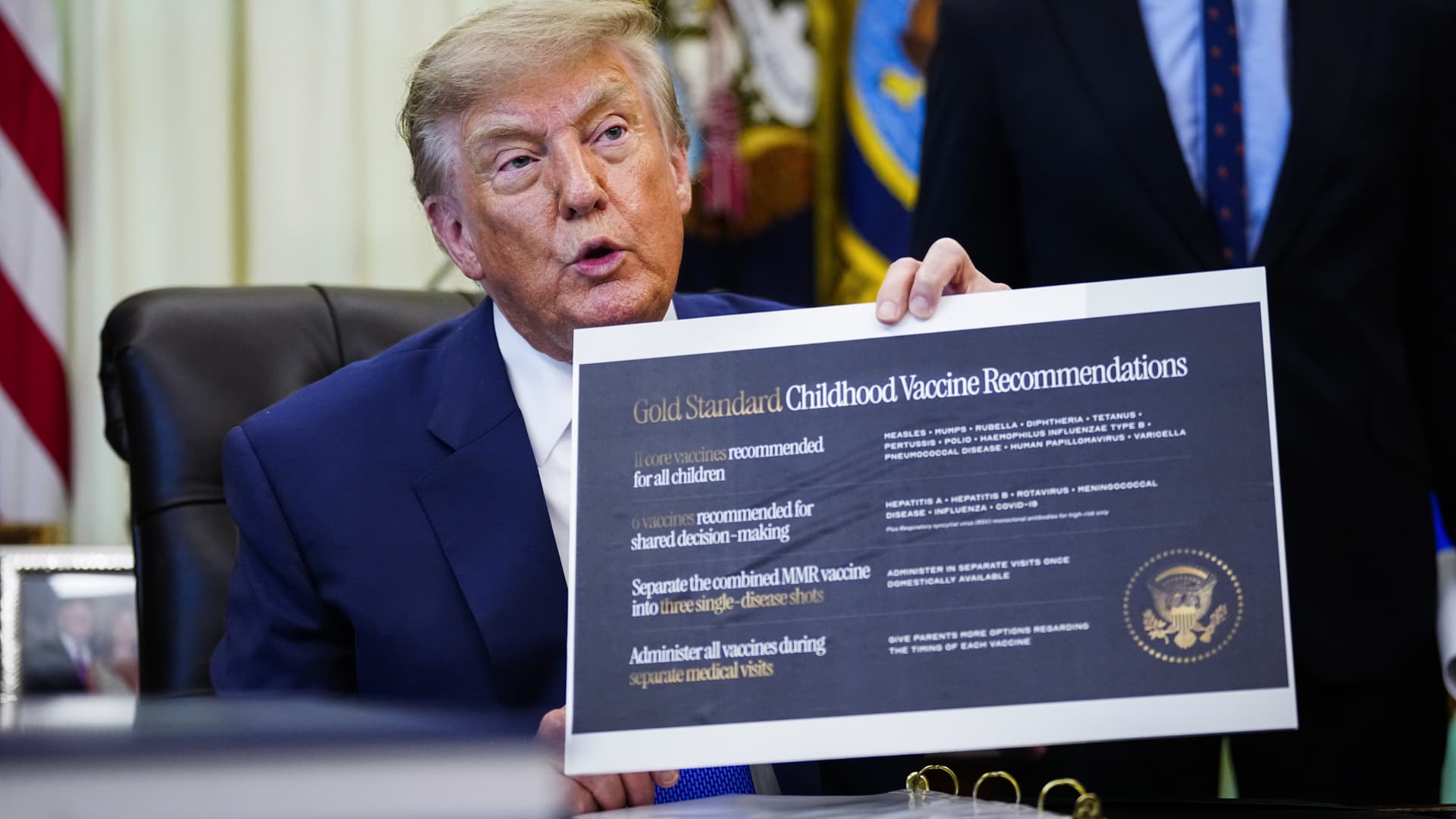
A new executive order from President Donald Trump is sparking significant concern among the medical community by calling for the separation of the combined measles, mumps, and rubella (MMR) vaccine into three individual shots. While the administration argues this change is necessary, pediatricians and infectious disease experts are pushing back, asserting that the proposal lacks a scientific foundation and could inadvertently lead to a resurgence of preventable childhood diseases.
What happened
President Trump recently issued an executive order directed at the pharmaceutical industry and federal health agencies, requesting that the standard MMR combination vaccine be dismantled into standalone injections. During the announcement, the President claimed without providing supporting data that the current combined formulation could be “lethal.”
Medical professionals were quick to refute these claims. Representatives from the American Academy of Pediatrics and various public health institutions emphasized that the MMR vaccine has undergone rigorous, large-scale safety trials over several decades, consistently proving to be both safe and effective. Experts noted that there is no clinical evidence suggesting that receiving the components separately offers any health benefits or safety advantages over the single combined dose.
Context
The push to separate the vaccines appears to be rooted in long-debunked theories. Public health researchers point to a retracted 1998 study by Andrew Wakefield, which falsely suggested a link between the MMR vaccine and autism. Although Wakefield was eventually stripped of his medical license and his findings were thoroughly discredited by the global scientific community, his rhetoric continues to influence modern anti-vaccination sentiment.
The timing of this policy change is particularly concerning to health officials, as the United States is already grappling with a decline in vaccination rates. According to a recent survey by the Washington Post and KFF, nearly 9% of parents admit to delaying or skipping the MMR vaccine for their children. This hesitation has contributed to the highest number of measles cases recorded in the U.S. in decades. Furthermore, the manufacturers of these vaccines, such as Merck and GSK, have expressed no interest in developing standalone versions, noting that the regulatory approval process for new formulations can take over a decade.
Why it matters
The primary concern among health advocates is that splitting the vaccine will create unnecessary barriers to care. Currently, children receive two doses of the MMR vaccine to achieve full immunity. Under the proposed plan, a child would require six separate injections across multiple doctor’s visits. This increased frequency poses a significant logistical burden on families, particularly those in rural areas or low-income households where taking time off work for repeated medical appointments is difficult.
By increasing the number of required visits, the likelihood of children missing or delaying their shots increases. Experts warn this creates a “dangerous window” where children remain unprotected against highly contagious viruses for a longer period. Furthermore, Merck has pointed out that combination shots actually improve compliance and health outcomes by simplifying the immunization schedule.
Ultimately, critics of the executive order argue that the policy is counterproductive. While the administration claims to be addressing concerns about the volume of shots children receive, the proposed solution would triple the number of injections required to protect against the same three diseases, potentially undermining public trust in the healthcare system at a time when vaccine-preventable outbreaks are on the rise.