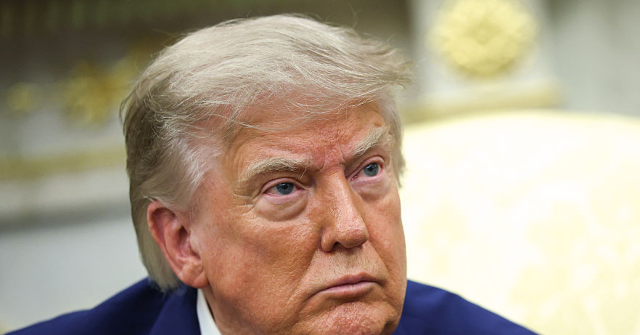
President Donald Trump has escalated his administration’s rhetoric against Tehran, asserting that the United States is “not finished at all” with its military campaign in the region. Speaking from the White House, the President indicated that American forces are preparing to target a heavily fortified Iranian nuclear facility known as Pickaxe Mountain in the near future. The warning signals a firm commitment to military escalation over diplomatic re-engagement, as the administration continues to target the regime’s strategic infrastructure.
What happened
During a Tuesday meeting with Lebanese President Joseph Aoun, President Trump addressed recent intelligence reports regarding Iran’s nuclear progress. Specifically, he responded to inquiries about a Wall Street Journal report suggesting that Iranian officials had relocated thousands of advanced centrifuges to the Pickaxe Mountain site, an underground facility situated near the Natanz nuclear complex.
The President did not dispute the possibility of the transfer but downplayed the immediate threat of the hardware itself. He argued that centrifuges are secondary to the nuclear material they process, stating that the U.S. is focused on tracking the material rather than just the equipment. Trump followed this assessment with a blunt warning: the U.S. military intends to strike the Pickaxe Mountain area “pretty soon” and “very heavily.” He emphasized that the strike is inevitable and that the Iranian regime lacks the capability to prevent it, suggesting a high level of confidence in American tactical superiority.
Context
Pickaxe Mountain has long been a point of contention for both U.S. and Israeli intelligence. Due to its extensive underground fortifications, the site is designed to withstand conventional aerial bombardments, making it a primary concern for those monitoring Iran’s nuclear ambitions. International inspectors have frequently sought access to the site amid suspicions that it could host undeclared activities beyond the scope of international agreements.
The President’s latest comments come amid a broader, sustained military campaign led by U.S. Central Command (CENTCOM). For months, U.S. forces have been actively degrading Iranian military assets, including missile batteries, drone launch sites, and command-and-control centers. These operations have also focused on maritime assets to prevent the disruption of commercial shipping in the Strait of Hormuz. Trump characterized the ongoing campaign as an unprecedented degradation of Iran’s capabilities, asserting that the regime has been “decimated” to the point where they are desperate for negotiations—an option he is currently dismissing until a “meaningful” proposal is on the table.
Why it matters
The implications of the President’s remarks suggest a strategy of total denial regarding Iran’s nuclear infrastructure. By threatening to strike any site where the regime might “possibly reconstitute” its nuclear program, the administration is moving beyond containment toward a policy of active destruction. Trump argued that if the U.S. were to cease its operations now, it would take Iran approximately 20 to 25 years to recover its current standing. By staying the course, the administration aims to ensure that the regime remains unable to pose a nuclear threat for decades.
This stance marks a significant departure from previous diplomatic frameworks. The President’s focus on the “material” rather than just the centrifuges indicates a shift in intelligence priorities, focusing on the essential components of a weapon rather than just the visible infrastructure. Furthermore, the explicit naming of Pickaxe Mountain as a target serves as a psychological deterrent, signaling to Tehran that even their most fortified assets are within the reach of American military power. As the U.S. continues to apply “very powerful” strikes, the window for a diplomatic resolution appears to be narrowing in favor of a long-term military pressure campaign.