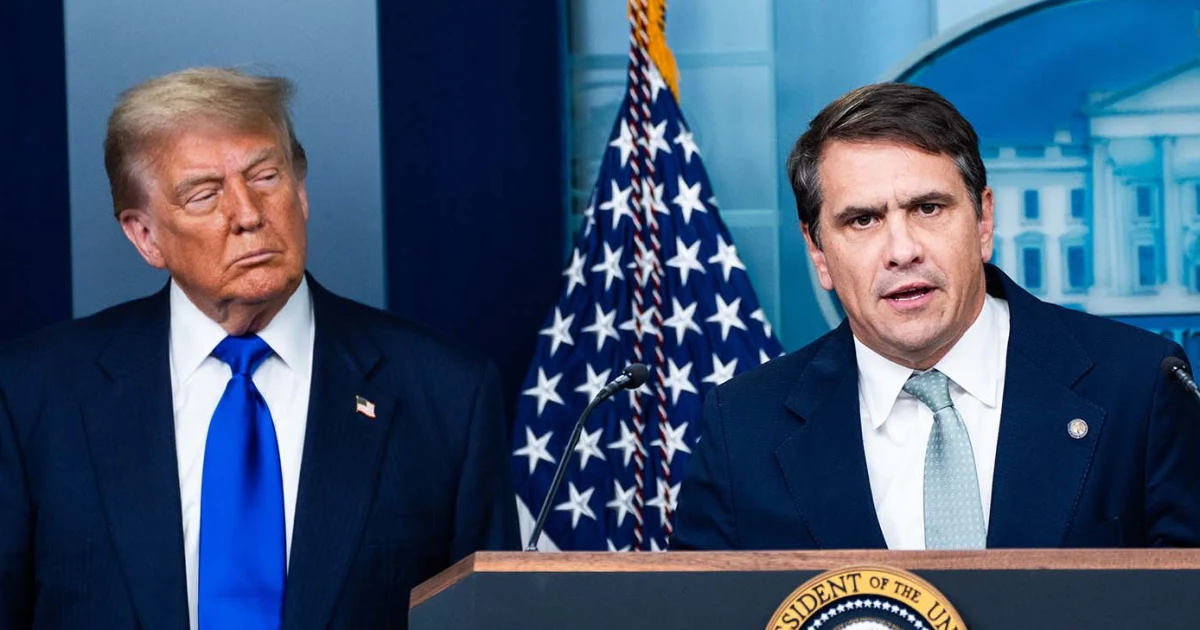
President Donald Trump’s recent public statements regarding a proposed multi-billion dollar “anti-weaponization fund” have created a significant hurdle for the confirmation of Todd Blanche, his nominee for Attorney General. While administration officials had previously suggested the controversial proposal was no longer being pursued, Trump’s renewed defense of the concept has reignited tensions within the Republican party. This development has effectively stalled the leadership transition at the Department of Justice as key senators demand more clarity on the administration’s fiscal and legal priorities.
What happened
During a Cabinet meeting on Friday, President Trump addressed the status of a proposed $1.8 billion fund intended to support January 6 defendants and others who claim they were unfairly targeted by federal agencies. Although Trump technically described the fund as “dead” to the press, he immediately qualified the statement by expressing personal regret that the program was not moving forward. He argued that individuals prosecuted by the government in recent years had been subjected to abuse and deserved financial restitution.
The president’s rhetoric directly contradicts previous assurances given by Todd Blanche and other high-ranking officials, who had told lawmakers that the fund was no longer a part of the administration’s agenda. This inconsistency has prompted a swift backlash from Senate Republicans, specifically John Cornyn of Texas and Thom Tillis of North Carolina. Both senators have placed a hold on Blanche’s nomination, preventing it from reaching a final vote.
Further complicating the situation, Trump took to social media to criticize Senator Cornyn, suggesting that the senator’s opposition was rooted in political retaliation rather than policy concerns. Trump alleged that Cornyn only began opposing the fund after the president supported a primary challenger against him. Cornyn and Tillis, however, maintain that their concerns are centered on the legal and ethical implications of using government-related settlements to fund private legal defenses for those involved in the Capitol riot.
Context
The “anti-weaponization fund” at the center of this dispute has a complex origin, reportedly tied to a settlement between the Trump administration and the Internal Revenue Service. The $1.8 billion pool was intended to provide financial relief to those who the president believes were “hunted” by the previous administration. For many conservative lawmakers, however, the creation of such a fund represents an unprecedented use of federal resources that bypasses traditional congressional oversight.
The fallout from this proposal has already impacted broader government operations. The debate over the fund recently delayed a $70 billion appropriations bill designed to fund Immigration and Customs Enforcement (ICE) and the Border Patrol. While that bill eventually moved forward, the lingering controversy has focused entirely on Todd Blanche. As the acting Attorney General, Blanche is viewed by many as a steady hand, but his path to permanent confirmation is now blocked by the very rhetoric of the president he serves.
Why it matters
This standoff highlights a deepening rift within the Republican party regarding the rule of law and the legacy of the January 6 investigations. By continuing to advocate for the fund, Trump is signaling to his base that he remains committed to those prosecuted for their roles in the Capitol events. However, this stance creates a functional vacuum at the highest levels of the Department of Justice.
Without a confirmed Attorney General, the department remains in a state of flux, led by an acting official whose authority is frequently challenged by legislative gridlock. The delay is particularly significant as the Senate prepares for its five-week summer recess. If Blanche is not confirmed before the break, the vacancy will persist well into the fall, potentially hampering the administration’s ability to execute its broader legal and domestic policy agenda.
Furthermore, the public dispute between Trump and senior GOP senators like Cornyn and Tillis suggests that the president may face continued difficulty in passing his agenda through a chamber that requires a unified party front. As long as the “anti-weaponization fund” remains a talking point for the administration, it appears the confirmation of Todd Blanche will remain in a state of political limbo.