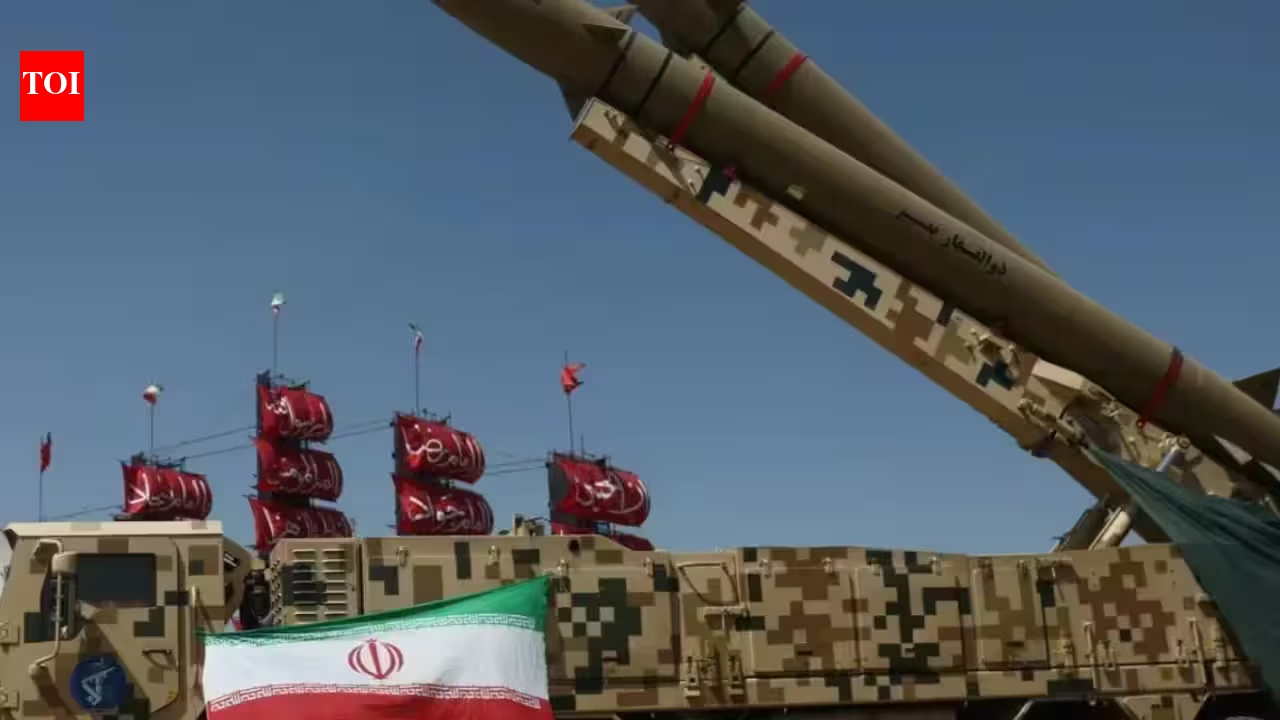
The United Arab Emirates has reaffirmed its commitment to national security following the detection of two ballistic missiles launched from Iranian territory. In a statement released by the Ministry of Defense, the UAE emphasized its high state of readiness to address any provocations, signaling a firm stance against actions that threaten the stability of the Gulf region. This latest development adds a new layer of complexity to an already tense geopolitical landscape, as the nation asserts its right to protect its sovereignty and citizens.
What happened
On Tuesday, Emirati defense systems identified two ballistic projectiles fired from Iran toward the UAE. While the ministry did not provide specific details regarding the exact trajectory or the eventual impact points of the missiles, the official communication was focused on the country’s defensive capabilities. The Ministry of Defense stated clearly that it is prepared to deal with any potential threats and is taking all necessary measures to safeguard the nation.
The announcement serves as a public declaration of the UAE’s military vigilance. By identifying the origin of the missiles and publicly vowing a response, the UAE is positioning itself as a proactive defender of its territorial integrity. The rhetoric coming out of Abu Dhabi suggests that while the nation remains focused on growth and stability, it will not ignore direct military provocations that could undermine its internal security or regional standing.
Context
The timing of these missile launches is particularly significant given the ongoing diplomatic efforts in the region. Recent reports have highlighted a series of negotiations between Iran and Oman, with the primary objective of reaching an agreement to ensure the consistent reopening and security of the Strait of Hormuz. This narrow waterway is a vital artery for global energy supplies, and its stability is a priority for both regional powers and international markets.
The contradiction between diplomatic discussions and military action is a recurring theme in the Middle East. While mediators like Oman work to bridge the gap between Tehran and its neighbors, kinetic events like these missile launches suggest a fractured approach to regional policy or a deliberate strategy of “pressure and dialogue.” For the UAE, which has spent years diversifying its economy and positioning itself as a global hub for trade and tourism, such disruptions represent a direct challenge to the “business as usual” atmosphere it strives to maintain.
Why it matters
The implications of this incident are twofold, affecting both regional security and global economic interests. First, the event underscores the fragile nature of security in the Persian Gulf. If ballistic missile launches become a frequent occurrence, the risk of a miscalculation leading to a larger conflict increases exponentially. The UAE’s vow to respond indicates that there is a limit to strategic patience, and future provocations may meet more than just defensive posturing.
Second, the international community views the stability of the UAE and its surrounding waters as essential for the global economy. As one of the world’s most critical transit points for oil and liquefied natural gas, any perceived threat to the Gulf region can lead to immediate fluctuations in energy prices.
Furthermore, this event tests the efficacy of regional air defense systems and the strength of international security partnerships. The UAE has invested heavily in advanced missile defense technology, and its ability to detect these launches is a testament to its technical readiness. Moving forward, the focus will remain on whether diplomacy can override these military escalations, or if the region is entering a new phase of heightened alert. For now, the UAE remains on guard, balancing its desire for regional peace with the undeniable necessity of military preparedness.