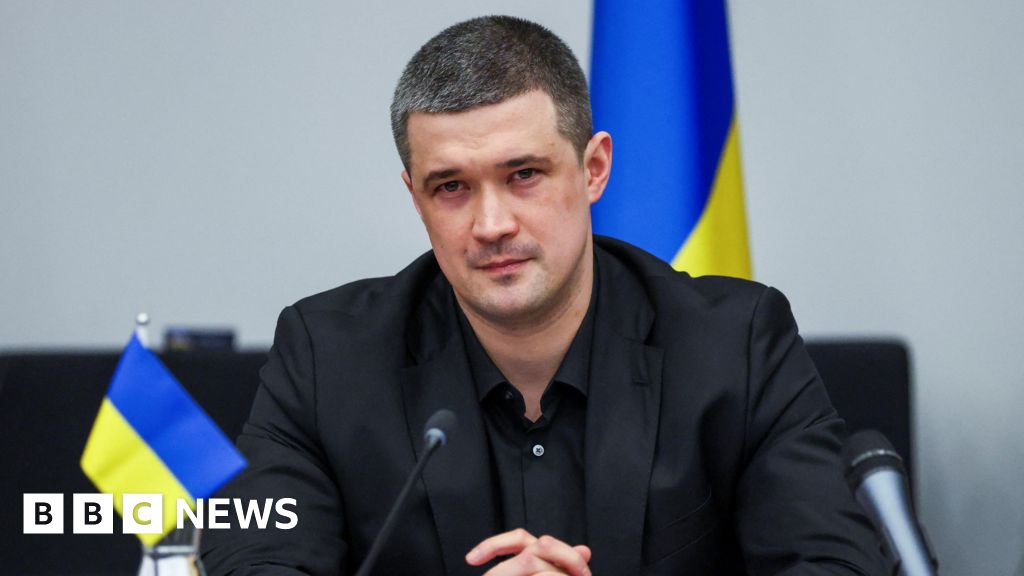
In a significant shift within Ukraine’s internal political landscape, the recently dismissed defence minister, Mykhailo Fedorov, has publicly urged the government to hold presidential elections despite the ongoing conflict with Russia. This move marks one of the most prominent challenges to President Volodymyr Zelensky’s leadership since the full-scale invasion began, surfacing at a time when the nation remains under strict martial law and faces mounting pressure on multiple fronts.
What happened
Mykhailo Fedorov, who was unexpectedly removed from his position as defence minister only a month ago, released a video address arguing that the nation’s democratic health should not be sacrificed due to the war. The 35-year-old former official emphasized that the very essence of Ukraine’s struggle is to remain a free, European democracy, and suggested that holding elections is a necessary part of that identity. Fedorov’s dismissal had already caused a stir, sparking protests across the country, but this latest call for a vote directly targets the current administration’s stance on political stability during wartime.
The response from the president’s office was swift and dismissive. An official source characterized the idea of organizing a national vote while the country is under constant bombardment as a “complete lack of realism.” President Zelensky himself has not addressed Fedorov’s comments directly. Instead, his recent communications have focused on military priorities, including the appointment of Yevhenii Khmara as the new Defence Minister and the expansion of long-range strike capabilities to counter Russian aerial aggression.
Context
Ukraine has been under martial law since the Russian invasion in February 2022, a legal status that automatically suspends all electoral processes. While Zelensky’s official five-year term reached its conclusion in May 2024, the government has maintained that a fair and secure election is impossible under current conditions. This position is supported by many domestic analysts who point out the logistical nightmares of organizing a vote for millions of displaced citizens and hundreds of thousands of soldiers serving on the front lines.
The debate is further complicated by international pressure. Elements of the U.S. political establishment, including Donald Trump, have suggested that the war is being used as a pretext to avoid a democratic transition. Zelensky previously indicated a willingness to hold a vote if allies could assist with security and funding, but the reality on the ground remains perilous. Recent tragedies underscore these risks: a drone strike in Kherson recently killed four people on a minibus, and another attack on a police headquarters in Zhytomyr resulted in two deaths and dozens of injuries.
Adding to the administration’s current hurdles is a burgeoning corruption scandal. Anti-corruption agencies have recently launched operations targeting members of parliament and officials within the presidential office. This led to the immediate dismissal of Iryna Mudra, a deputy head in Zelensky’s office, following reports of law enforcement raids.
Why it matters
Fedorov’s demand for elections highlights a growing tension between the necessity of emergency wartime governance and the preservation of democratic institutions. For many Ukrainians, the legitimacy of their leadership is a source of national strength, but the practical dangers of gathering citizens at polling stations under the threat of missile strikes are undeniable.
Furthermore, this internal friction comes at a delicate time for Ukraine’s international standing. By calling for a vote, Fedorov has tapped into a narrative often pushed by Moscow to undermine Zelensky’s authority. The challenge for the Ukrainian government now is to balance the demands of democratic accountability with the harsh realities of national survival, all while managing internal dissent and high-level corruption investigations that threaten to erode public trust during the country’s most difficult hour.