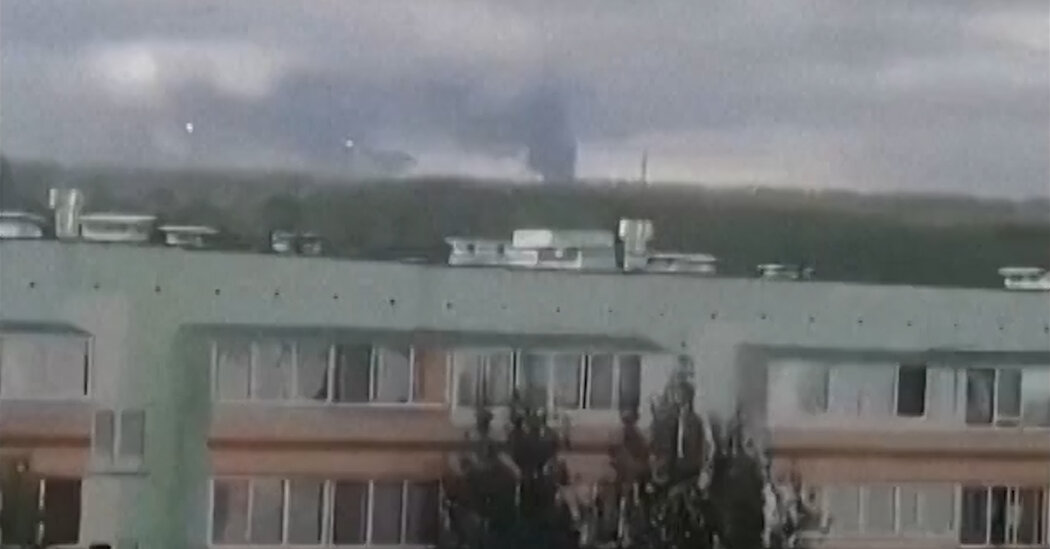
A significant escalation in the ongoing conflict between Kyiv and Moscow unfolded on Monday as a Ukrainian drone strike targeted an industrial hub deep within Russian territory. The attack, which took place in the region of Tatarstan, resulted in the deaths of at least 13 people, marking one of the most lethal strikes on Russian soil since the full-scale invasion of Ukraine began in early 2022. This operation underscores a pivotal shift in the war’s geography, as Ukraine increasingly demonstrates its capacity to hit strategic targets hundreds of miles away from the front lines.
What happened
The strike occurred on Monday morning, targeting an industrial complex located approximately 550 miles east of Moscow. Initial reports from regional authorities and emergency services confirmed that the casualties included both workers and residents in the vicinity of the facility. At least 13 individuals were killed, and several others were treated for injuries ranging from blast-related trauma to shrapnel wounds.
The drones utilized in the attack managed to bypass several layers of Russian air defenses, traveling a distance that suggests sophisticated navigation and long-range capabilities. While the specific nature of the industrial facility has not been detailed in full by local officials, the region is known for its heavy manufacturing, including sectors tied to the Russian energy and defense industries. Footage emerging from the scene showed significant damage to structures, with plumes of smoke rising over the industrial landscape, signaling the intensity of the impact.
Context
Since the start of the war, the majority of the combat and destruction has been concentrated within Ukrainian borders. However, as the conflict has entered its third year, Kyiv has intensified its campaign to bring the costs of the war home to the Russian Federation. By targeting industrial and logistical centers, Ukraine aims to disrupt the machinery that sustains the Russian military effort.
Tatarstan is an essential economic region for Russia, housing major refineries and manufacturing plants. Previously considered out of reach for most Ukrainian weaponry, the region is now clearly within the crosshairs of Kyiv’s burgeoning drone program. This specific incident follows a series of recent strikes on oil refineries and storage depots across western Russia, though the high death toll in this latest attack distinguishes it as a particularly severe event. It reflects a trend where Ukraine is compensating for its lack of long-range missiles by refining its domestic production of unmanned aerial vehicles (UAVs).
Why it matters
This attack is significant for several strategic and psychological reasons. First, it highlights the vulnerability of the Russian interior. For a long period, the Russian public in cities far from the border experienced the war as a distant event. Strikes of this magnitude, occurring deep within the heartland, challenge the Kremlin’s narrative of security and domestic stability.
Second, the strike represents a significant technological milestone for the Ukrainian military. Successfully hitting a target 550 miles from the border requires not only advanced drone technology but also precise intelligence and the ability to exploit gaps in one of the world’s most dense air defense networks.
Finally, the focus on industrial centers has direct economic implications. By forcing Russia to divert air defense systems from the front lines to protect internal infrastructure, Ukraine creates a “dilemma of defense” for Russian military planners. If these strikes continue to cause high casualties and substantial industrial damage, they may force a reassessment of how Russia allocates its resources between offensive operations in Ukraine and defensive measures at home. This evolution in the conflict suggests that the “buffer zone” once enjoyed by Russian industrial hubs is rapidly disappearing.