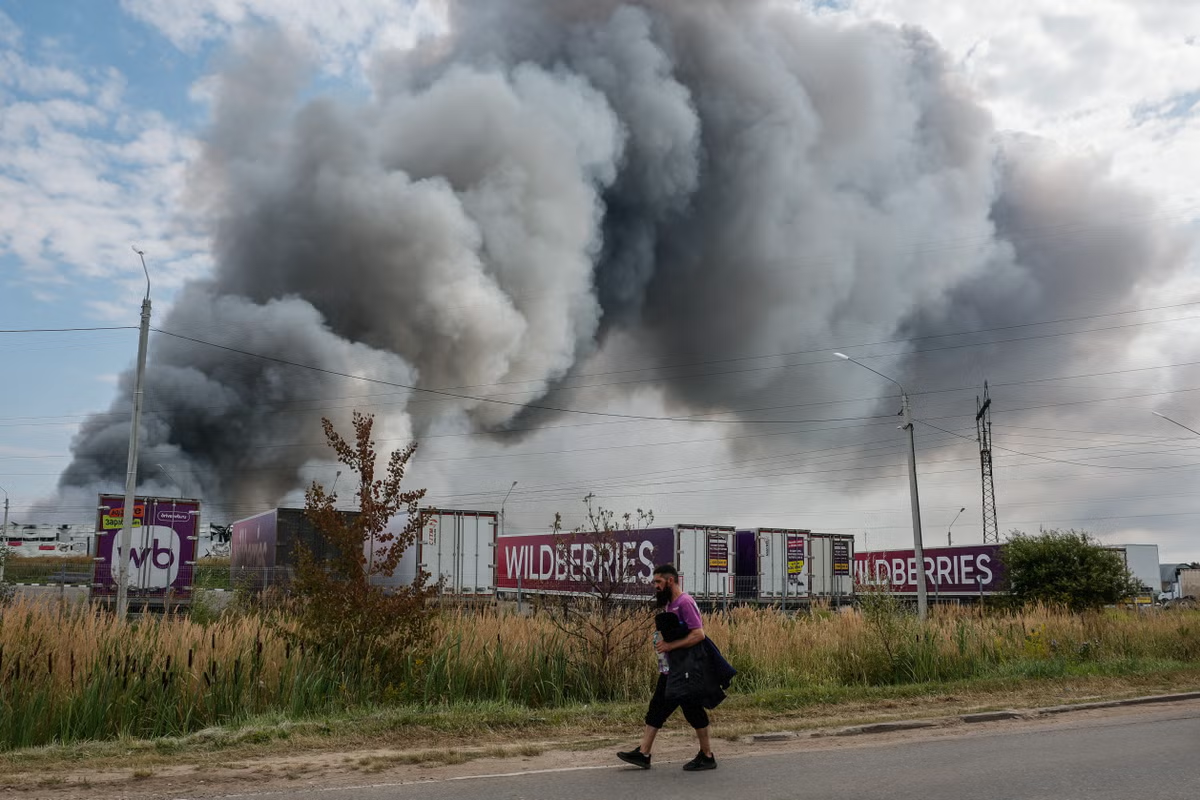
Ukraine has dramatically escalated its aerial campaign against Russian infrastructure, launching an unprecedented wave of more than 800 drones in a single overnight offensive. The strikes, which primarily targeted the Russian capital and its surrounding logistics hubs, represent one of the most significant coordinated drone operations since the conflict began. By focusing on high-profile commercial targets, Kyiv is signaling a shift in its military strategy, aimed at disrupting the Russian economy and bringing the reality of the war closer to the Russian civilian population.
What happened
According to reports from the Russian Defence Ministry, Ukraine deployed approximately 822 drones during the night. Of those, Russian authorities claim that roughly 600 were directed toward Moscow. While the total number of intercepted craft remains unconfirmed by independent sources, the impact on the ground was substantial. The most prominent target was a massive distribution center in Podolsk, located in the Moscow region.
The facility belongs to Wildberries, often referred to as the “Amazon of Russia.” Images from the scene depict the total destruction of what is considered the retailer’s largest warehouse hub. The human cost of the escalation was also felt on both sides; Moscow region Governor Andrei Vorobyov confirmed that an 83-year-old man was killed during the drone barrage. Meanwhile, in Kyiv, retaliatory Russian missile and drone strikes left at least three people injured on Sunday morning.
The conflict also spilled over into neighboring NATO territory. The Romanian Ministry of National Defence reported that a Spanish F-18 fighter jet, currently performing air policing duties for NATO, intercepted and shot down a drone that had entered Romanian airspace near the city of Galati. Additional debris was later discovered in the Black Sea near the coastal city of Constanta, highlighting the growing regional instability caused by the ongoing air war.
Context
This massive drone wave follows a series of high-precision strikes by Ukrainian forces. Just prior to this operation, President Volodymyr Zelensky announced the use of “flamingo” missiles to strike a Russian rocket and space facility in Samara. Ukraine alleges that the Samara center is vital to Russia’s development of a domestic satellite internet network, similar to Starlink, which would bolster the Kremlin’s communication and surveillance capabilities.
The targeting of Wildberries is part of a broader “economic front” in the war. By hitting the largest logistics hub of Russia’s premier online retailer, Kyiv is moving beyond strictly military targets like oil refineries and airbases. This strategy aims to strain the Russian supply chain and exert pressure on the domestic economy, which has remained largely resilient despite international sanctions.
Why it matters
The scale of this attack marks a turning point in the drone war. Deploying hundreds of unmanned aerial vehicles (UAVs) simultaneously is designed to overwhelm air defense systems, ensuring that even if a majority are shot down, enough will reach their targets to cause significant damage. For Ukraine, these strikes serve as a force multiplier, allowing them to project power deep into Russian territory without the immediate use of Western-supplied long-range missiles, which often come with geographic restrictions.
Furthermore, the strategy of “bringing the war home” to ordinary Russians is a calculated psychological move. For much of the conflict, residents in and around Moscow have been insulated from the frontline devastation. The destruction of a major consumer hub like Wildberries serves as a stark reminder of the conflict’s reach.
On the international stage, the involvement of a Spanish F-18 in shooting down a drone over Romania underscores the precarious nature of NATO’s border security. As the theater of war expands and aerial assets frequently drift into allied airspace, the risk of a direct confrontation between Russian tech and NATO forces continues to escalate. These incidents force NATO members to remain on high alert, complicating the diplomatic efforts to contain the conflict within Ukrainian borders.