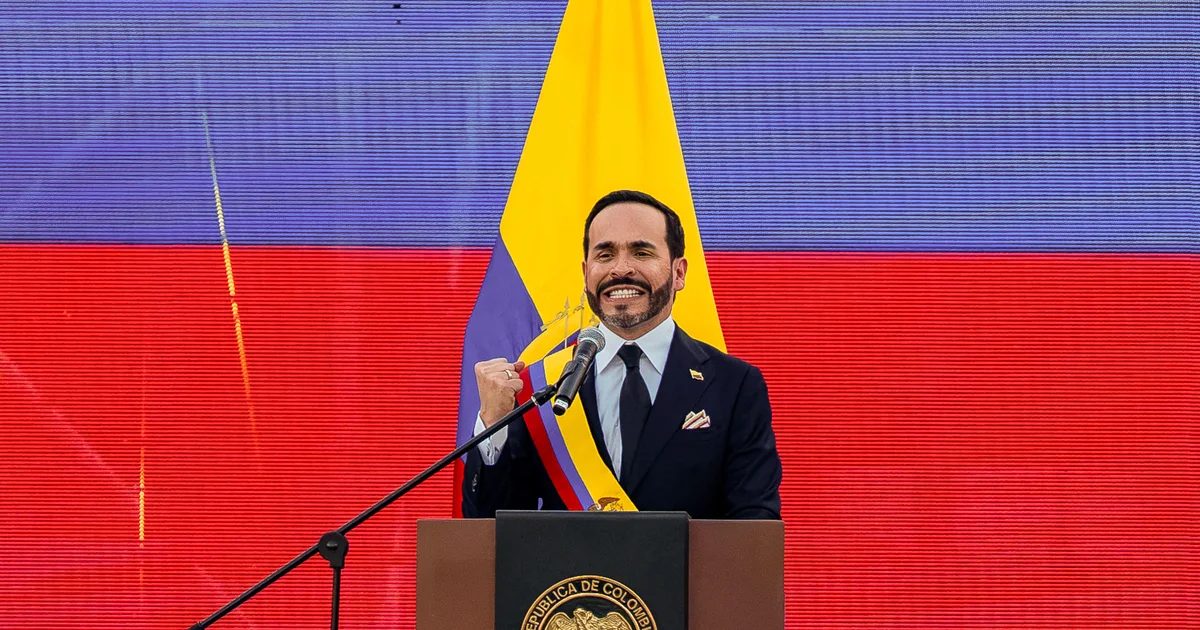
A significant shift in Western Hemisphere geopolitics occurred this week as the United States committed $1 billion in security assistance to Colombia. This financial pledge coincides with the inauguration of Abelardo de la Espriella, a right-wing leader who has promised a radical departure from his predecessor’s approach to domestic security and international relations. The move signals a restoration of the historically close military and diplomatic ties between Washington and Bogota, focusing heavily on aggressive counter-narcotics operations.
What happened
On Friday, Abelardo de la Espriella officially began his four-year term as the President of Colombia. A wealthy attorney who entered the political arena as an outsider, De la Espriella secured the presidency by tapping into widespread public anxiety regarding rising crime and regional instability. His campaign, which earned the endorsement of President Trump, focused on a “law and order” platform that resonated with voters tired of long-standing internal conflicts.
In response to his victory, the United States government announced a $1 billion aid package aimed at bolstering the new administration’s security initiatives. According to official statements, the funds are intended to help Colombia achieve shared goals in regional stability and the eradication of drug trafficking.
During his inaugural address, De la Espriella adopted a militant tone, declaring that the time for negotiation with insurgent groups had ended. He famously utilized a military salute as his trademark gesture and outlined a “relentless” strategy to dismantle narco-terrorist organizations. His proposed policies include the construction of “mega-prisons,” the aerial bombardment of cocaine production facilities in the jungle, and an open invitation for American military personnel to be stationed on Colombian territory.
Context
The ascension of De la Espriella follows the four-year term of Gustavo Petro, the first leftist president in Colombia’s history. The Petro administration attempted a “paradigm shift” in the war on drugs, prioritizing social programs and peaceful negotiation with armed groups over traditional military confrontation. However, these efforts faced significant hurdles, as peace talks stalled and many communities reported an increase in violence and lawlessness.
This period was also marked by diplomatic friction between Bogota and Washington. While Colombia has traditionally served as the primary U.S. ally in the region for trade and anti-drug efforts, the relationship cooled significantly under Petro’s leadership. De la Espriella, who holds dual citizenship in both Colombia and the United States, represents a return to the status quo of the early 21st century, albeit with a more populist and aggressive flair. His platform also includes plans to significantly reduce the size of the Colombian state and overhaul the country’s bureaucracy.
Why it matters
The $1 billion pledge and the policy shift in Bogota carry heavy implications for the future of Latin American security. For the United States, the installation of an eager ally in Colombia provides a strategic foothold in a region where several other nations have moved toward leftist or non-aligned stances. This partnership is expected to lead to a surge in joint military exercises and a more coordinated effort to disrupt the global supply of cocaine.
However, the hardline approach also raises questions regarding regional stability and human rights. The focus on “mega-prisons” and the rejection of dialogue suggest a return to the era of intense internal conflict that has characterized much of Colombia’s modern history. While the promise of “narco-terrorism” defeat is popular among a weary electorate, the transition from a policy of peace talks to one of total military confrontation will test the resilience of Colombian institutions.
Ultimately, the massive injection of U.S. capital serves as a clear endorsement of De la Espriella’s vision. As the new president begins to implement his plan to slash government spending while expanding the military’s reach, the world will be watching to see if this “spectacle” of governance can deliver the safety and stability he promised his voters.