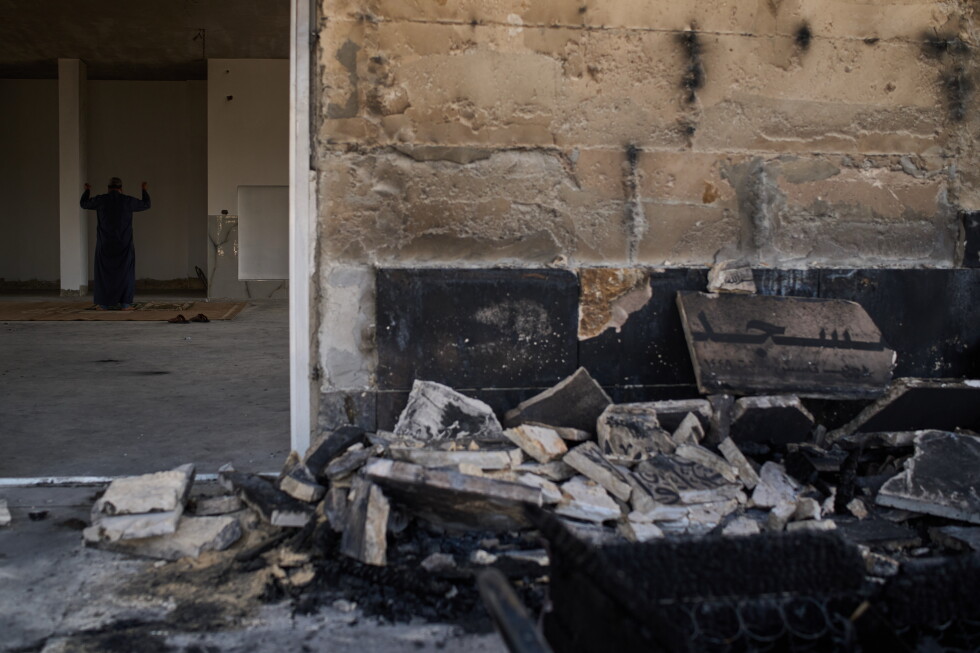
A new wave of unrest has swept through the West Bank as two mosques were targeted in arson attacks early Sunday morning. These incidents follow a weekend marked by significant bloodshed, including the deaths of four Palestinians and two Israeli soldiers. The attacks on the religious sites, located in the villages of Qusra and Kour, mark a dangerous escalation in the cycle of retaliatory violence currently gripping the region.
What happened
In the early hours of Sunday, July 26, residents in the northern West Bank villages of Qusra and Kour discovered their local mosques heavily damaged by fire. In Qusra, the perpetrators left behind Hebrew graffiti that explicitly linked the arson to the deaths of Israeli personnel earlier in the week. Phrases such as “Revenge Benayahu”—a reference to an Israeli soldier killed the previous Friday—and “the land of Israel is redeemed with blood” were found spray-painted on the charred remains of the buildings.
Witnesses described a scene of chaos and helplessness. Ahmed Abu Mahmoud, a 64-year-old resident whose home is adjacent to the mosque in Qusra, reported hearing suspicious noises around 3 a.m. Upon investigating, he found the place of worship engulfed in flames too large to extinguish alone. According to Abu Mahmoud, Israeli military forces arrived at the scene shortly after the fire was discovered, but they did not stay to assist, leaving the villagers to manage the aftermath.
In response to the weekend’s instability, the Israeli military has intensified its operations across the territory. Security forces have implemented strict travel restrictions, closing major transit routes and blocking access to a hospital in Nablus under the suspicion that militants were hiding within the facility.
Context
The arson attacks are the latest chapter in a series of fatal confrontations that occurred over the weekend. The violence began with clashes that resulted in the deaths of two Israeli soldiers and four Palestinian villagers. The soldier mentioned in the graffiti, Benayahu, lived in a settlement near the village of Tell, making the choice of target in nearby Qusra appear to be a direct act of retaliation.
The Israeli military confirmed that it has detained more than 70 Palestinian suspects since the violence began on Friday. This massive sweep is part of a broader effort by the Israel Defense Forces (IDF) to maintain control over the West Bank as tensions reach a breaking point. However, the focus of the arrests has drawn criticism from those who feel the government is failing to address the actions of extremist settlers.
Why it matters
This latest flare-up highlights the increasingly volatile relationship between settlers and Palestinian residents, as well as the growing political pressure on the Israeli government. Critics of Prime Minister Benjamin Netanyahu’s administration, including members of the Israeli opposition, argue that the current hard-line government is turning a blind eye to settler-led aggression. This perceived lack of accountability, they warn, threatens to ignite a broader, uncontrollable conflict across the entire territory.
Furthermore, the deliberate targeting of places of worship is a significant provocation. By attacking mosques, the perpetrators are striking at the heart of the community’s social and religious identity, which often serves to deepen communal divides and make de-escalation nearly impossible. As the military continues its raids and roadblocks, the international community remains concerned that without intervention or a change in policy, the cycle of revenge will continue to claim lives on both sides.