Elon Musk, the world’s first trillionaire, is once again at the center of intense market speculation regarding the future of his industrial empire. Following a record-setting public offering from SpaceX last month, the financial world is buzzing with a single, monumental question: Will Musk merge Tesla and SpaceX into a $3 trillion corporate behemoth? While a definitive answer remains elusive, Musk’s recent interactions with shareholders suggest that the boundaries between his electric vehicle company and his aerospace venture are becoming increasingly porous.
What happened
During Tesla’s latest quarterly earnings call, investors were eager for clarity on a potential “megamerger.” While Musk did not commit to a specific timeline or deal structure, he acknowledged that the two companies are experiencing significant “overlap.” He noted that regulatory and procedural requirements prevent him from discussing the specifics of a corporate combination during an earnings report, but he did not dismiss the idea.
The interest from the investment community was palpable. Dozens of inquiries submitted by individual shareholders prior to the call focused specifically on the likelihood of a Tesla-SpaceX tie-up. Although Tesla executives chose to skip these questions during the live session, the sheer volume of interest indicates that the market is already pricing in the possibility of a unified Musk entity.
Context
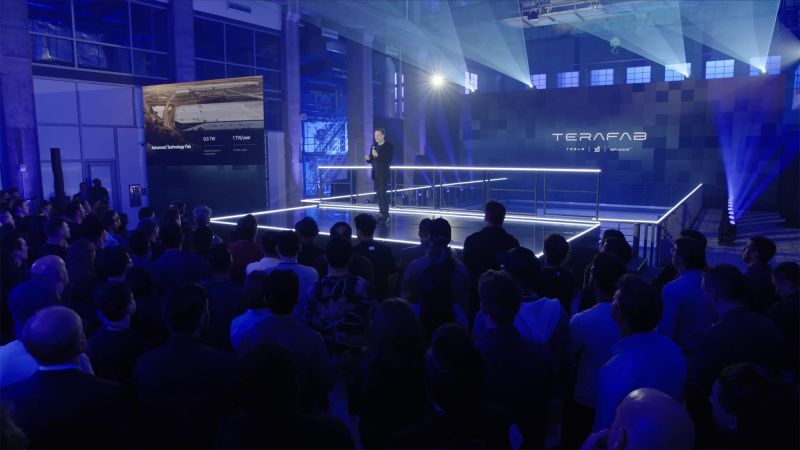
The groundwork for a closer relationship between the two companies is already being laid through operational collaboration. In March, Tesla and SpaceX established a joint venture called Terafab. Located in Austin, Texas, this facility is dedicated to the fabrication of microchips, a critical component for both high-performance electric vehicles and advanced spacecraft.
Musk has pointed toward several technical synergies that make a merger strategically attractive. For instance, SpaceX’s Starlink satellite internet service could provide the essential high-speed connectivity required for Tesla’s planned fleet of autonomous robotaxis. Furthermore, both companies are essentially deep-tech entities disguised as manufacturing firms. Investors no longer value Tesla solely on its ability to sell cars, nor SpaceX solely on its launch capabilities. Instead, the high valuations of both are driven by their advancements in artificial intelligence and robotics. By combining these efforts, Musk could theoretically accelerate development across both platforms.
Why it matters
A merger of this magnitude would create one of the most powerful corporate entities in history, with a market capitalization comparable to technology titans like Microsoft. Such a massive valuation would provide Musk with unprecedented leverage and easier access to capital to fund his more ambitious long-term projects, such as the colonization of Mars or the development of a fully autonomous global transport network.
From a leadership perspective, analysts argue that a merger offers “strategic coherence.” JPMorgan analyst Rajat Gupta noted that a combination would allow Musk to unify his engineering leadership and vision under a single banner. This sentiment is echoed by tech analyst Dan Ives, who estimated an 80% chance of the companies merging by 2027. Ives suggests that from a data engineering standpoint, a merger is the most logical path forward.
As Tesla faces pressure from a recent dip in net income due to heavy investments in research and development, a merger could offer a way to streamline costs and consolidate AI talent. For Musk, it would also provide a level of control over Tesla that currently remains subject to the whims of the public markets and independent board members. If the merger proceeds, it would not just be a financial transaction—it would be a total unification of the Musk ecosystem, designed to dominate the future of both terrestrial and extraterrestrial technology.